

![benny blanco, Selena Gomez, Becky G – Te Olvido (La La) [Official Music Video]](https://musicvideosclub.com/wp-content/uploads/2026/08/benny-blanco-selena-gomez-becky-360x203.jpg)

Bobby McFerrin – Don’t Worry, Be Happy
He Knocked Guns N’ Roses Off Number One With Nothing But His Voice
The summer of 1988 belonged to big hair, bigger synthesizers, and the kind of rock records that needed an entire arena to contain them. “Don’t Worry, Be Happy” arrived into that landscape like someone opening a window. No instruments. No band. No production budget to speak of. Just Bobby McFerrin — the jazz vocalist’s jazz vocalist, a man whose previous album had been recorded entirely without accompaniment and sold respectably to people who appreciated that sort of thing — layering his voice over itself until he had a bass line, a percussion section, a whistle, background harmonies, and a lead vocal in what sounded like a fake Caribbean accent. It was the first a cappella song to reach number one on the Billboard Hot 100 , knocking “Sweet Child o’ Mine” by Guns N’ Roses off the top on September 24, 1988, and staying there for two weeks. It then won three Grammy Awards. Bobby McFerrin, who had never set out to be a pop star and found the experience quietly disorienting, promptly dropped it from his live sets entirely — for reasons that had nothing to do with the music.
The song also peaked at number one in Australia, where it stayed for seven weeks, and number one in Canada. In the United Kingdom it reached number two, kept from the top spot by Whitney Houston’s “One Moment in Time.” At the 1989 Grammy Awards, it swept three of the night’s top honours — Song of the Year, Record of the Year, and Best Male Pop Vocal Performance — placing Bobby McFerrin in the same ceremonial company as the year’s slickly produced pop behemoths, armed only with his own larynx and a borrowed philosophy. In 2024, the song was added to the US National Recording Registry, recognised as culturally, historically, and aesthetically significant. Not bad for a record its own label nearly refused to release.
The title came from a poster. Indian spiritual guru Meher Baba often used the expression “Don’t worry, be happy” when communicating with his followers in the West, and the expression was printed on inspirational cards and posters during the 1960s. In 1988, McFerrin noticed a similar poster in the apartment of jazz duo Tuck & Patti in San Francisco. In an interview with USA Weekend magazine, McFerrin explained that he saw the poster and thought it was “a pretty neat philosophy in four words.” There is a layer of irony in the origin that nobody involved mentioned publicly at the time: Meher Baba had taken a vow of silence in 1925 and maintained it for 44 years until his death in 1969. He had a whole flock of Western admirers, including Pete Townshend, who used his name in the title of The Who’s “Baba O’Riley.” The most famous cheerful phrase in late-1980s pop was borrowed from a man who spent four decades saying nothing. The song that followed was made entirely from a human voice. The irony was complete.
McFerrin had been fooling around with the musical idea for five years, never nailing down the words or the music to his satisfaction. The recording session that finally cracked it was not, by any measure, a solemn creative occasion. According to producer/engineer Lenny Goldstein, the team had just seen the movie Three Amigos and were doing bad Spanish accents from the film, cracking each other up and making jokes. McFerrin went to the piano in the midst of all this and started playing the tune. The accent that everyone subsequently assumed was Jamaican was, in fact, a failed Spanish impression that nobody had thought to correct. McFerrin himself noted: “I hate to go so far as to say it’s Jamaican. It was heavily influenced by Juan’s Mexican Restaurant, which was just around the corner from the studio.” The vocal character that launched a thousand arguments about cultural appropriation was a Tuesday afternoon joke that got into the master tape by accident.
Simple Pleasures was a low-budget production that Elektra Records had to make to fulfil its contract with the singer. Elektra had released three previous McFerrin albums to critical acclaim but commercial indifference and had no patience for his artistic approach, actually considering cancelling the album’s release. When McFerrin first explained his idea for an all-vocal album of mostly classic doo-wop songs to label president Bruce Lundvall, Lundvall was dubious. McFerrin, a straight-up Episcopalian who reads his Bible every day, finally said, “God wants me to make this record.” Lundvall said, “Who am I to stand in the way of that?” After some back and forth, they agreed to put it out. Then, as occasionally happens, fate intervened. A radio DJ in San Diego fell in love with the album’s opening song and started playing it incessantly. By September 1988 it was the number one song in America. A record the label had nearly cancelled had outsold everything on their roster.
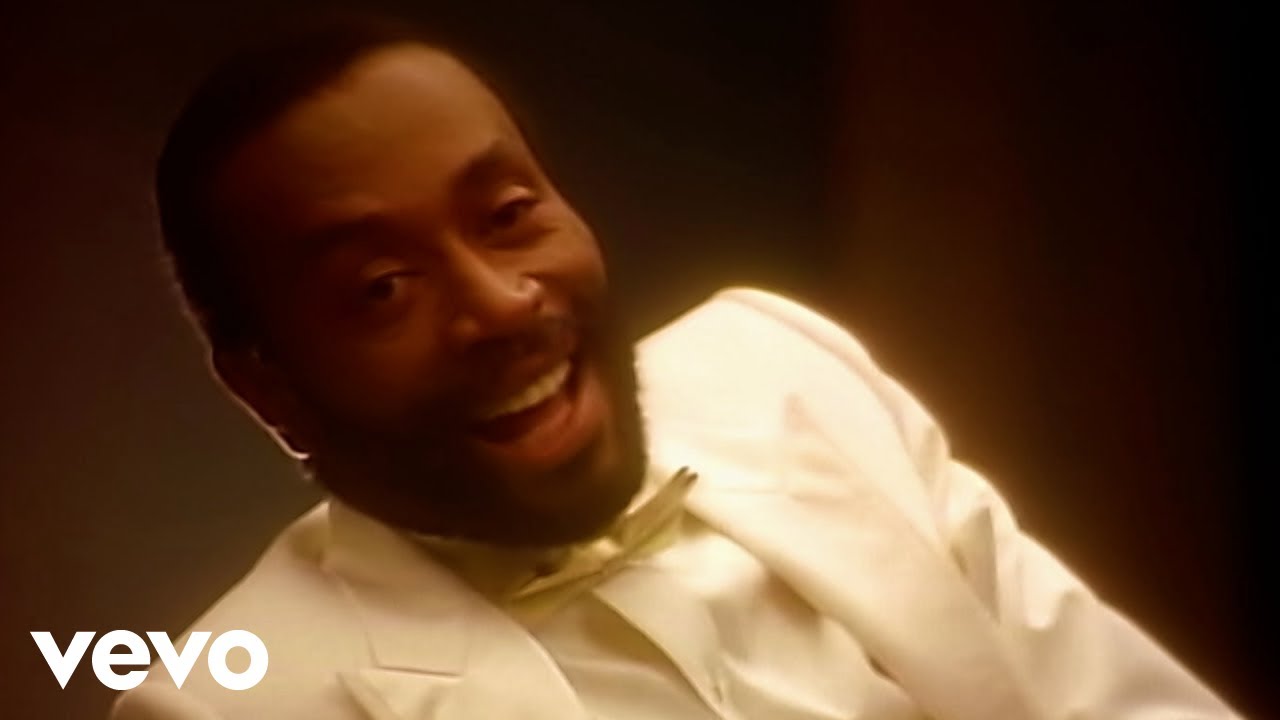
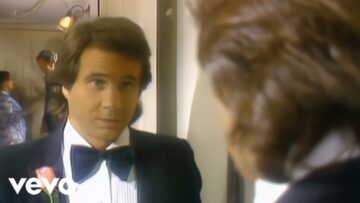
The music video, directed by Drew Takahashi, features Robin Williams and comedian Bill Irwin alongside McFerrin in various comedic scenarios — McFerrin playing a landlord, a lawyer, a lover, a jumping street musician. Williams, in 1988, was at the precise peak of his cultural omnipresence. Many, many people evidently think the song is a Bob Marley track — a confusion that persists to this day and says rather more about how most listeners process music than about the song itself. The song became an unofficial anthem in Jamaica after Hurricane Gilbert struck the island in September 1988, coinciding with the song’s release, causing months of hardship. A song recorded in Berkeley with a bad Spanish accent had become the comfort music of a Caribbean island dealing with a natural disaster. Pop music rarely maps its own geography so unexpectedly.
Then came the presidential campaign. The song was used in George H. W. Bush’s 1988 presidential election campaign without McFerrin’s permission or endorsement. Bush’s campaign invited McFerrin to have dinner with the vice president, and McFerrin declined. Instead, McFerrin, a Democrat, publicly endorsed Michael Dukakis, and the Bush campaign stopped using the song. McFerrin completely dropped the song from his own performance repertoire to make the point even clearer. The artist who had made the most optimistic record of the year refused to perform it because a political campaign had turned its message into a slogan for complacency. There was something clarifying about that decision — a man with a number one hit and three Grammys, pulling his own song from his setlist on principle. Critics who had savaged the record for being trivial were suddenly faced with an artist making a very serious point about a very trivial song.
McFerrin went on to conduct the Saint Paul Chamber Orchestra, record celebrated duet albums with Chick Corea and Yo-Yo Ma, and develop Circlesongs — a collective vocal experience in which audience members improvise alongside him in real time. He has won ten Grammy Awards across his career , most of them entirely unknown to the millions of people who know exactly one Bobby McFerrin song. The success of “Don’t Worry, Be Happy” gave him the privilege to be his own man, an artistic explorer, for the rest of his career — the one-hit wonder that paradoxically bought him complete creative freedom. The man who knocked Guns N’ Roses off number one with nothing but his voice has spent the decades since proving that was the least interesting thing he could do with it. Watch the video, read the full story at Music Videos Club — and try, if you can, not to sing along.
SONG INFORMATION