



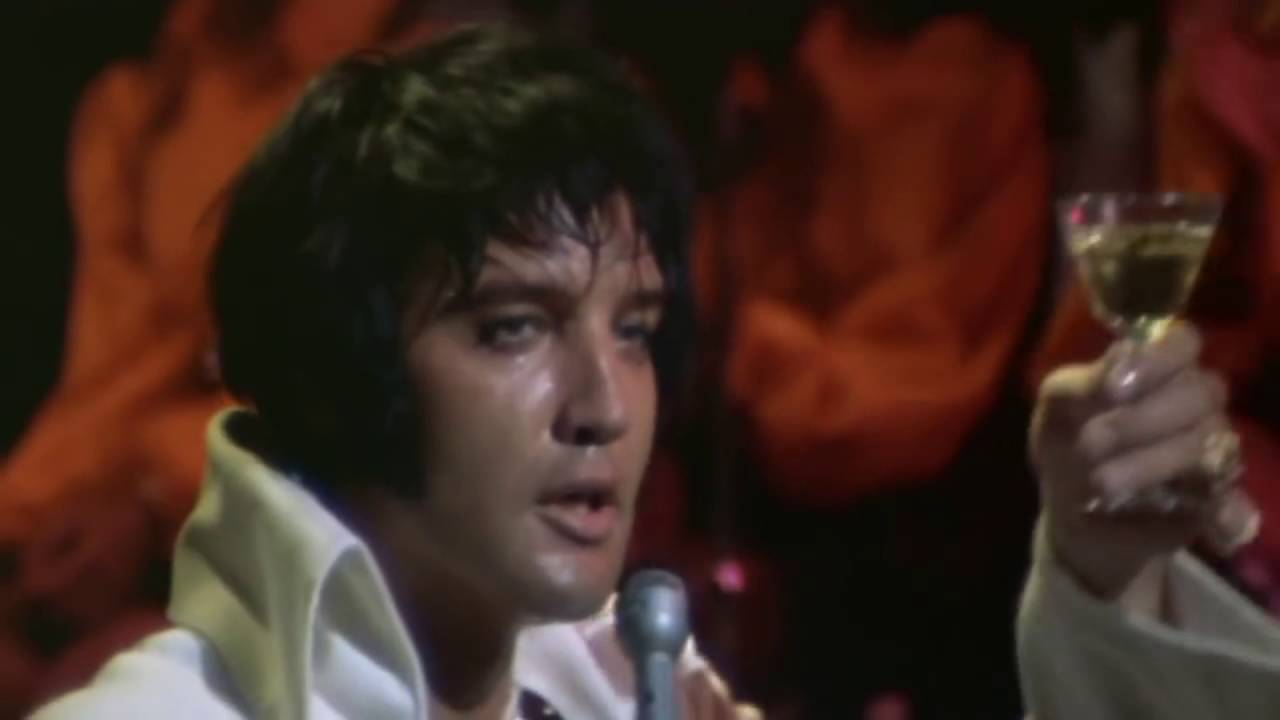






Elvis Presley – Always On My Mind
Elvis Presley walked into a Hollywood studio two weeks after separating from his wife and recorded a plea for forgiveness that three songwriters had built and two other singers had already tried — and made it permanently his.
On March 29, 1972, Elvis Presley arrived at RCA Studio C in Hollywood to record a song that was not new and not his. “Always on My Mind” had been written by Wayne Carson, Johnny Christopher, and Mark James, and by the time Elvis recorded it, two other singers had already put it on tape. Brenda Lee had cut it first; Gwen McCrae had been the first to release it commercially, in March 1972, under the title “You Were Always on My Mind.” Neither version had made much of an impression. What gave Elvis’s reading its weight was not the song’s novelty but his timing. He had separated from his wife Priscilla in February 1972, only weeks before the session, and the legal proceedings were already underway. By every account of that period, Elvis in early 1972 wanted to record only songs that matched his emotional situation — and “Always on My Mind,” a plea for forgiveness from someone who knows he has failed the person he loves, matched it exactly.
The song the three writers had built was deceptively simple. Wayne Carson had written most of it quickly at his kitchen table in Springfield, Missouri; the bridge came later, completed in the studio with the help of Johnny Christopher and Mark James when producer Chips Moman pointed out the song needed one. Christopher and James were not strangers to the Presley catalog — James had written “Suspicious Minds,” the song that had given Elvis his final No. 1 in 1969, and Christopher had played guitar on that recording. The lyric they assembled is built almost entirely on apology and acknowledgment: a confession of small failures — not enough kind words, not enough attention — wrapped around the repeated insistence that the love itself was never in doubt. It is a song about regret that arrives too late to fix anything, and Elvis sang it as a man who understood that arithmetic.
Two sides, two countries, two different hits
“Always on My Mind” was recorded at the same RCA Studio C sessions that produced “Separate Ways,” a song written by Elvis’s friend and bodyguard Red West with Richard Mainegra — a song so closely tied to Elvis’s own circumstances that it framed a separating couple explaining the situation to their daughter. The two recordings were paired together and released as a single on October 31, 1972, on RCA Victor. What happened next depended on which country the record was sold in. In the United States, “Separate Ways” was promoted as the A-side and “Always on My Mind” as the B-side; the single was later treated as a double-sided hit and reached No. 16 on Billboard’s Hot Country Singles chart in November 1972. In the United Kingdom, RCA reversed the sides — “Always on My Mind” became the A-side, and it climbed into the UK Top 10 in January 1973. Glen D. Hardin, the pianist and arranger who worked extensively with Elvis in this era, wrote the string and horn arrangements that frame the recording. The single was certified gold by the RIAA, and the budget compilation album RCA built around the pairing, also titled Separate Ways, has sold over three million copies worldwide in the decades since.
The recording has held up as one of the defining Elvis performances of the 1970s — a decade in which his film career had ended, his marriage was dissolving, and his recorded output was increasingly uneven. Rate Your Music’s reviewers have called “Always on My Mind” the standout of the single and, in more than one assessment, the last truly great artistic statement Elvis committed to record. The restraint is the reason. Elvis does not oversing it. The vocal sits inside Hardin’s arrangement rather than fighting it, and the performance trusts the lyric to do its own work — which, given what the lyric is about and what Elvis was living through in March 1972, it does.
The song that outgrew its first owner
“Always on My Mind” did not stop with Elvis. The song went on to become one of the most-recorded compositions in American popular music — AllMusic lists more than three hundred recorded releases. In 1982, Willie Nelson recorded a version that won three Grammy Awards, including Song of the Year, and became the definitive country reading of the song for an entire generation of listeners. In 1987, the Pet Shop Boys turned it into a synth-pop hit that reached No. 1 in the United Kingdom, demonstrating that the song’s architecture of regret could survive being moved into almost any genre. John Wesley Ryles, Brenda Lee, and dozens of others recorded it across the decades. But Elvis Presley’s was the first commercially successful version, the one that established the song as a vehicle for serious emotional weight rather than a forgettable album cut — and it remains, for many listeners, the recording against which every later version is measured. Elvis died on August 16, 1977, less than five years after the session. The song he had recorded two weeks into the end of his marriage outlived him by nearly half a century and shows no sign of being finished.
SONG INFORMATION
Related videos
 Watch LaterAdded
03:29
Watch LaterAdded
03:29  Watch LaterAdded
04:05
Watch LaterAdded
04:05  Watch LaterAdded
04:48
Watch LaterAdded
04:48