



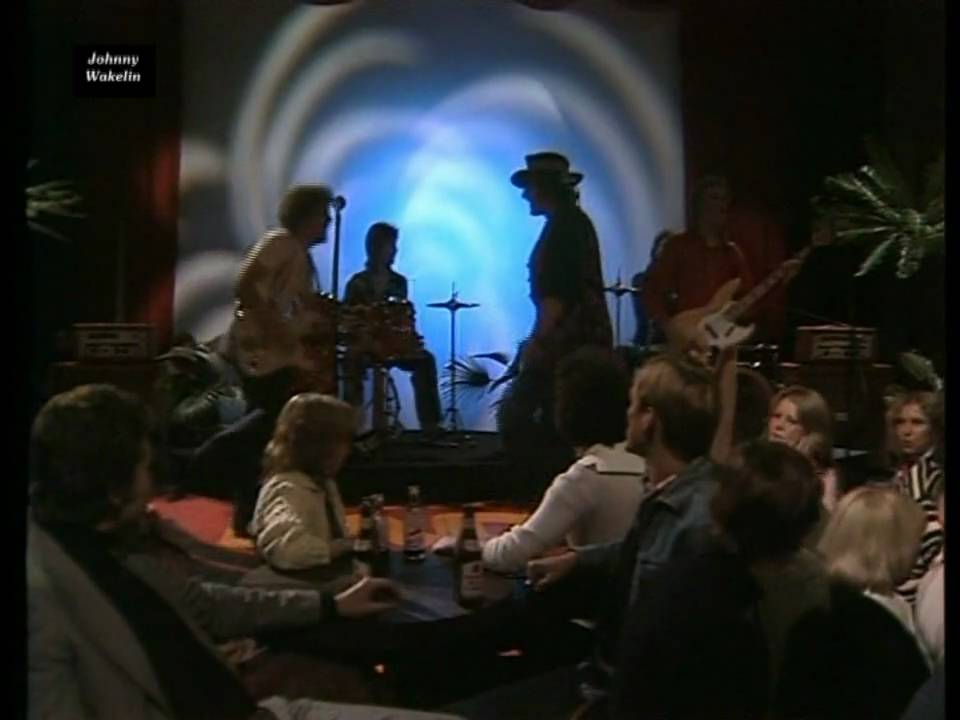





Johnny Wakelin – In Zaire
A Brighton Cabaret Singer’s Second Shot At Muhammad Ali
Johnny Wakelin released “In Zaire” in July 1976 as the title track from his debut album. The song peaked at number four on the UK Singles Chart in August 1976 and spent 10 weeks on the chart—climbing higher than his previous Muhammad Ali tribute “Black Superman” had managed. The single charted across Europe, becoming a substantial hit in Belgium, France, Germany, and the Netherlands. For an unassuming mustachioed singer from Brighton’s seaside cabaret circuit, this was vindication. What nobody expected was that a white English club singer would score two consecutive international hits celebrating a Black American boxing icon—especially since Muhammad Ali himself reportedly hated the first one.
The single became Wakelin’s biggest UK chart success, surpassing “Black Superman (Muhammad Ali),” which had peaked at number seven in January 1975. While “Black Superman” had reached number one in Australia and spent six months on the US Billboard Hot 100, eventually peaking at number 21, “In Zaire” achieved its greatest success in Europe. The song appeared on Wakelin’s debut album Reggae, Soul & Rock ‘n’ Roll, released in March 1976 on Pye Records. The album mixed disco, reggae, and soul influences—a sound that producer Robin Blanchflower had pioneered the previous year with Carl Douglas’ worldwide smash “Kung Fu Fighting.” After “In Zaire,” Wakelin released “Africa Man” and “You Turn Me On,” but neither matched his Ali-inspired hits. His final charting attempt, “Dr. Frankenstein’s Disco Party,” failed to catch on.
Wakelin wrote the song about the October 30, 1974 boxing match in Kinshasa, Zaire, where Muhammad Ali defeated George Foreman in eight rounds—the legendary bout known as The Rumble in the Jungle. The fight had captivated the world, with promoter Don King bringing together two undefeated heavyweight champions in what many considered the greatest sporting event of the decade. Wakelin’s lyrics celebrated Ali’s victory with a reggae-disco beat and crowd chants: “Muhammad, Muhammad Ali / He floats like a butterfly and stings like a bee.” The song captured the euphoria of Ali’s upset victory over the younger, stronger Foreman. Unlike “Black Superman,” which Ali allegedly refused to acknowledge, “In Zaire” was embraced by fans worldwide as a tribute to what many still consider the greatest boxing match ever staged.
The track was produced by Robin Blanchflower, Keith Rossiter, and Steve Elson—the same team behind Wakelin’s earlier work. Recording took place in 1975-1976, likely at Pye Studios in London, though specific session details remain scarce. The production featured prominent percussion, chanting vocals, and a hypnotic bassline that made it irresistible on European discotheques and radio. Wakelin layered his vocals over a driving rhythm section, creating what critics described as a perfect marriage of reggae and disco—two styles dominating mid-1970s dance floors. The B-side, “You Got the Bug,” was a funkier, more uptempo track that never gained traction but showed Wakelin’s range beyond novelty records. The single was released on Pye Records in the UK and licensed to various European labels including Ariola-Eurodisc in Germany and Disques Vogue in France.
Wakelin had been discovered performing in Brighton clubs by Robin Blanchflower, the Pye Records producer who’d already launched Carl Douglas to international stardom. Blanchflower recognized Wakelin’s gift for infectious, rhythm-driven pop with socio-political themes. Before his Ali tributes, Wakelin had released “Hungarian Superman (Joe Bugner)” in late 1972, honoring the Hungarian-born British-Australian boxer—but that single went nowhere. It took Muhammad Ali’s 1974 comeback to give Wakelin his breakthrough. His 1975 follow-up single “Cream Puff,” backed with “Gotta Keep on Going,” flopped despite being included on the Reggae, Soul & Rock ‘n’ Roll album. “In Zaire” marked his commercial peak—a moment when European audiences couldn’t get enough of Ali tributes set to disco beats.
The song has been remixed and re-released multiple times over the decades, with Wakelin recording several updated versions hoping to recapture the magic. Dance producers have sampled it, and it appeared on numerous disco and 1970s compilation albums. The track resurfaced during the 1996 Olympics when Muhammad Ali lit the torch in Atlanta, introducing the song to a new generation. When Ali died in 2016, both “Black Superman” and “In Zaire” experienced streaming surges as fans worldwide mourned the loss of the greatest boxer who ever lived. The songs appeared in documentaries about Ali’s career and the Rumble in the Jungle, cementing their place in boxing history.
For a cabaret singer from Brighton who’d never boxed a day in his life, Johnny Wakelin achieved something remarkable—he created the definitive musical tribute to Muhammad Ali’s greatest victory. While Ali himself may not have appreciated being called “Black Superman,” the world embraced Wakelin’s celebration of The Rumble in the Jungle. The fight took place in Zaire, but Wakelin’s song conquered Europe. Sometimes the most unlikely voices tell the stories that matter most. As Wakelin sang in the chorus: “We all come from Africa / We all love Muhammad Ali.” Forty-nine years later, that simple truth still resonates—and the song still makes you want to dance.
SONG INFORMATION
Related videos
 Watch LaterAdded
04:06
Watch LaterAdded
04:06  Watch LaterAdded
 Watch LaterAdded