


![The Score – Revolution: Lyrics [Assassins Creed: Unity]](https://musicvideosclub.com/wp-content/uploads/2025/10/the-score-revolution-lyrics-assa-360x203.jpg)





![Lady Antebellum – Silent Night [4K]](https://musicvideosclub.com/wp-content/uploads/2025/12/lady-antebellum-silent-night-4k-360x203.jpg)




![Sister Sledge – Hes the Greatest Dancer (Official Music Video) [4K]](https://musicvideosclub.com/wp-content/uploads/2025/09/sister-sledge-hes-the-greatest-d-360x203.jpg)
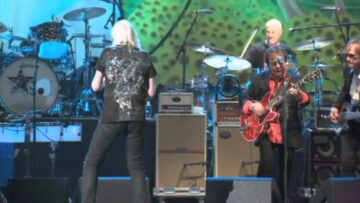


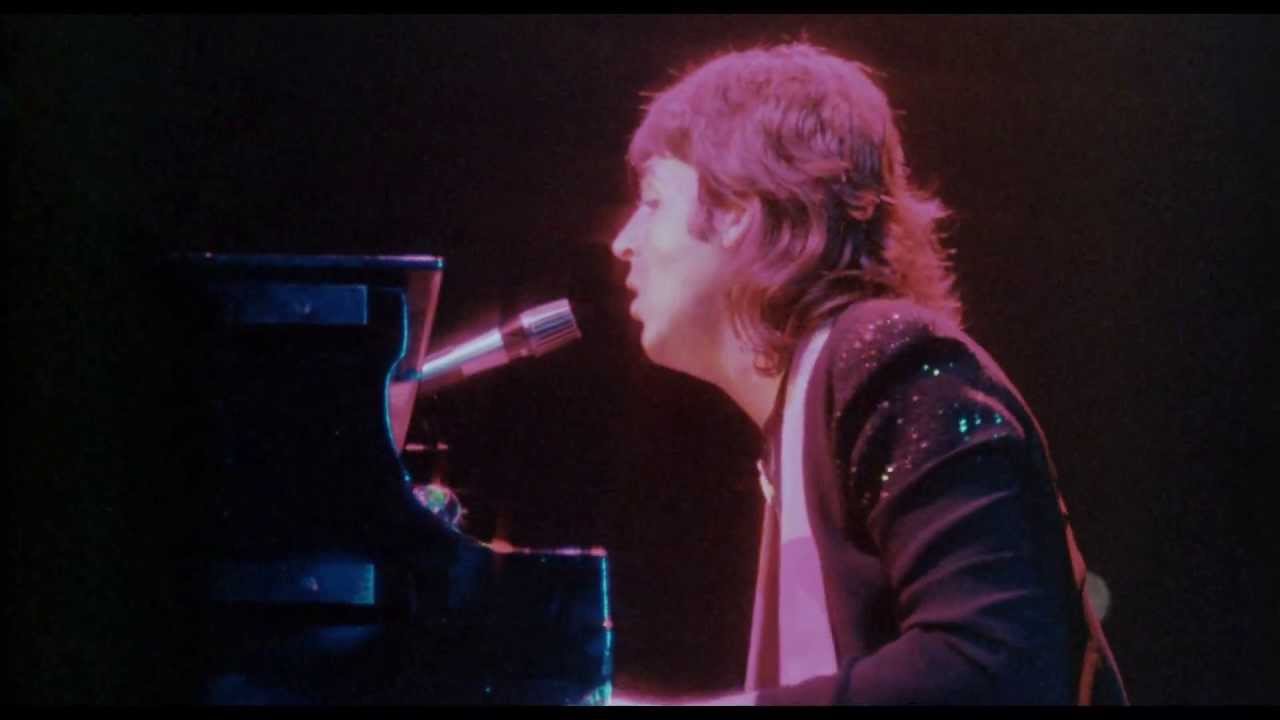




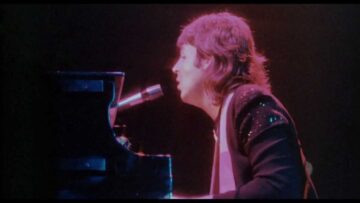
Paul McCartney And Wings – My Love (from Rockshow)
The Guitar Solo McCartney Hated Until The Guitarist Improvised His Own
Released on March 23, 1973, in the UK and April 9 in the United States, “My Love” climbed to number one on the Billboard Hot 100 on June 2, holding the top spot for four consecutive weeks and spending 18 weeks on the chart total. The song also topped Billboard’s Easy Listening chart for three weeks and reached number nine in the UK. On the same day it hit number one, the album Red Rose Speedway also reached the summit of the Billboard 200, making Paul McCartney and Wings the first act to simultaneously top both charts in 1973. The track earned gold certification on July 9 for sales exceeding one million copies and finished at number five on Billboard’s year-end Hot 100 singles chart for 1973. This was Wings’ first genuine American blockbuster, the song that finally convinced skeptics McCartney could succeed beyond The Beatles. What nobody at home knew was that guitarist Henry McCullough had improvised his twangy, emotional solo on the spot after refusing to play the version McCartney had written for him, creating a standoff that nearly ended with McCullough being fired before the recording was finished.
While “My Love” dominated American charts throughout the summer of 1973, George Harrison’s “Give Me Love (Give Me Peace on Earth)” finally knocked it from number one in late June, marking the first time since April 25, 1964, that Beatles members had occupied the top two positions, and the only time any of them achieved this as solo artists. In the UK, the song peaked at number nine during a chart run dominated by David Bowie’s “Drive-In Saturday” and Dawn’s “Tie a Yellow Ribbon Round the Ole Oak Tree.” The single became a Top 10 hit in Australia, Canada, New Zealand, and Norway, though British audiences remained cooler toward Wings than Americans. When Red Rose Speedway took over the number one album spot from The Beatles’ 1966-1970 compilation and was replaced by Harrison’s Living in the Material World, it completed a remarkable Beatles takeover of the American charts despite the band having disbanded three years earlier.
McCartney wrote the ballad as a love song to Linda during the uncertain early days of Wings, when critics savaged their debut album Wild Life and questioned whether Paul could function without John, George, and Ringo. Rob Sheffield later observed that both McCartney and Lennon started bands with their wives after The Beatles dissolved, something you couldn’t picture Mick Jagger and Keith Richards doing, but neither man had anything left to prove after becoming more famous than any human should be. Linda received co-writing credit despite Paul composing the melody and most of the structure, though the lyrics reflected their partnership. The song wandered through moony sweet nothings without traditional structure, lines about finding something in bare cupboards and building worlds with his love that critics found either charming or meaningless depending on their McCartney tolerance. Paul had been performing early versions during Wings’ 1972 college tours, including their public debut at Nottingham University on February 9, where Linda sang response lines to Paul’s lead vocal in an arrangement they later abandoned.
Recording sessions took place at Abbey Road Studios in January 1973 with a 50-piece orchestra arranged by Richard Hewson, who’d previously worked with McCartney on Mary Hopkin’s recordings. The lineup featured Paul on lead vocals, piano, and bass, Linda on backing vocals, Denny Laine on backing vocals and guitar, Henry McCullough on lead guitar, and Denny Seiwell on drums. Producer Glyn Johns had quit the Red Rose Speedway sessions months earlier after clashing with McCartney over the album’s direction, leaving Paul to produce it himself after endless weed-fueled jam sessions that Johns found indulgent. For the orchestral recording, McCartney brought in his old Beatles collaborator George Martin to oversee the string arrangement, though Hewson had done the actual work. The song was recorded live with the orchestra, giving it a sense of majesty that almost worked despite the meandering structure. McCullough had prepared to play the guitar solo McCartney had written and demonstrated for him, but when it came time to record, he stopped and told Paul he didn’t like it.
The confrontation became Wings legend. McCullough later described it as the first time anyone in Wings had challenged McCartney, an approach other band members had encouraged to make Wings feel like a genuine band rather than Paul’s backing group. McCullough suggested playing his own solo instead, something bluesier and more emotional than Paul’s version. McCartney resisted initially, but McCullough stood his ground, and Paul eventually relented. When McCullough improvised the twangy, soulful solo heard on the final recording, McCartney loved it immediately and admitted it was superior to what he’d written. McCullough later reflected it was a stroke of luck, a gift from God really, the kind of magic moment you get in music when everything aligns. The incident improved McCullough’s status within the band temporarily, though underlying tensions about musical direction and Linda’s inclusion would lead to McCullough and Seiwell both quitting in August 1973, just as Wings was preparing to record Band on the Run in Nigeria.
Red Rose Speedway, released on April 30, 1973, via Apple Records, became the first Wings album credited to Paul McCartney and Wings rather than Wings alone. The name change was made after the disappointing sales of Wild Life convinced EMI that the public didn’t realize McCartney’s involvement. The album was originally conceived as a double LP, but McCartney conceded to EMI’s opinion that much of the material was substandard and cut it down to a single disc. The nine-track album included “Big Barn Bed,” “Get on the Right Thing,” “Little Lamb Dragonfly,” “Single Pigeon,” and the medley of “Hold Me Tight,” “Lazy Dynamite,” “Hands of Love,” and “Power Cut.” Two tracks were leftovers from the Ram sessions. The album spent three weeks at number one on the Billboard 200 and eventually earned gold certification. Billboard praised it as McCartney’s best effort since the Beatles breakup, noting the tighter arrangements and stronger guitar work from McCullough and Laine compared to previous Wings releases.
Director Mick Rock filmed a promotional video for “My Love” that aired on two episodes of BBC’s Top of the Pops in April 1973, making it one of the earliest music videos from the era. Wings performed the song on the ABC-TV special James Paul McCartney on April 16, just days after it entered the Billboard Hot 100 at number 73. The band toured it extensively during their 1973 UK tour, though these performances became a source of frustration for McCullough. Adhering to a populist approach that clashed with McCullough’s blues sensibilities, McCartney insisted he reproduce the solo exactly as heard on the studio recording, denying him the freedom to improvise that had created the original magic. This conflict exemplified the broader tension within Wings between McCartney’s perfectionism and his sidemen’s desire for creative input. The live version on the Wings over America triple album featured Jimmy McCulloch, who replaced McCullough after his 1973 departure, playing a faithful recreation of the original solo.
Isaac Hayes and Dionne Warwick covered “My Love” for their 1977 live-duets album A Man And A Woman, transforming McCartney’s piano ballad into a soulful R&B duet. The song became a staple of McCartney’s solo concerts after Wings disbanded in 1981, appearing on live albums including Paul Is Live from 1993, Back in the World from 2002, and Good Evening New York City from 2009. McCartney has performed it on virtually every major tour since, making it one of his most frequently played post-Beatles compositions alongside “Maybe I’m Amazed” and “Band on the Run.” The song was included on the 1978 compilation Wings Greatest and the McCartney retrospectives All the Best! from 1987, Wingspan: Hits and History from 2001, and Pure McCartney from 2016. In 2022, the original single with live B-side “The Mess” was included in McCartney’s box set The 7″ Singles Box.
Linda McCartney, who Paul wrote the song for and who sang backing vocals on the recording, passed away on April 17, 1998, at age 56 after battling breast cancer. Paul later wrote “About You” on his 2001 album Driving Rain, expressing gratitude to his second wife Heather Mills for helping him grieve Linda’s death. When performing “My Love” after Linda’s passing, McCartney has acknowledged the song takes on deeper meaning, transforming from a declaration of present love into a memorial for a partnership that lasted 29 years. As McCartney reflected decades later, “My Love” was exactly what it appeared to be—a simple, sincere love song with no hidden depths or political statements, the kind of fluffy but heartfelt composition that critics either embraced or dismissed based on their tolerance for McCartney’s sentimental side. The genius of Henry McCullough’s improvised solo was that it added an unexpected emotional weight to lyrics that might otherwise have floated away on strings and sentimentality, grounding McCartney’s sweetness with blues-tinged humanity that made the whole thing believable.
SONG INFORMATION
Related videos
 Watch LaterAdded
 Watch LaterAdded
04:00
Watch LaterAdded
04:00  Watch LaterAdded
03:58
Watch LaterAdded
03:58