



![The Score – Revolution: Lyrics [Assassins Creed: Unity]](https://musicvideosclub.com/wp-content/uploads/2025/10/the-score-revolution-lyrics-assa-360x203.jpg)






![The Dead South – You Are My Sunshine [Official Music Video]](https://musicvideosclub.com/wp-content/uploads/2026/01/the-dead-south-you-are-my-sunshi-360x203.jpg)




![Sister Sledge – Hes the Greatest Dancer (Official Music Video) [4K]](https://musicvideosclub.com/wp-content/uploads/2025/09/sister-sledge-hes-the-greatest-d-360x203.jpg)





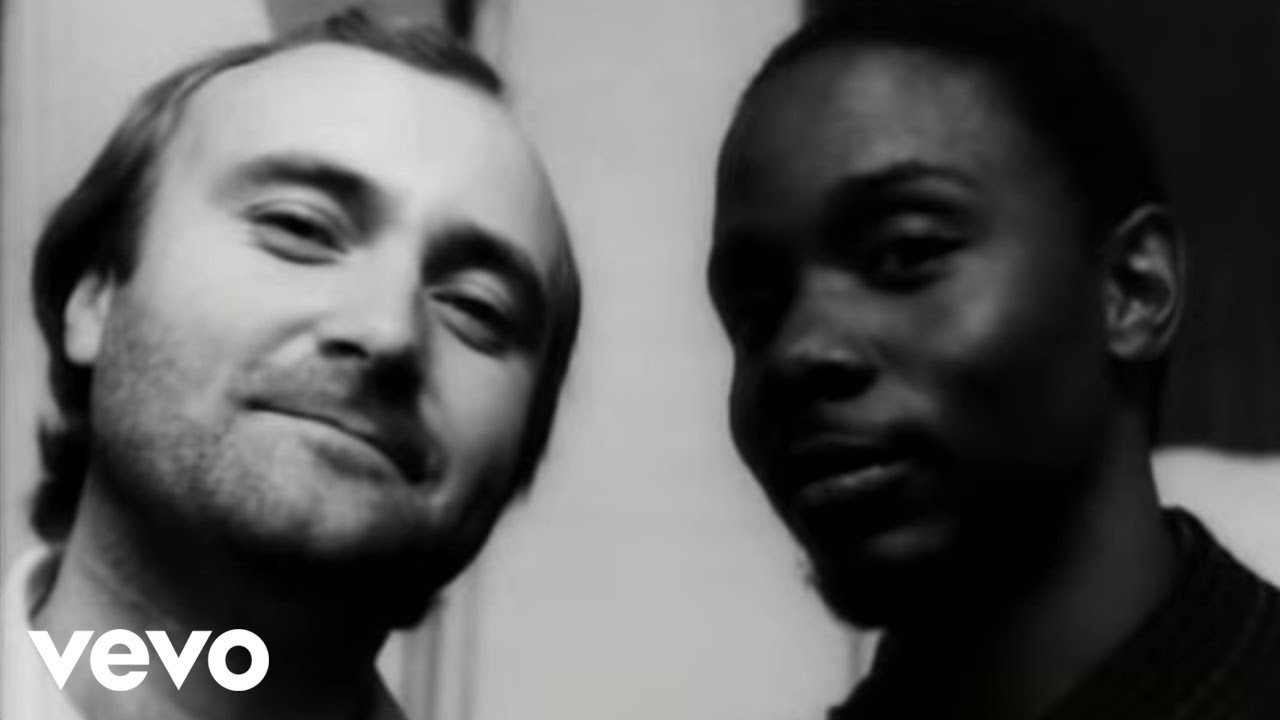




Philip Bailey & Phil Collins – Easy Lover
Written In Twenty Minutes On The Last Day Of Sessions
Released in November 1984 in the United States and late February 1985 in the UK, “Easy Lover” became one of the biggest hits of the mid-eighties, reaching number two on the Billboard Hot 100 for two consecutive weeks in February 1985, kept from the summit only by Foreigner’s “I Want to Know What Love Is.” In the UK, the song entered at number twenty on March 3, 1985, jumped to number two the following week behind Dead or Alive’s “You Spin Me Round (Like a Record),” then claimed the top spot on March 17 where it stayed for four consecutive weeks. What made this success particularly remarkable was that the entire song had been written and recorded in approximately twenty minutes at the end of a two-week recording session when Nathan East sat down at a piano and started fooling around with a riff, Bailey began singing what he thought was “Choosy Lover,” and Collins started chiming in with melodies until they realized they had something undeniable.
The single spent an extraordinary twenty-three weeks on the Billboard Hot 100, including seven weeks in the top ten and sixteen weeks in the top forty, becoming Philip Bailey’s only US top forty hit as a solo artist. The track topped the charts in Canada, the Netherlands, Ireland, and the United Kingdom, while reaching number two in Belgium, New Zealand, and number five in Germany. It sold over one million copies in the United States alone, earning gold certification under pre-1989 RIAA standards when platinum status still required two million units sold. The Chinese Wall album peaked at number twenty-two on the Billboard 200 and number ten on the Billboard Top R&B/Hip-Hop Albums chart, eventually achieving gold certification. The song competed against Madonna’s “Like a Virgin,” Wham!’s “Careless Whisper,” and Prince’s “Let’s Go Crazy” for airplay, yet managed to outlast them all through sheer crossover appeal that transcended racial and genre boundaries.
The songwriting happened at the very end of two weeks of sessions at the Townhouse Studios in London during spring 1984. Phil Collins had been producing Philip Bailey’s Chinese Wall album after completing Eric Clapton’s Behind the Sun earlier that year, with Nathan East providing bass throughout the sessions. Bailey approached Collins one day near the end expressing concern that the album still didn’t have that undeniable single that the record label would instantly pick. East went over to the piano and started fooling around with the main riff, Bailey started singing the verse, and Collins began adding melodies. In approximately twenty minutes, they had what they considered a demo. Bailey later recalled walking around singing “Choosy Lover” over the piano chords, though the final title became “Easy Lover.” The lyrics painted a vivid picture of an alluring, free-spirited woman who plays around with men, reeling them in before breaking hearts and quickly moving on to the next lover. The warning became the hook: she’s an easy lover, she’ll get a hold on you, believe it.
The recording session captured lightning in a bottle. They laid down what they thought was a rough version just to remember the song, intending to re-record it properly the next day. When they listened back, they realized there was nothing wrong with the original take. They tried recording it again, but according to Bailey, they kept the original version because it had an energy impossible to replicate. Collins played drums using his signature gated reverb sound that had become his trademark, with the heavy echo-beat dominating the track. Daryl Stuermer, Genesis’s longtime touring guitarist who also played on Collins’ solo albums, contributed lead and rhythm guitar parts. East handled bass duties, creating a groove that Collins later described as not black music and not white music, calling it an interesting color of beige. The production blended rock, pop, and funk into an infectious sound with dynamic vocal interplay between Bailey’s soaring falsetto and Collins’ grittier mid-range, creating harmonies that showcased both singers’ strengths without either dominating.
Chinese Wall was Philip Bailey’s third solo album, released in October 1984 on Columbia Records. The album marked Bailey’s biggest solo success despite creating controversy within the Black music community. Collins later explained that Bailey received substantial criticism for being produced by someone who is white, noting there was paranoia that the album would not be played by Black radio stations. The racial politics of the collaboration were complicated, with Collins acknowledging that the reason he appeared in the video for “Easy Lover” was because he knew it wouldn’t be shown if it was just Phil Bailey. The album had experienced a rocky start during rehearsals, with Collins feeling Bailey was confiding more in bassist Nathan Watts than in him as producer, and they were trying to make an R&B record at first which Collins wasn’t comfortable with. Bailey eventually agreed to make an album of what they did best rather than a pure R&B record. The gamble paid off commercially, with follow-up single “Walking on the Chinese Wall” reaching number forty-six on the Hot 100 and number thirty-four in Britain.
The music video won the 1985 MTV Video Music Award for Best Overall Performance in a Video and earned a nomination for an American Music Award in the category of Favorite Pop/Rock Video. Directed by Jim Yukich and produced by Paul Flattery, the video was filmed at Etward Studios in London and humorously depicted the making of a music video. The opening featured Collins and Bailey in a helicopter flying above London before transitioning to a behind-the-scenes setup showing the pair rehearsing choreography and trying to perfect different dance moves. The lighthearted, self-aware approach matched the track’s upbeat energy, with both performers clearly having fun rather than taking themselves too seriously. The video received heavy MTV rotation, introducing the song to audiences who might not have heard it on radio. Collins later told Rolling Stone that the hip-hop brigade fell in love with him after “Easy Lover,” noting they were surprised by a track that defied easy categorization.
The song spawned numerous covers and remixes across multiple decades. A 12-inch extended dance remix by John Potoker was released in 1984, running six minutes eighteen seconds and becoming a disco and club staple despite Phil Collins’ general absence from dance floors. The remix helped the track reach number fifteen on Club Play Singles chart. James Last incorporated it into his 1985 medley work, while Paul Mauriat’s orchestra recorded an instrumental version. Spectrum created a cover in the late eighties, followed by the Evening Star Orchestra’s interpretation. Danish group Party Animals delivered their version, while various tribute acts and lounge performers kept it alive through the nineties and beyond. Collins himself performed the song regularly in his solo concerts, with the track appearing on his 1990 live album Serious Hits… Live! featuring Fred White and Arnold McCuller sharing Bailey’s vocal parts, his 1998 compilation …Hits, and his 2016 career-spanning collection The Singles. Bailey continued performing it as well, making it a centerpiece of his solo shows separate from Earth, Wind and Fire repertoire.
The track earned a Grammy nomination for Best Pop Performance by a Duo or Group With Vocals at the 28th Annual Grammy Awards in 1986, though it lost to USA for Africa’s “We Are the World.” The Chinese Wall album received a nomination for Best R&B Vocal Performance, Male, demonstrating the crossover confusion the collaboration created within award categories. Looking back, Nathan East reflected on the session with pride, noting how the bass player-drummer love affair between himself and Collins was being set up over those two weeks, making the final jam session feel natural rather than forced. Phil Collins called it a song that doesn’t sound like any particular era, just fantastic, a timeless quality that kept it relevant decades after release. The track appeared in numerous films and television shows including a memorable scene in Ryan Murphy’s The Assassination of Gianni Versace: American Crime Story, where Darren Criss as Andrew Cunanan dances half-naked to the song while his victim suffocates, creating a shocking juxtaposition between the track’s upbeat energy and the dark subject matter. Four decades on, “Easy Lover” stands as proof that sometimes the best songs are the ones written in twenty minutes at the end of a session when nobody’s trying too hard and the chemistry is just right.
SONG INFORMATION
Related videos
 Watch LaterAdded
05:02
Watch LaterAdded
05:02  Watch LaterAdded
02:15
Watch LaterAdded
02:15  Watch LaterAdded
02:23
Watch LaterAdded
02:23