



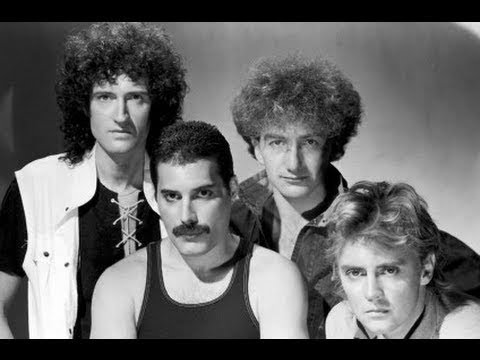




Queen and David Bowie – Under Pressure (Official Video)
Twenty-Four Hours Of Wine And Cocaine, Then Bowie Threatened To Block Its Release
“Under Pressure” was released on October 26, 1981 as a standalone single, later appearing on Queen’s tenth studio album Hot Space in May 1982. The song hit No.1 on the UK Singles Chart, becoming Queen’s second UK chart-topper and David Bowie’s third, while peaking at No.29 on the US Billboard Hot 100 and charting in the top 10 in over 10 countries worldwide. What most fans don’t know: the entire collaboration happened by accident when Bowie dropped by Mountain Studios in Montreux, Switzerland to visit Queen during a marathon 24-hour session fueled by wine and cocaine—and then Bowie and Freddie Mercury fought so viciously over the final mix at Power Station Studios in New York that Bowie threatened to block the song’s release entirely. Engineer Reinhold Mack had to call Mercury in as a mediator, pleading for help.
The chart performance surprised everyone, given that the song arrived without an album to support it. “Under Pressure” entered the UK chart at No.8 on November 7, 1981, then climbed to No.1 for two consecutive weeks starting November 21, 1981—the same day Queen’s Greatest Hits album was spending its second week at No.1. The double chart domination marked only the second time in UK history that two previous chart-topping artists had collaborated on a new No.1 single—the first being Frank and Nancy Sinatra’s “Somethin’ Stupid” in 1967. Rolling Stone readers later voted it the second-best collaboration of all time, and in 2021, Rolling Stone ranked it No.429 on their list of the 500 Greatest Songs of All Time. VH1 placed it at No.31 on their 100 Greatest Songs of the ’80s. This success came during Queen’s transition from progressive rock toward a more funk and disco-influenced sound that would define Hot Space.
The song wasn’t supposed to exist. Queen had been working on a track called “Feel Like,” written by drummer Roger Taylor, but they weren’t satisfied with it. Bowie, who owned a house near Mountain Studios, dropped by one evening while Queen were recording. The original plan was for Bowie to sing backing vocals on “Cool Cat,” but according to Taylor: “David came in one night and we were playing other people’s songs for fun, just jamming. In the end, David said, ‘This is stupid, why don’t we just write one?'” What followed was a marathon session lasting nearly 24 hours, fueled—according to Mark Blake’s book Is This the Real Life?: The Untold Story of Freddie Mercury and Queen—by copious amounts of wine and cocaine. John Deacon locked into that now-legendary bassline, and Brian May remembered Bowie reaching over to Deacon and saying “No, don’t do it like that,” prompting Deacon to snap back: “Excuse me? I’m the bass player, right? This is how I do it!” The track was credited to all five musicians—Mercury, May, Taylor, Deacon, and Bowie—though Deacon later claimed Mercury was the primary musical songwriter.
Recording took place at Mountain Studios in Montreux, Switzerland in September 1981 (some sources say July), with vocals and mixing completed weeks later at Power Station Studios in New York. Bowie introduced an avant-garde vocal construction method where everyone went into the booth with no ideas or notes and sang the first thing that came into their heads over the backing track. They then compiled the improvised bits and pieces into the final vocal arrangement—which explains the scat singing that dominates much of the song. Mercury and Bowie traded vocal parts with fierce intensity, their voices intertwining in what May later described as “a fierce battle.” The original title was “People on Streets,” but Bowie insisted on changing it to “Under Pressure.” When mixing time came, Bowie demanded to be present at Power Station. According to engineer Reinhold Mack: “It didn’t go too well. We spent all day and Bowie was like, ‘Do this, do that.’ In the end, I called Freddie and said, ‘I need help here,’ so Fred came in as a mediator.” Mercury and Bowie argued ferociously over the final mix—at one point, Bowie threatened to block the song’s release entirely. May admitted years later: “I found it very hard because I got so little of my own way. But David had a real vision and he took over the song lyrically.” Much of May’s heavier guitar work was stripped back and replaced with earlier acoustic takes, leaving him dissatisfied with the mix for years.
“Under Pressure” was released as a standalone single on EMI in the UK and Elektra in the US, with the B-side “Soul Brother”—an R&B-influenced slow burner that wouldn’t appear on an album until the 2011 expanded edition of Hot Space. The single took the record-buying public by surprise since it wasn’t attached to any existing album. When Hot Space finally arrived in May 1982, the track appeared alongside other singles like “Body Language” (which hit No.11 in the US), “Las Palabras de Amor” (No.17 in the UK), and “Calling All Girls.” The album peaked at No.4 in the UK and No.22 in the US, earning mixed reviews for its funk and disco direction. Queen performed “Under Pressure” live at every concert from 1981 until the end of their touring career in 1986. Live versions appear on Queen Rock Montreal and Live at Wembley ’86. Notably, Mercury and Bowie never performed it together live—not even at Live Aid in 1985, despite playing back-to-back sets.
The song’s afterlife proved as dramatic as its creation. In 1990, Vanilla Ice released “Ice Ice Baby,” sampling Deacon’s iconic bassline without permission or credit. When Freddie Mercury heard it while eating breakfast, he was more bemused than angry—but he immediately called Queen’s manager Jim Beach, who contacted attorneys. Vanilla Ice famously claimed the basslines were different because he’d added an extra beat, insisting they were “not the same”—a defense he later admitted was him being “a jackass.” The case settled out of court for an undisclosed sum, with Bowie and all four Queen members receiving songwriting credits on “Ice Ice Baby.” Years later, Vanilla Ice revealed he’d paid $4 million to purchase the publishing rights to “Under Pressure,” claiming it was cheaper than continuing to pay royalties. The case became a landmark copyright precedent for the emerging hip-hop sampling culture.
After Mercury’s death in 1991, Bowie performed “Under Pressure” at virtually every concert for the rest of his career, with bassist Gail Ann Dorsey taking Mercury’s vocal parts. During his 2004 A Reality Tour, Bowie frequently dedicated the song to Freddie Mercury. Queen + Paul Rodgers performed it, as did Queen + Adam Lambert starting in 2012. Brian May reflected years later: “‘Under Pressure’ is a significant song for us, and that is because of David and its lyrical content. I would have found that hard to admit in the old days, but I can admit it now. But one day, I would love to sit down quietly on my own and re-mix it.” That day never came before May’s touring commitments resumed. Sonny and Cher performed their signature duet one final time in 1987, Bowie sang this one final time with Mercury’s spirit hovering over every show—and for one marathon night in a Swiss studio in 1981, five precocious boys created something that transcended ego, outlasted arguments, and survived even a threat to block its release. The pressure, it turned out, produced diamonds.
SONG INFORMATION
Related videos
 Watch LaterAdded
 Watch LaterAdded
04:47
Watch LaterAdded
04:47  Watch LaterAdded
04:41
Watch LaterAdded
04:41