









![Fleetwood Mac – Rhiannon (Official Music Video) [HD Remaster]](https://musicvideosclub.com/wp-content/uploads/2025/01/fleetwood-mac-rhiannon-official-360x203.jpg)


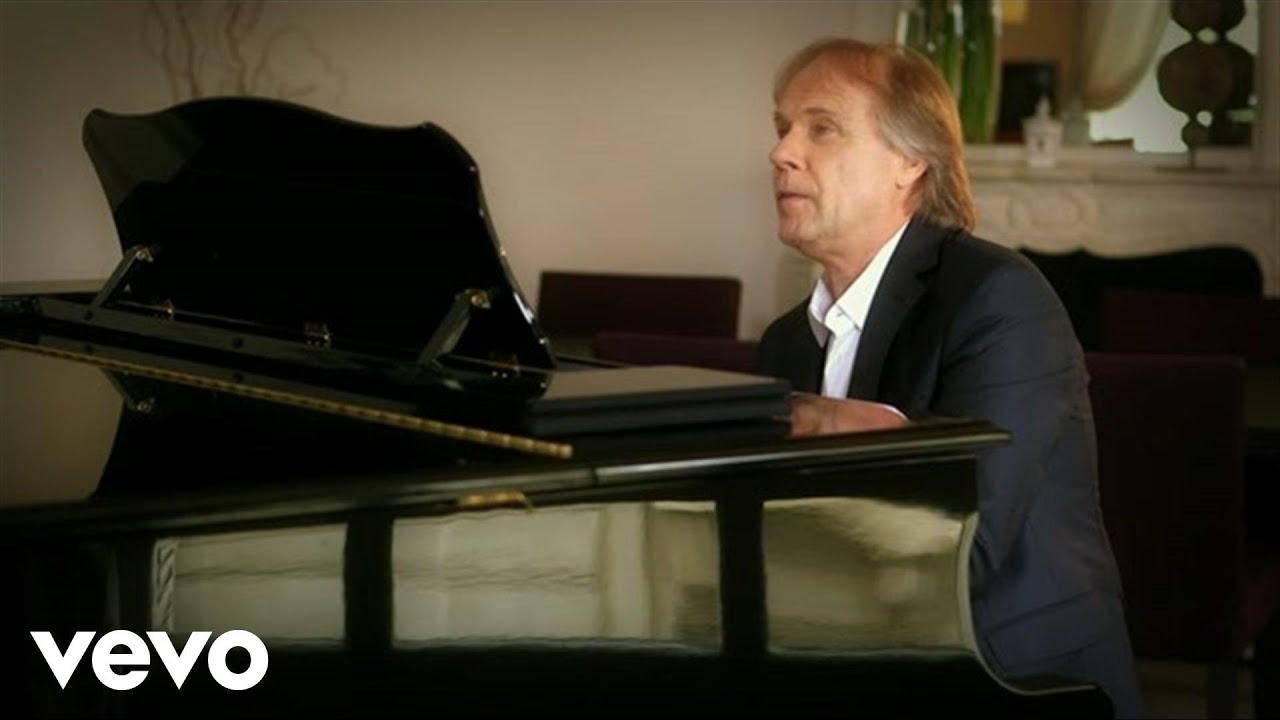
Richard Clayderman – Ballade Pour Adeline
The Bank Clerk Who Beat Twenty Pianists For A Father’s Love Letter
Released in 1977 as a single and title track of Richard Clayderman’s debut album, “Ballade pour Adeline” became one of the most commercially successful instrumental recordings in music history, selling 22 million copies in 38 countries by 2020. The gentle piano ballad reached number one in Argentina and charted across Europe, Asia, and Latin America, establishing the 23-year-old Parisian as the world’s most successful easy listening pianist. Composer Paul de Senneville had written the piece as a lullaby for his newborn daughter Adeline, never imagining it would transform both his career and that of an unknown bank clerk named Philippe Pagès. Producer Olivier Toussaint later admitted he’d told Clayderman he’d be thrilled if they sold 10,000 singles because disco dominated 1977 and nobody could imagine a piano ballad becoming a phenomenon. The song changed the trajectory of instrumental music, proving that romantic piano could conquer pop charts during the height of Studio 54 and Saturday Night Fever.
While “Ballade pour Adeline” never cracked the UK or US Top 40, it achieved massive success in territories where easy listening thrived. The song became a cultural touchstone across Europe, South America, and Asia, with particularly strong sales in Germany, France, Spain, and Japan. The album Ballade pour Adeline featured both an orchestral version running two minutes and 38 seconds and a piano solo version lasting two minutes and 42 seconds, along with tracks like “Secret of My Life,” “L’enfant et la mer,” and “Lys River.” Clayderman’s career exploded overnight, leading to over 90 million records sold worldwide across more than 1,300 recorded melodies. He earned 267 gold discs and 70 platinum certifications, becoming what one German journalist called the man who has arguably done more to popularize the piano around the world than anyone since Beethoven. Nancy Reagan dubbed him The Prince of Romance, a nickname that stuck for decades.
The song’s origin story reads like a fairytale. Philippe Pagès was born on December 28, 1953, in Paris, the son of a piano teacher who began training him at age five. By age six, Pagès could read music more fluently than French. At twelve he entered the prestigious Conservatoire de Paris, winning first prize at sixteen and seeming destined for a classical career. Then his father fell ill, and financial realities shattered those dreams. Pagès abandoned classical ambitions to support his family, taking work as a bank clerk while accompanying French singers like Johnny Hallyday, Thierry Le Luron, and Michel Sardou. He even formed a rock band with friends but nearly destroyed his health eating nothing but sandwiches, requiring ulcer surgery at seventeen. In 1976, producer Olivier Toussaint called Pagès about an audition for a piano recording. Toussaint and his partner Paul de Senneville needed someone to perform a ballad de Senneville had written for his newborn daughter.
Twenty pianists auditioned for the job at Delphine Records, the label de Senneville and Toussaint had founded and named after de Senneville’s first daughter. Philippe Pagès arrived nervous and uncertain, convinced he had no chance. Then he sat at the piano and began playing. De Senneville later recalled being struck immediately by Pagès’ special and soft touch on the keyboards, combined with his reserved personality and good looks. The decision was instantaneous. They hired Pagès on the spot but insisted on changing his name because Philippe Pagès was too difficult to pronounce outside France. Pagès adopted his great-grandmother’s surname, becoming Richard Clayderman. The recording sessions were straightforward, with Clayderman’s delicate touch paired with lush string arrangements, acoustic guitar, bass, and gentle percussion. De Senneville’s composition was deceptively simple—19 bars divided into three sections following an extended binary structure with antecedent and consequent phrases that created a perfect lullaby framework. The melody was so memorable that listeners could hum it after one hearing.
The Ballade pour Adeline album arrived in 1977 on Delphine Records, distributed by various labels including Teldec in Germany and other territories. The eleven-track album showcased Clayderman’s trademark style—romantic piano melodies supported by orchestral arrangements that never overwhelmed the keyboard. Beyond the title track, the album featured compositions by de Senneville and Toussaint that would become staples of Clayderman’s repertoire. Over the following decades, de Senneville composed approximately 400 melodies specifically for Clayderman, with Toussaint and Jean Baudlot serving as composition partners. The album established the template Clayderman would follow for over 40 years—instrumental renditions of popular music, rearrangements of movie soundtracks, easy-listening versions of classical works, and original compositions that blended accessible melodies with sophisticated arrangements. The success allowed Clayderman to tour relentlessly, performing over 200 concerts annually at his peak, becoming a fixture in concert halls from Manila to Moscow.
Jean-Claude Borelly, the French trumpeter, recorded his own version in the early 1980s using the same instrumental backing track as Clayderman’s original, swapping trumpet for piano on the melody line. In 1999, Clayderman recorded a duet with guitarist Francis Goya for their collaborative album Together, again utilizing the original backing track. A new arrangement appeared on Clayderman’s 2007 album A Thousand Winds, celebrating the piece’s 30th anniversary with updated string arrangements by Olivier Toussaint. The ballad transcended music to become cultural shorthand for romance and nostalgia. Casio used it as the demo song for their CT-650 keyboard in 1989. Filipino television program Lovingly Yours, Helen made it the theme music from 1980 to 1996. India’s Kingfisher Airlines played it as their signature tune during pre-departures and post-arrivals. The German film Goodbye Berlin featured it repeatedly during the protagonists’ road trip, while the German crime series The Old Fox used it in episode 21, first broadcast November 24, 1978.
Clayderman’s career spans five decades and shows no signs of slowing. He performs approximately 600 concerts worldwide and has toured every continent except Antarctica. Despite recording over 230 albums, “Ballade pour Adeline” remains his signature piece, the composition audiences demand at every performance. As Clayderman reflected in interviews, he’s simply an interpreter rather than a composer, working closely with de Senneville and Toussaint to add his personal style and sensitivity to their melodies. The piece perfectly encapsulates what made Clayderman a global phenomenon—technical precision combined with emotional warmth, sophisticated enough for concert halls yet accessible enough for airport lounges. Paul de Senneville’s love letter to his daughter Adeline became a love letter to the entire world, proving that sometimes the most personal expressions of affection resonate universally. “Ballade pour Adeline” transformed a struggling bank clerk into The Prince of Romance and gave millions of listeners a soundtrack for their most tender moments.
SONG INFORMATION
Related videos
 Watch LaterAdded
03:27
Watch LaterAdded
03:27 ![Bruno Mars – Risk It All [Official Music Video]](https://musicvideosclub.com/wp-content/uploads/2026/02/bruno-mars-risk-it-all-official-360x203.jpg) Watch LaterAdded
Watch LaterAdded
 Watch LaterAdded