



![David Lee Roth – California Girls (Official Video) [HD]](https://musicvideosclub.com/wp-content/uploads/2026/10/david-lee-roth-california-girls-360x203.jpg)

Sheena Easton – For Your Eyes Only
The Lyricist Had “For Your Eyes Only” as the Final Line — and Only the Final Line. Maurice Binder Complained He Couldn’t Synchronise the Title Reveal. Conti Rewrote the Whole Song to Open With It. Blondie Had Already Been Rejected. Sheena Easton Was Twenty-Two.
The phrase was supposed to be the ending. Mick Leeson — Sheena Easton’s regular collaborator, who had co-written her 1980 UK single “One Man Woman” — was Bill Conti’s choice as lyricist for the new Bond theme, a selection Conti later explained was driven by Easton’s own preference: she had worked with him before, she trusted him, and that relationship was worth preserving. Leeson approached the assignment the way any careful lyricist approaches a title that carries specific built-in weight — with the conviction that “for your eyes only” was a conclusion rather than an opening, a phrase that earned its impact by arriving at the end of an emotional argument rather than announcing itself at the start. He wrote the lyric accordingly, threading the four words into the final line, and sent it to Conti. Maurice Binder, the title sequence designer who had created the visual language of the Bond franchise from Dr. No onward, looked at what he had been given and had a specific practical complaint: he could not synchronize the unveiling of the film’s title in the opening credits with the moment the lyric delivered it, because the moment arrived too late. Conti went back to Leeson. They rewrote the song from the beginning, so that “for your eyes only” opened it instead of closing it. The version that exists on record and on screen — the one that begins with the title phrase, the one that Easton sang in the opening credits of the twelfth James Bond film — is the solution to a synchronisation problem that Binder identified before a single frame was shot.
The path to Easton had itself been circuitous. Blondie — whose “Call Me,” produced by Giorgio Moroder for American Gigolo, had topped the charts in both the UK and US in 1980 — was the commercially obvious choice, and the band was commissioned to write a Bond theme. Their version of “For Your Eyes Only” was submitted and rejected by producer Albert “Cubby” Broccoli, who did not rate it. Debbie Harry and Chris Stein eventually released the song on Blondie’s 1982 album The Hunter, where it can still be heard. Meanwhile, Conti had been thinking about the kind of voice the Bond tradition required and had landed on Donna Summer and Dusty Springfield as his ideals — singers he felt fit the style, the scale, the emotional register. United Artists, the film’s US distributor, had a different suggestion. Sheena Easton, the twenty-two-year-old Scottish singer from Bellshill, Lanarkshire, had just taken “Morning Train (Nine to Five)” to number one on the Billboard Hot 100. The label thought she was the right momentum, the right moment, the right voice. Conti listened to her debut album Take My Time and was not immediately convinced. He agreed to meet her in person anyway. That meeting changed his mind. Easton was, he concluded, a really good singer — and what she could do with the material was something her recorded discography up to that point had not fully demonstrated.
The Opening Credits and What They Made Permanent
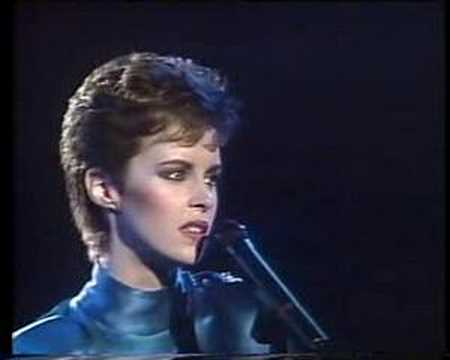
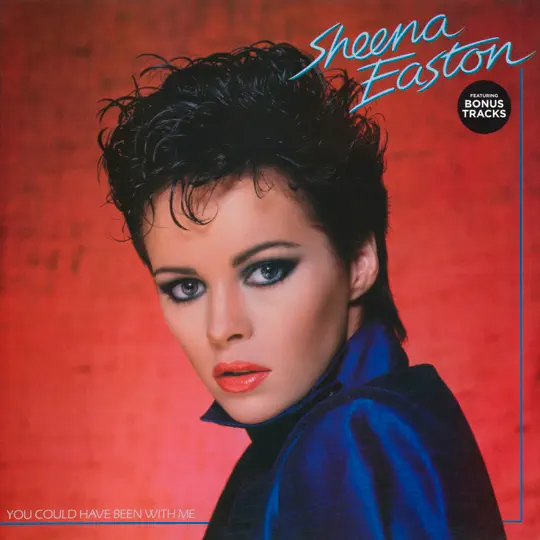
The recording was produced by Christopher Neil — Easton’s regular producer, who had worked on Take My Time and who understood the particular qualities of her voice well enough to frame them precisely. The arrangement that Conti built around the vocal replaced the brassy orchestral swagger that had defined earlier Bond themes with something more restrained and electronic: synthesisers underpinning the lush strings, the rhythm section present but never imposing, a production approach that matched the film’s own tonal shift toward a grittier, more grounded version of Bond after the Roger Moore era’s more flamboyant excesses. Derek Watkins played a flugelhorn solo on the B-side instrumental version. The single was released on June 24, 1981, at the film’s UK premiere at the Odeon Leicester Square. The picture sleeve carried Bond-themed imagery alongside a photograph of Easton, and the connection between the singer and the film was unusually direct from the first moment of release — because Maurice Binder had looked at Easton during production and made a decision that no Bond title designer had made before. He liked her appearance. He built her into the opening credit sequence. Sheena Easton became the only artist in Bond history — and to date, still the only one — to be seen on screen singing the Bond theme during the film’s opening titles. The visual arrangement of the sequence placed Easton’s face and silhouette among the trademark Binder imagery of swimming female figures and gun barrels, making her simultaneously the performer of the song and a figure within the film’s own aesthetic language.
The commercial results confirmed United Artists’ instincts. In the United States the single entered the Billboard Hot 100 at number 83 on July 19, 1981, climbed steadily across twelve weeks, and peaked at number four on October 11 — where it held for four consecutive weeks, spending twenty-five weeks on the chart in total. It reached number six on the Adult Contemporary chart. In the United Kingdom it peaked at number eight. It went to number one in the Netherlands, Norway, and Switzerland, and reached the top five in Germany, France, Austria, Canada, New Zealand, and Australia. The Academy of Motion Picture Arts and Sciences nominated it for Best Original Song at the 54th Academy Awards — where it lost to “Arthur’s Theme (Best That You Can Do)” from Arthur, the Christopher Cross recording that had been holding the number one position on the Billboard Hot 100 on the very day “For Your Eyes Only” peaked at number four. The song also received a Golden Globe nomination for Best Original Song at the 39th ceremony in 1982. It was, across all the metrics available, one of the most successful Bond themes ever recorded, and its success contributed directly to Easton winning the Grammy Award for Best New Artist at the 24th Annual Grammy Awards in February 1982 — an acknowledgment of a year in which she had placed at the top of the American charts twice, in entirely different contexts.
The Youngest, and Then Not
Easton was twenty-two years old when the single was released, making her the youngest artist ever to perform a Bond theme — a record she held for thirty-nine years, until Billie Eilish recorded “No Time to Die” in 2020 at the age of eighteen. The comparison is instructive in both directions. Eilish’s recording is a deliberate embrace of vulnerability and interiority — a Bond theme built around whisper and weight rather than the traditional soaring vocal statement. Easton’s is the opposite: a voice that builds through the song, that deploys its full range as the arrangement expands, that treats the Bond tradition’s demand for emotional scale as a creative opportunity rather than a constraint. Record World, reviewing the single on release, described Easton’s vocal as showing overwhelming vocal range and power. The video released on Sheena Easton’s own YouTube channel — published six days ago — gives the song a fresh digital context for the audiences who have encountered it on streaming platforms and in the continuous cultural circulation that the Bond catalogue generates. “For Your Eyes Only” has appeared on every major Bond compilation since 1981, on the soundtrack album reissued by Rykodisc in 2000 with bonus material, and in the cultural memory of anyone who has watched the opening credits of the twelfth Bond film and seen a twenty-two-year-old singer from Bellshill, Lanarkshire, appear on screen alongside the film’s own title — the first time that had ever happened, and the last time too.
SONG INFORMATION
Related videos
 Watch LaterAdded
04:50
Watch LaterAdded
04:50  Watch LaterAdded
04:30
Watch LaterAdded
04:30  Watch LaterAdded
03:30
Watch LaterAdded
03:30