



![The Score – Revolution: Lyrics [Assassins Creed: Unity]](https://musicvideosclub.com/wp-content/uploads/2025/10/the-score-revolution-lyrics-assa-360x203.jpg)








![Lady Antebellum – Silent Night [4K]](https://musicvideosclub.com/wp-content/uploads/2025/12/lady-antebellum-silent-night-4k-360x203.jpg)





![Sister Sledge – Hes the Greatest Dancer (Official Music Video) [4K]](https://musicvideosclub.com/wp-content/uploads/2025/09/sister-sledge-hes-the-greatest-d-360x203.jpg)







![Led Zeppelin – Since Ive Been Loving You (Live at Madison Square Garden 1973) [Official Video]](https://musicvideosclub.com/wp-content/uploads/2025/10/led-zeppelin-since-ive-been-lovi-360x203.jpg)

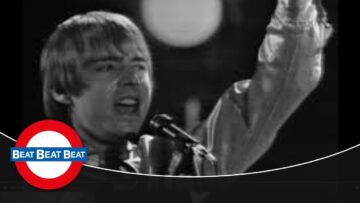
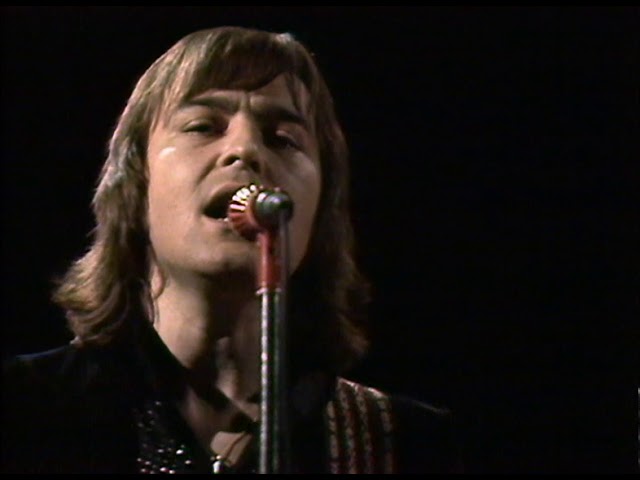
Spooky Tooth – Cotton Growing Man
When The Future Foreigner Guitarist Joined A Blues-Rock Band Nobody Knew
Released in May 1973 as the opening track on You Broke My Heart So I Busted Your Jaw, “Cotton Growing Man” introduced a revamped Spooky Tooth featuring a guitarist named Mick Jones who’d spend the next three years largely unknown before co-founding Foreigner in 1976. The song served as the centerpiece of a reunion album that reached number 84 on the Billboard 200 and number 58 in Canada, marking Spooky Tooth’s best commercial performance since their 1969 masterwork Spooky Two. Gary Wright wrote the track, crafting lyrics that explored themes of complacency and willful ignorance in the face of historical injustice, using the cotton trade as a metaphor for inherited privilege built on exploitation. The song featured Jones’ clean but fiery guitar work paired with Wright’s organ and Mike Harrison’s soulful vocals, creating a sound that straddled blues-rock, progressive rock, and the emerging arena rock aesthetic that would define mid-1970s mainstream hard rock.
While You Broke My Heart So I Busted Your Jaw never achieved major chart success beyond its modest Top 100 placement in America, it became Spooky Tooth’s most commercially viable album of their reformation period. The band toured extensively throughout 1973 to promote the record, opening for established acts and building a devoted cult following among progressive rock and hard rock enthusiasts. Critics praised highlights like “Cotton Growing Man” and “Wild Fire” for their heavy guitar riffs and funky grooves, though the album was ultimately deemed inconsistent. The followup Witness peaked at number 99 on the Billboard 200 in November 1973, while their final studio album The Mirror limped to number 130 in October 1974 before the band collapsed entirely. Despite the modest commercial returns, “Cotton Growing Man” showcased a band attempting to evolve beyond their blues-rock roots into something heavier and more socially conscious, even if mainstream audiences never quite caught on.
The song’s creation came during a period of creative turmoil for Wright and Harrison. Following Spooky Tooth’s initial breakup in February 1970, Wright had pursued a solo career with A&M Records while Harrison released his own material. Neither achieved significant commercial success, leading them to reunite in September 1972 with an almost entirely new lineup. Wright’s lyrics for “Cotton Growing Man” painted a portrait of willful blindness, describing someone who sits comfortably while ignoring the suffering that created their wealth and comfort. The protagonist drinks gin to forget history, remaining oblivious to exploitation while indulging in leisure. Wright described the song as examining how people distance themselves from uncomfortable truths about where their privilege comes from. The metaphor of cotton growing carried obvious weight—the cotton trade’s brutal history of slavery in the American South and colonial exploitation worldwide. Wright wanted listeners to confront their own capacity for selective memory and moral complacency, making the song one of Spooky Tooth’s most politically charged compositions.
Recording sessions took place in early 1973 at Olympic Studios, Island Studios, and Apple Studios, all in London. The band self-produced alongside Wright, with Chris Kimsey handling recording engineering and mixing duties alongside Phil McDonald and Rod Thear. The reformed lineup featured Wright on organ, piano, and backing vocals, Harrison on lead vocals, piano, and harmonica, Jones on guitar and vocals, Chris Stewart on bass, and Bryson Graham on drums. Jones had been Wright’s bandmate in Wonderwheel, his short-lived post-Spooky Tooth project that collapsed in 1972, and both Jones and Graham transitioned directly into the reformed Spooky Tooth. Klaus Voormann, the German artist famous for designing The Beatles’ Revolver cover, created the album’s striking gatefold artwork. The band thanked Sherb and friends for choral support on select tracks. The production emphasized raw energy over studio polish, capturing a band hungry to prove they still mattered after three years apart and eager to establish a heavier sound than their 1960s material.
You Broke My Heart So I Busted Your Jaw marked Spooky Tooth’s first album release since 1970’s experimental Ceremony, their notorious collaboration with French electronic music pioneer Pierre Henry that Wright later called an utter failure. The new album contained eight tracks running approximately 35 minutes, all written by Wright except “This Time Around” by Bryson Graham and “Times Have Changed” co-written with Mick Jones. Beyond “Cotton Growing Man,” standout tracks included “Wild Fire,” originally written for French rocker Johnny Hallyday, and the closing epic “Moriah.” The album mixed heavy riffs with mid-tempo grooves, soulful pastiches, and progressive rock ambitions. Founding guitarist Luther Grosvenor didn’t rejoin because he’d teamed up with Mott the Hoople under the stage name Ariel Bender, while founding drummer Mike Kellie sat out this initial reunion, returning for Witness later in 1973. The album was released on Island Records in the UK and A&M Records in the United States, distributed with a promotional insert in early pressings.
The album received a 2005 remaster and re-release on compact disc by Repertoire Records, featuring the bonus track “Nobody There At All” in an alternate mix. In 2015, You Broke My Heart So I Busted Your Jaw was included in The Island Years 1967-1974, a comprehensive nine-disc box set from Esoteric Recordings that compiled Spooky Tooth’s entire Island Records catalog alongside rarities and a previously unreleased 1973 live concert from Oldenburg, Germany. Critics retrospectively rated the album around three and a half out of five stars, acknowledging its solid but unremarkable place in 1970s blues-rock while highlighting Mick Jones’ contributions as a fascinating historical footnote given his later megastardom with Foreigner. AllMusic praised Jones’ guitar work but noted the album lacked the experimental defiance of the band’s late 1960s peak. Rate Your Music users favor the album as an overlooked 1970s hard rock obscurity anchored by Harrison’s powerful vocals and heavy, riff-driven compositions.
Spooky Tooth ultimately disbanded in November 1974 after The Mirror failed commercially and Wright departed for a solo career that would yield his 1975 breakthrough The Dream Weaver and massive hits like the title track and “Love Is Alive.” Harrison left after Witness, replaced by Mike Patto for the final album. Jones departed to assemble Foreigner, whose self-titled 1977 debut sold over five million copies in America alone. The band reformed briefly in 1997-1998 with Harrison, Grosvenor, Greg Ridley, and Kellie, releasing Cross Purpose in 1999, then again in 2004 with Wright, Harrison, and new members for occasional live performances. As Wright reflected years later, You Broke My Heart So I Busted Your Jaw represented a band trying to recapture lightning in a bottle while navigating an entirely different musical landscape. “Cotton Growing Man” stands as one of the album’s most durable tracks, a socially conscious blues-rocker that challenged listeners to examine their own complicity in historical injustice while delivering the heavy riffs audiences craved.
SONG INFORMATION
Related videos
 Watch LaterAdded
 Watch LaterAdded
03:48
Watch LaterAdded
03:48  Watch LaterAdded
03:52
Watch LaterAdded
03:52