








Tony Christie – (Is This the Way to) Amarillo
Neil Sedaka Couldn’t Think of Words for the Sha-La-La — So He Left a Placeholder on the Demo Tape. Christie’s Manager Heard It in New York, Flew Home, and Said: Use It Exactly As It Is.
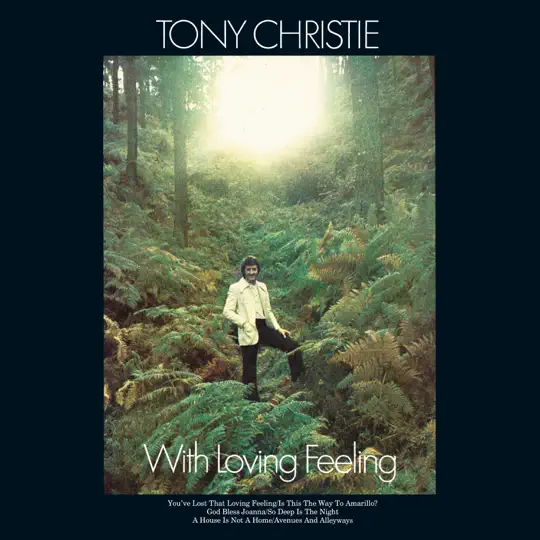
The most recognisable part of the song was never meant to stay. Neil Sedaka and Howard Greenfield had written the verses, the narrative of a man making his way across the American plain toward his girlfriend Marie and the Texas city waiting at the end of the road, but the chorus had given them trouble. The melodic line was there — jaunty, irresistible, the kind of phrase that lodges without effort — but the words for it weren’t arriving. So Sedaka left a vocal placeholder on the cassette demo: sha-la-la, la-la-la-la. He would come back to it. He would find proper lyrics eventually. He sent the tape out anyway. Harvey Lisberg, the Mancunian manager who had already built a career discovering Herman’s Hermits and who had recently taken on a powerful-voiced singer from South Yorkshire named Anthony Fitzgerald — who performed under the name Tony Christie, borrowed from a Julie Christie film he had seen in 1965 — heard the demo in New York, knew immediately, and flew home. He played it to Mitch Murray and Peter Callander, who were producing Christie’s singles. Nobody could improve on the sha-la-la. It stayed. The song was originally called “Is This the Way to Pensacola,” but Sedaka had changed the city to Amarillo before the tape left New York. It scanned better. It sounded further away. It sounded like somewhere a man might genuinely need directions to.
The recording was made in 1971, Mitch Murray and Peter Callander producing — the same team who had recently given Christie his first major hit with “I Did What I Did for Maria,” a dramatic, big-orchestra number that had reached number two on the UK Singles Chart. Murray and Callander understood Christie’s voice: a rich, powerful baritone that carried across a room and across an arrangement, trained not in a music college but in a decade of working men’s clubs across South Yorkshire, singing at night while holding down a job in an accounts office in Sheffield during the day. Harvey Lisberg had described him to anyone who would listen as the best singer in England for his interpretive powers and his perfect clarity delivering a lyric. The arrangement for “Amarillo” was built around that clarity — the orchestration wide and warm, giving Christie space to place each phrase cleanly, the sha-la-la chorus designed to land with the kind of open simplicity that a trained singer sometimes struggles to leave alone. Christie left it alone. The result sounded like a man genuinely asking a question and genuinely expecting an answer.
What Germany Understood First
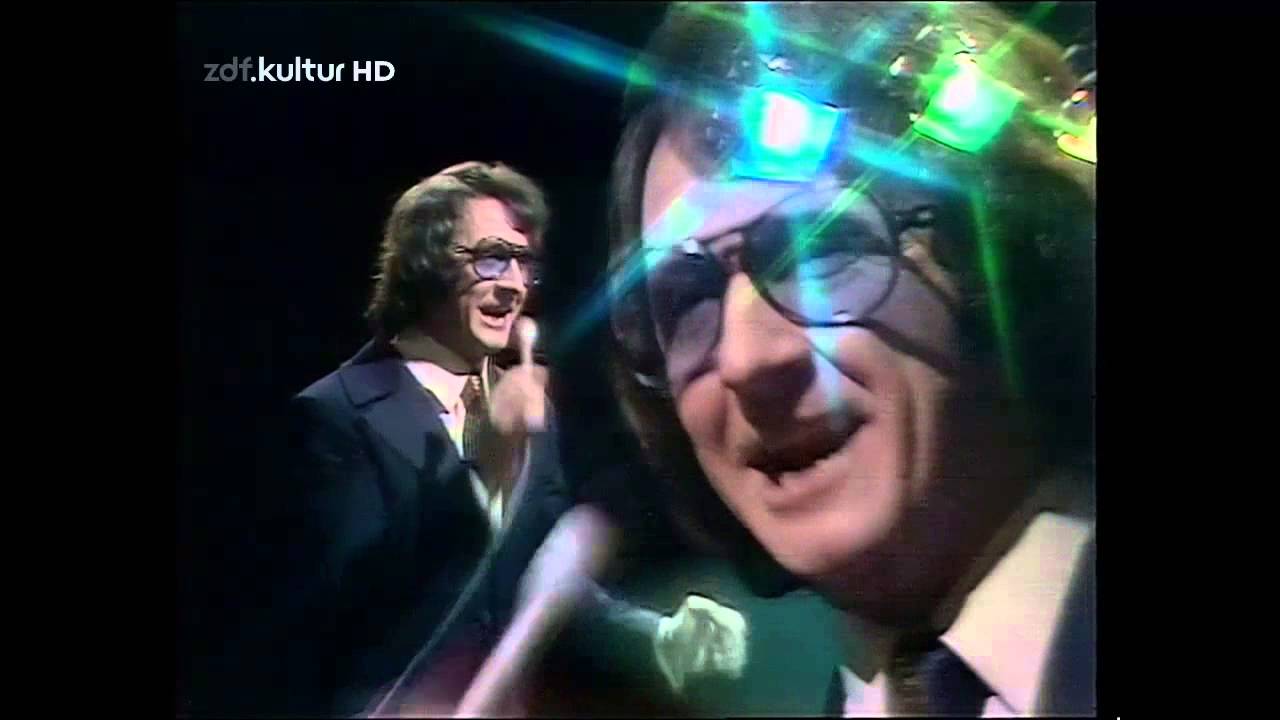
Released in November 1971 on MCA Records, the single reached number eighteen on the UK Singles Chart — a respectable position for a follow-up to a number two, but hardly a signal of what was building across the Channel. In Germany the song went to number one. In Spain it went to number one. In Belgium it reached the top of the charts, and in the Netherlands, Switzerland, South Africa, New Zealand, and Australia it entered the top ten. The ZDF performance captured in this video sits inside that European moment — ZDF, Zweites Deutsches Fernsehen, the second public German television channel, whose music programmes in the early 1970s were among the most significant broadcast platforms in continental Europe for British and international artists who were breaking through in those markets. For a song that was performing more substantially in Germany than in its own country, an appearance on German television was not a promotional afterthought. It was where the conversation was loudest. By September 1972, “Amarillo” had sold more than one million copies worldwide and had been awarded a gold disc. Christie was subsequently invited to Amarillo, Texas, where the city granted him the freedom of the city — a gesture that the song’s lyric, in retrospect, had been anticipating all along.
Sedaka himself cut a reggae version of the song that went unheard. He told the Daily Mail years later that he knew it was a good song but had been astonished at the manner of its survival, describing it as coming from the old Brill Building tradition — a timeless quality built not from novelty but from the elemental structure of verse, chorus, and a melodic hook that the ear could carry out of the room. What neither Sedaka nor anyone else anticipated was the second life the song would develop thirty years after its first chart run. In 2002, British comedian Peter Kay revived it in his television series Phoenix Nights, where it became embedded in the affections of an entire new generation of British viewers. Three years later, Kay approached Christie about recording a version for Comic Relief 2005. The video they made — Kay lip-synching and leading a procession of celebrity cameos through a series of parody scenarios — became one of the most-watched Comic Relief productions in the charity’s history. The reissued single spent seven weeks at number one on the UK Singles Chart, eventually selling over two million copies in the United Kingdom alone. The song Tony Christie had made as a follow-up single in 1971, which had not quite reached the top twenty at home first time around, was now one of the biggest-selling British singles of the twenty-first century.
The Accounts Office and the City in Texas
The distance between Anthony Fitzgerald working nights in working men’s clubs in Conisbrough while studying accountancy he hated at night school, and Tony Christie standing on German television in 1972 singing a song about a Texas city he had never visited, is the kind of distance that careers are built from — slowly, through conviction and a voice that did not diminish the more it was used. Murray and Callander dressed the song in orchestral pop and gave it a tempo that walked rather than ran. Christie sang it as though Marie were real and Amarillo were reachable and the sha-la-las were the only honest thing left to say in a chorus. That combination of scale and directness — the big voice and the simple feeling — is what the ZDF cameras caught in 1972, and it is what the record had been carrying since the session the year before. Sedaka’s placeholder never found a replacement because it never needed one. Some gaps in a lyric are filled by the music itself, and the music here always knew where it was going.
SONG INFORMATION