



![The Score – Revolution: Lyrics [Assassins Creed: Unity]](https://musicvideosclub.com/wp-content/uploads/2025/10/the-score-revolution-lyrics-assa-360x203.jpg)





![Kid Rock – All Summer Long [Official Music Video]](https://musicvideosclub.com/wp-content/uploads/2025/12/kid-rock-all-summer-long-officia-360x203.jpg)




![Sister Sledge – Hes the Greatest Dancer (Official Music Video) [4K]](https://musicvideosclub.com/wp-content/uploads/2025/09/sister-sledge-hes-the-greatest-d-360x203.jpg)




![Led Zeppelin – Stairway To Heaven (Live at Earls Court 1975) [Official Video]](https://musicvideosclub.com/wp-content/uploads/2025/01/led-zeppelin-stairway-to-heaven-360x203.jpg)
![Fleetwood Mac – Everywhere (Official Music Video) [HD]](https://musicvideosclub.com/wp-content/uploads/2025/07/fleetwood-mac-everywhere-officia-360x203.jpg)
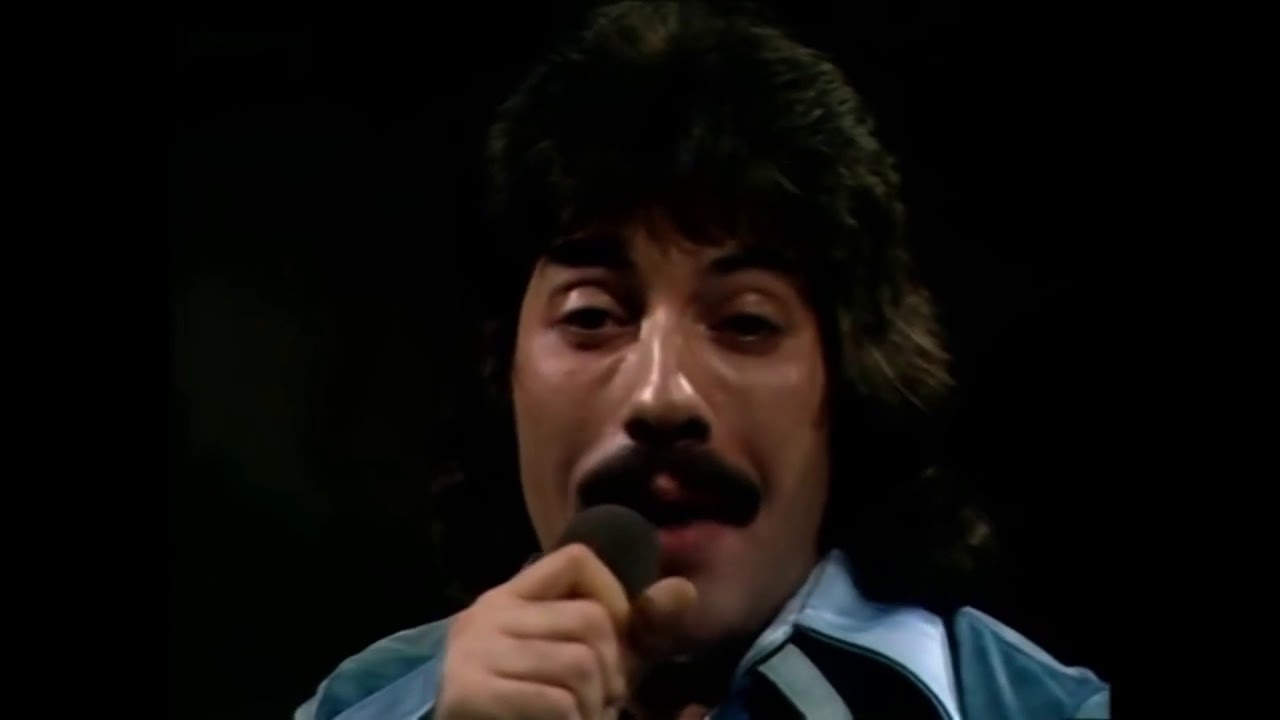
Tony Orlando & Dawn – Tie A Yellow Ribbon Round The Ole Oak Tree
The Song That Created A Symbol
In 1973, Dawn featuring Tony Orlando released “Tie A Yellow Ribbon Round The Ole Oak Tree”, a song that would not only dominate the charts but fundamentally change American culture. Written in less than fifteen minutes by the songwriting team of Irwin Levine and L. Russell Brown, this deceptively simple pop ballad became the biggest-selling single of the year in both the United States and the United Kingdom.
The single hit number one on the Billboard Hot 100 on April 21, 1973, holding the top position for four consecutive weeks. It also claimed the summit of the Adult Contemporary chart and reached number one in the UK for four weeks, in Australia for seven weeks, and remarkably spent ten weeks at number one in New Zealand. The song sold three million copies in the United States within just three weeks of release, eventually moving over one million copies in the UK alone. Billboard crowned it the number one song of 1973, and BMI calculated that radio stations had played it three million times over seventeen continuous years of airplay. In 2008, Billboard ranked it as the 37th biggest song of all time in their Hot 100 50th anniversary issue.
The genesis of the song reads like folklore itself. L. Russell Brown read a half-page story in Reader’s Digest about a Civil War soldier returning home from Andersonville Prison. The soldier had written his sweetheart asking her to tie a yellow handkerchief on the big oak tree outside town if she still wanted him after three years apart. The next morning, Brown drove thirty-three miles to Irwin Levine’s house, shared the story, and watched his partner get chills. They changed the handkerchief to a yellow ribbon because, as Brown later explained, handkerchiefs seemed unromantic—you blow your nose on them. The song practically wrote itself, with both writers claiming the melody and lyrics flowed out in under fifteen minutes.
The song tells the story from the perspective of a man completing a three-year prison sentence, riding a bus home while anxiously wondering if the woman he loves will take him back. Producers Hank Medress and Dave Appell helmed the recording sessions, featuring Tony Orlando’s warm lead vocal supported by the rich harmonies of former Motown and Stax backing vocalists Telma Hopkins and Joyce Vincent Wilson, along with Joyce’s sister Pamela Vincent. The production captured the perfect balance of hope and vulnerability, with Orlando’s earnest delivery making the narrator’s anxiety palpable. The arrangement built carefully to the emotional payoff—a hundred yellow ribbons adorning the oak tree, signaling unconditional acceptance and love.
The song appeared on the group’s third album, Tuneweaving, released in 1973 by Bell Records (titled Tie a Yellow Ribbon in the UK). The album was recorded at Century Sound Studio in New York City and mastered at Media Sound. Another track from the album, Peter Skellern’s “You’re a Lady”, reached number seventy on the US charts. This single marked the most commercially successful moment in the group’s career, launching a string of seven consecutive Hot 100 appearances. Interestingly, at the time of the single’s release, the group was still billed simply as “Dawn,” with Tony Orlando’s name not prominently featured until later in 1973 with the release of “Who’s in the Strawberry Patch with Sally”.
The song enjoyed immediate international success beyond the English-speaking world. Ray Conniff recorded a version on April 9, 1973, for his album You Are The Sunshine Of My Life on Columbia Records. Bing Crosby cut his own rendition on June 8, 1973, with an orchestra conducted by Billy Byers for Daybreak Records. Perry Como, Dean Martin, and Italian singer Domenico Modugno all released covers in 1973, with Modugno’s Italian-language version titled “Appendi un nastro giallo”. The song achieved duplicate success on country radio when Johnny Carver’s cover version, simply titled “Yellow Ribbon”, reached the top ten on the Billboard Hot Country Singles chart in June 1973 and hit number one on Canada’s RPM Country Tracks chart. Connie Francis even recorded an answer song later in 1973 titled “The Answer (Should I Tie a Yellow Ribbon Round the Old Oak Tree?)”, which peaked at number thirty-one in Australia. Bobby Goldsboro covered it for a 1976 compilation album called Storytellers, and Finnish artist Kai Hyttinen recorded a Finnish version called “Nosta lippu salkoon”.
What elevates this song beyond mere chart statistics is its cultural impact. Though yellow ribbons had appeared in various forms throughout history—possibly dating back to Puritan soldiers in the English Civil War and featured in the 1949 John Wayne film She Wore A Yellow Ribbon—the Library of Congress itself traces the modern ubiquity of the yellow ribbon symbol directly to this 1973 recording. The song gained renewed significance in 1979 during the Iranian hostage crisis when Penelope Laingen, wife of hostage Bruce Laingen, tied a yellow ribbon around a tree at her Maryland home. This gesture sparked a nationwide movement, with yellow ribbons appearing across America as symbols of hope and welcome. The tradition continued during the Gulf War in the early 1990s, where yellow ribbons paired with “support our troops” slogans became omnipresent. The song received two Grammy nominations—Song of the Year and Best Pop Group Performance—and when the trio performed it at the March 1974 ceremony, CBS executive Fred Silverman was so impressed he greenlit their variety series, Tony Orlando and Dawn, which premiered in July 1974 and ran for three successful seasons. The song appeared in the 1982 film An Officer and a Gentleman, performed by a Navy Ball band, and Andy Kaufman memorably sang it in character as Tony Clifton on HBO in 1977.
Today, “Tie A Yellow Ribbon Round The Ole Oak Tree” endures as one of the defining pop recordings of the 1970s. Its transformation from a rejected demo—Ringo Starr’s people initially dismissed it as ridiculous—to a song that created an entire symbolic language demonstrates music’s power to shape culture. For listeners discovering Tony Orlando & Dawn’s catalog, this recording remains essential not just for its commercial dominance but for capturing a moment when a simple story about hope, forgiveness, and homecoming resonated so profoundly that it changed how Americans express solidarity and support.
Related videos
 Watch LaterAdded
03:24
Watch LaterAdded
03:24  Watch LaterAdded
03:10
Watch LaterAdded
03:10  Watch LaterAdded
02:49
Watch LaterAdded
02:49