






Edgar Winter – Frankenstein
The B-Side Nobody Wanted That Listeners Demanded
Released in early 1973 as the B-side to “Hangin’ Around,” “Frankenstein” climbed to number one on the Billboard Hot 100 on May 26, holding the top spot for one week before Paul McCartney’s “My Love” pushed it aside. The instrumental sold over one million copies, reached number one in Canada the following month, peaked at number 18 in the UK, and hit number 10 in Mexico. The single earned gold certification on June 19, 1973, just weeks after its ascent. Epic Records had zero faith in the track initially, burying it as a B-side because they couldn’t imagine an experimental synthesizer jam with no vocals becoming a hit. Then radio DJs across North America started flipping the single over after being inundated with phone calls from listeners demanding to know who created that crazy noise. The label wisely reversed course and made “Frankenstein” the A-side, watching it storm the airwaves and become one of 1973’s most unlikely chart-toppers.
While “Frankenstein” conquered American pop radio, it propelled the They Only Come Out at Night album to number three on the Billboard 200, where it spent 80 weeks on the chart. The album was certified gold on April 30, 1973, and platinum on November 21, 1986, eventually selling over two million copies. In Canada, the album reached number four on two separate occasions and spent 14 weeks in the Top 10. The followup single “Free Ride,” written by bassist Dan Hartman, climbed to number 14 on the Hot 100 after initially failing as the album’s first single. Rolling Stone later ranked “Frankenstein” number seven on their list of the 25 best rock instrumentals, while Guitar Hero immortalized the track as one of five songs in the game’s highest difficulty tier, referred to as Face Melters. The track became Edgar Winter’s lasting commercial legacy, though it almost never made the album at all.
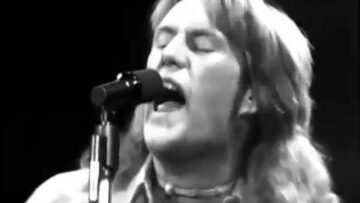
Winter had been developing the instrumental for years without knowing what to do with it. Born in Beaumont, Texas in 1946, both Edgar and his older brother Johnny were born with albinism, making for a striking visual when they performed together. Edgar became Johnny’s secret weapon, a multi-instrumentalist who could switch from keyboard to saxophone to drums in quick succession. During Johnny’s live shows, Edgar would unleash a titanic thunder-riff he’d been developing, using it as a framework for onstage pyrotechnics while jumping between instruments. The riff had no title yet, but Edgar was a showman—he pioneered strapping a keyboard around his neck with a guitar strap, giving him the mobility and audience interaction of guitar players. When Johnny Winter played Woodstock in 1969, Edgar was there and performed the riff on that stage. When Edgar went solo in 1970, he took the instrumental with him, jamming it with his band Edgar Winter’s White Trash before assembling The Edgar Winter Group in 1972.
Recording sessions for They Only Come Out at Night stretched on for weeks, with producer Rick Derringer overseeing an all-star lineup featuring Winter, songwriter Dan Hartman on bass and vocals, guitarist Ronnie Montrose fresh from Van Morrison’s band, and drummer Chuck Ruff. Eagles producer Bill Szymczyk served as technical director. During one studio session, the band started jamming on what they were calling The Instrumental, letting it sprawl for 15 or 20 minutes as Winter moved between different instruments. They captured everything on tape the way they’d play it live, with lots of solos and transitions. Winter remembers audiotape lying all over the control room, draped over the backs of chairs and overflowing the console and the couch. Rick Derringer convinced Winter to edit the massive jam into something usable for the album. As they physically cut and spliced master tape together, drummer Chuck Ruff muttered, “Wow, man, it’s like Frankenstein.” The title stuck immediately. Winter later reflected that as soon as he heard the name, the monster was born.
They Only Come Out at Night arrived in November 1972 as The Edgar Winter Group’s debut album via Epic Records. The ten-track record showcased Winter’s multi-instrumentalism across ARP 2600 synthesizer, organ, piano, clavinet, marimba, alto saxophone, and timbales. Hartman wrote or co-wrote six tracks including “Free Ride” while also contributing vocals, guitar, ukulele, bass, and percussion. Twenty-one-year-old Hartman was a child prodigy who’d played with Johnny Winter previously and whom Edgar called a true genius and musical visionary. Montrose delivered heavy guitar riffs despite not viewing himself as a rock guitarist when he joined—Winter encouraged him to embrace that sound. Other album tracks included “Round & Round,” “Autumn,” and “Alta Mira.” Derringer sat in on guitar for “Frankenstein” despite not being an official band member, playing the crunchy riffs alongside Montrose’s 1958 Gibson Les Paul Standard. The working title of “Frankenstein” had been The Double Drum Song because it featured a dual percussion showcase with Ruff on drums and Winter on timbales.
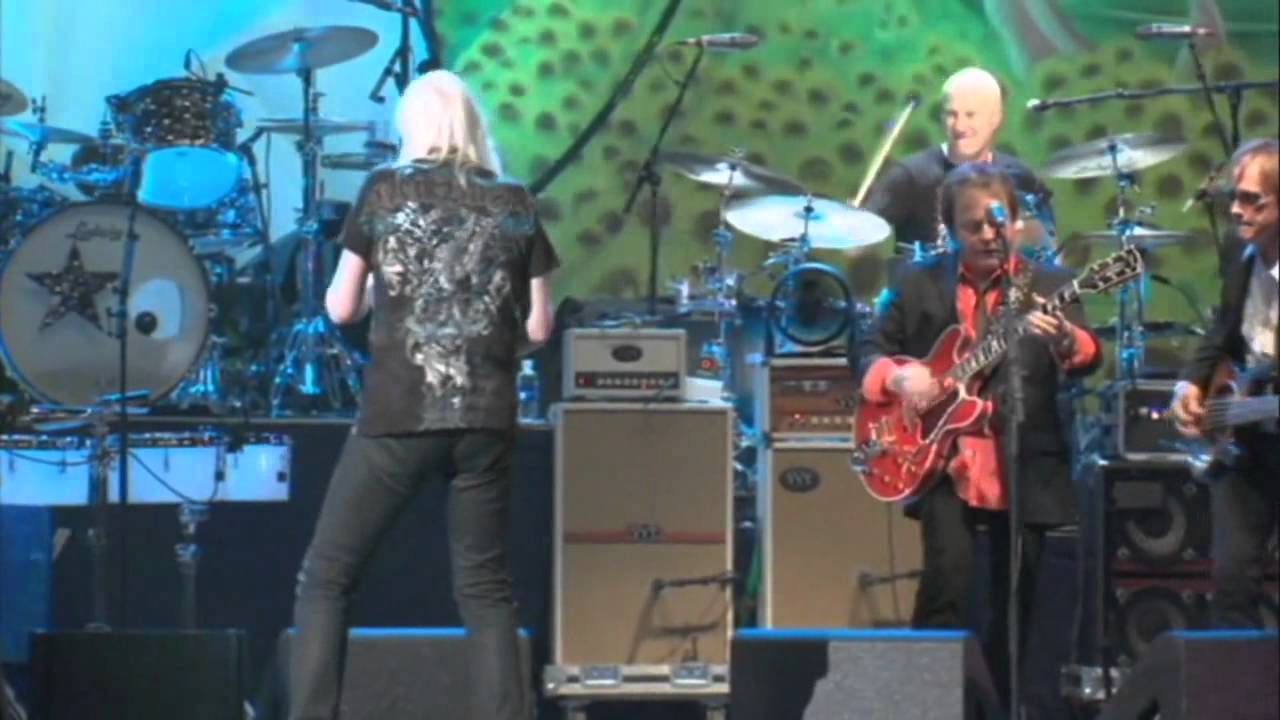
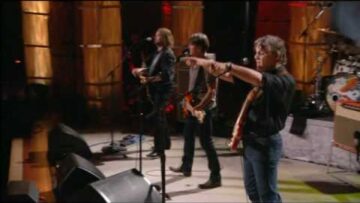
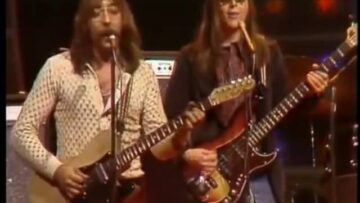
The song’s influence extended beyond its chart success. Winter pioneered the advancement of the synthesizer as a lead instrument, becoming the first person to strap a keyboard around his neck for live performances. His invention predated the term keytar by years, revolutionizing how keyboard players could move onstage. In 1983, Winter released a beat-heavy, synthesizer-heavy reworking with an accompanying video showing him as Dr. Frankenstein that MTV added to their playlist in November. The Edgar Winter Group performed an over nine-minute version on BBC’s The Old Grey Whistle Test in 1973 with Rick Derringer on guitar, a version many consider superior to the studio cut. Sections of the track were edited into jingles for Alan Freeman’s Top 40 and Saturday Rock Show on BBC Radio 1 and Radio 2 for years, often followed by Freeman’s trademark greeting, “Greetings Pop Pickers.” Ringo Starr’s All-Starr Band performed the song during tours when Winter joined the lineup in 2006, 2008, 2010-2011, and 2022 onward.
The Edgar Winter Group disbanded in 1976 after three albums. Ronnie Montrose left in 1973 to form his own band Montrose, featuring Sammy Hagar on vocals. Dan Hartman’s solo career yielded the 1984 hit “I Can Dream About You,” which peaked at number six before his death from a brain tumor in 1994. Winter continued recording and touring, releasing albums including 2003’s Live at the Galaxy and 2017’s four-CD compilation Tell Me in a Whisper: The Solo Albums 1970-1980. From August to September 2017, The Edgar Winter Band opened for Deep Purple and Alice Cooper during The Long Goodbye Tour. As Winter reflected decades later, “Frankenstein” was never meant to be a hit—it was too experimental, too weird, too long. But sometimes the most unlikely songs capture lightning in a bottle, proving that raw musicianship and fearless experimentation can conquer mainstream radio when given the chance.
SONG INFORMATION
Chart Performance: No. 1 in US (1 week), No. 1 in Canada, No. 18 in UK, No. 10 in Mexico, No. 39 in West Germany; Album reached No. 3 on Billboard 200