






![Gianna Nannini ft Laura Pausini – Sei nellanima [Live at San Siro] (Traducción en Español)](https://musicvideosclub.com/wp-content/uploads/2025/11/gianna-nannini-ft-laura-pausini-360x203.jpg)


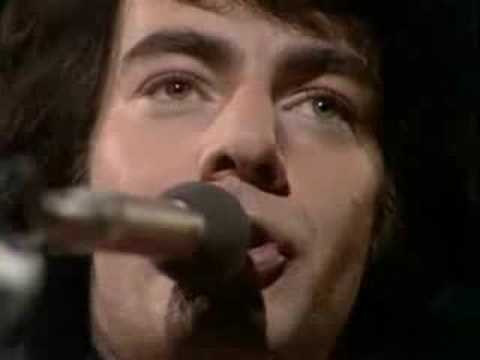
Neil Diamond – Sweet Caroline
Written In One Hour About His Wife—But Needed Caroline Kennedy’s Name To Rhyme
Released on May 28, 1969, “Sweet Caroline” climbed to number four on the Billboard Hot 100 on August 16, spending 16 weeks on the chart and becoming Neil Diamond’s biggest hit to that point. The song also reached number three on the Cash Box Top 100 and Billboard’s Adult Contemporary chart, earned gold certification from the RIAA on August 18, 1969, for sales exceeding one million copies, and has since sold over two million digital downloads in the United States. It reached number eight in the UK in March 1971, then remarkably re-entered the UK Singles Chart 50 years later in July 2021 at number 48 following its use by England supporters during Euro 2020, climbing to number 20 the following week. In 2018, the Library of Congress inducted the song into the National Recording Registry for being culturally, historically, or aesthetically significant. What nobody at Fenway Park knew in 1997 when they first started playing the song was that it would become an integral part of Boston Red Sox tradition, transform into a city-wide solidarity anthem after the 2013 Boston Marathon bombing, and remain more closely associated with Boston than with Diamond’s native Brooklyn despite the artist having no connection to New England whatsoever.
While “Sweet Caroline” peaked at number four in America, it became Diamond’s first major hit after a commercial slump and launched him into the most successful period of his career. Between August 1969 and October 1972, Diamond scored seven consecutive Top 10 hits including “Holly Holy” at number six, “Cracklin’ Rosie” at number one for one week in October 1970, and “Song Sung Blue” at number one in July 1972. The enduring popularity of “Sweet Caroline” transcended its modest chart peak, with the song becoming a karaoke favorite, sporting event staple, and wedding reception standard. In the decade following its release, the track was covered by Elvis Presley, Bobby Womack, Roy Orbison, and Frank Sinatra, with Diamond rating Sinatra’s swinging big-band version the best of all covers. By 2014, the song had become ubiquitous at sporting events worldwide, from Boston College football to Hong Kong rugby tournaments to soccer matches in Northern Ireland, proving its appeal crossed all cultural and geographic boundaries.
Diamond wrote the song in his Memphis hotel room on the night before a scheduled recording session at American Sound Studio in June 1969. He later described the creation as a moment of creative desperation—he had an empty space on his dance card, a new baby, mounting bills, and everything riding on the upcoming session. The song came to him quickly, the melody flowing naturally, but something wasn’t working with the lyrics. He’d been writing about his second wife Marcia Murphey, whom he’d married in December 1969, but couldn’t find a rhyme that fit the three-syllable rhythm he’d created. Looking for inspiration, Diamond’s eyes wandered to a nearby magazine photo of Caroline Kennedy as a young child dressed in riding gear next to her pony. The innocent, wonderful image gave him the name he needed. That night, “Sweet Caroline” was born in about an hour—or at least that’s one version of the story Diamond has told over the years, changing details depending on the interview and occasion.
Recording sessions took place at American Sound Studio in Memphis, Tennessee with producer Chips Moman and the legendary Memphis Boys session musicians. Arranger Charles Calello created the lush orchestration that gave the song its warm, embracing quality. Tommy Cogbill, who played bass on the session, later revealed in the 2011 book Memphis Boys that Diamond didn’t like the song at all during recording and didn’t want it released as a single. Despite Diamond’s reservations, the production captured something magical—opening with solo piano before building through verses into the infectious chorus with its singalong hook. The arrangement featured strings, horns, and the tight rhythm section that defined the American Sound Studio sound, creating what Billboard called a hard-hitting love ballad with exceptional production and vocal workout. Cash Box praised it as sensational, highlighting how Diamond’s material and production took on a completely different dimension in this warm love ballad with occasional surges of strength.
The single was released from Diamond’s album Brother Love’s Travelling Salvation Show, though UNI Records quickly added “Sweet Caroline” to existing copies of the album, changed the cover to feature a poor picture of Diamond, and retitled it Sweet Caroline/Brother Love’s Travelling Salvation Show. The original Brother Love’s album with its gatefold cover became extremely rare. The B-side “Dig In” was a soul-inflected track from the same album that complemented the single’s pop appeal, featuring bluesy energy and gritty production, though it remained completely overshadowed by its A-side. Diamond promoted the song through television appearances including a November 30, 1969 performance on The Ed Sullivan Show that amplified its reach during the crucial holiday season. The song debuted on the Hot 100 at number 59 on June 28, 1969, then spent eight weeks climbing to its number four peak, demonstrating remarkable staying power throughout the summer.
The Fenway Park tradition began innocuously in 1997 when the Boston Red Sox started playing the song during late innings if the team was ahead. Amy Tobey, who handled music at Fenway from 1998 to 2004, actually considered it a good luck charm. In 2002, Red Sox executives asked Tobey to play “Sweet Caroline” specifically in the middle of the eighth inning because the tune had transformative powers. When the Red Sox won the World Series that year, breaking an 86-year curse, the “Sweet Caroline” tradition not only continued but became a defining element of Boston sports culture. The song transcended baseball, becoming a theme for the entire city. After the Boston Marathon bombing in April 2013, Diamond showed up unannounced at the first home game to lead the crowd in an emotional rendition while wearing a Red Sox cap. The New York Yankees, Boston’s fierce rivals, even played the song at Yankee Stadium the day after the bombing as a show of solidarity. Sales surged nearly 600 percent that week, and Diamond donated all royalties to the One Fund Boston charity.
The song’s cultural afterlife proved extraordinary. During England’s Euro 2020 run, when DJ Tony Parry played it after England defeated Germany at Wembley, it became an unofficial anthem for English football supporters. Parry explained he thought “Sweet Caroline” worked slightly better than “Three Lions” for the post-match celebration. The song re-entered the UK chart 50 years after its initial release, introducing it to an entirely new generation. During the COVID-19 pandemic in March 2020, Diamond posted a video to YouTube performing “Sweet Caroline” with modified lyrics about washing hands and social distancing, demonstrating the song’s adaptability to contemporary moments. In 2009, Austrian singer DJ Ötzi released a high-energy dance remix that became a European festival favorite, transforming Diamond’s warm ballad into a party anthem. The Iowa State Cyclones adopted it as their football victory song in 2006, while countless other colleges and professional teams made it part of their game-day traditions.
Frank Sinatra’s version from his 1974 album Some Things I’ve Missed remains Diamond’s favorite cover, with Sinatra reimagining it in his signature swinging big-band style rather than copying Diamond’s record. Elvis Presley sped up the tempo and added country-style guitar influences on his version, making it the second Diamond composition he recorded after “And the Grass Won’t Pay No Mind.” Bobby Womack brought breezy, soulful influence to his 1972 version, which peaked at number 51 on the pop chart and number 16 on the R&B chart. Roy Orbison included it on his 1973 album Milestones after performing it regularly in concerts. The song appeared in films including the 1996 movie Beautiful Girls during a lively bar sing-along scene that perfectly captured its infectious communal energy. In 2011, a musical titled A Beautiful Noise based on Diamond’s life and featuring his songs opened in Boston before touring nationally, with “Sweet Caroline” serving as the emotional centerpiece.
Neil Diamond retired from touring in January 2018 at age 77 after being diagnosed with Parkinson’s disease, though he gave a rare performance at the March 2020 Keep Memory Alive Power of Love Gala in Las Vegas where he was being honored. He was inducted into the Rock and Roll Hall of Fame in 2011, with Bruce Springsteen delivering the induction speech and joining Diamond for a performance. Over his career, Diamond sold more than 130 million records worldwide, scored 38 Top 10 hits on the Billboard Adult Contemporary chart, and wrote ten singles that reached number one. Despite changing his story about the song’s inspiration multiple times over the decades—claiming it was about Caroline Kennedy in 2007, then admitting in 2014 it was actually about his wife Marcia—the ambiguity only added to the song’s mystique. As Diamond told interviewers, he intentionally kept the truth vague, understanding that sometimes the best songs are the ones listeners can make their own. “Sweet Caroline” transcended its origins to become something bigger than any one person’s story, a collective anthem about good times and shared joy that belongs to everyone who sings along.