


![Rush – Spirit Of The Radio [Live] – 1989](https://musicvideosclub.com/wp-content/uploads/2025/08/rush-spirit-of-the-radio-live-19-360x203.jpg)
![The Rolling Stones – Brown Sugar [Live] HD Marquee Club 1971 NEW](https://musicvideosclub.com/wp-content/uploads/2025/12/the-rolling-stones-brown-sugar-l-360x203.jpg)
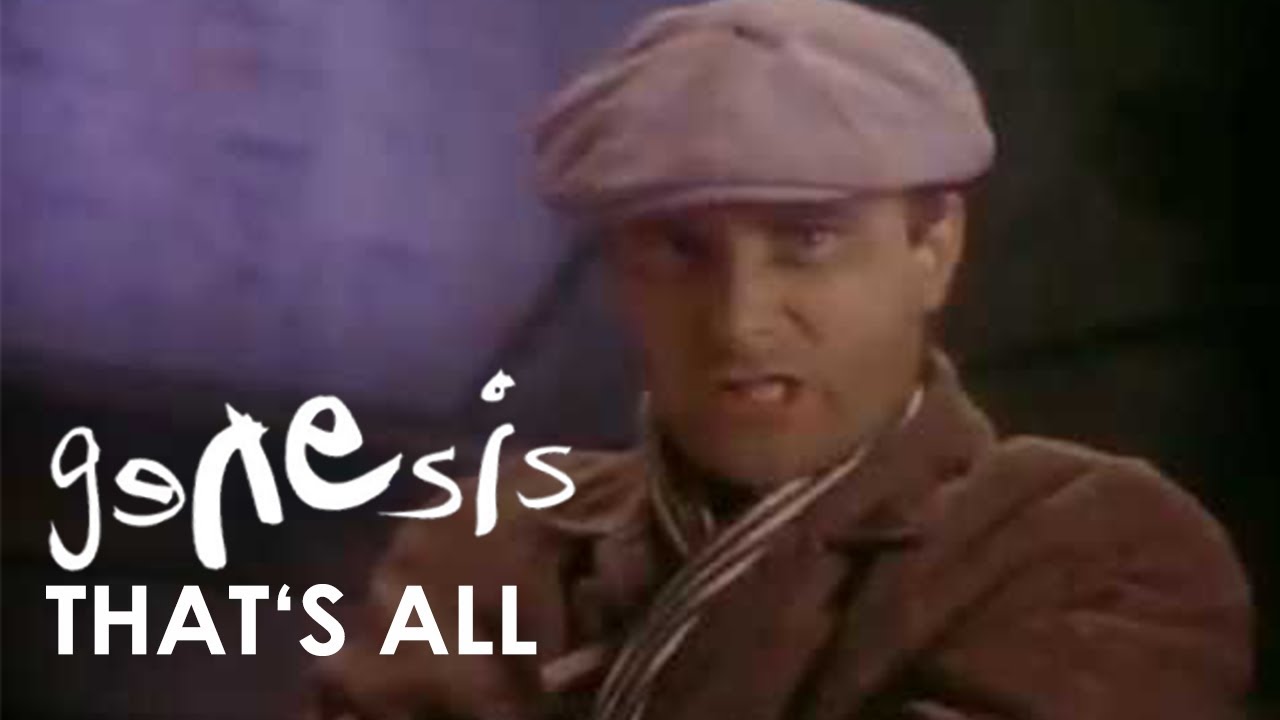
Genesis – That’s All
When A Slowed-Down Guitar Sample Became A Beatles Tribute
“That’s All” was released on October 31, 1983 as the second single from Genesis’ self-titled twelfth album, following the dark and brooding “Mama.” The song peaked at No.6 on the US Billboard Hot 100 in March 1984—making it Genesis’ first American top 10 hit—and reached No.16 in the UK. What most fans don’t know: the piano riff that defines the entire song started as a slowed-down guitar sample that Tony Banks recorded on his E-mu Emulator, then recreated on piano when he realized how good it sounded at quarter speed.
The chart performance marked a watershed moment for Genesis. After years of progressive rock complexity, “That’s All” became their commercial breakthrough in America, where previous singles had stalled outside the top 20. The parent album Genesis, released October 3, 1983, hit No.1 in the UK for one week and peaked at No.9 on the Billboard 200, eventually selling over four million copies in the US alone. The album achieved double platinum certification in Britain by 1987. This success came on the heels of Phil Collins’ solo stardom—his albums Face Value and Hello, I Must Be Going had already made him a household name, and the press expected Genesis to sound like “Face Value with louder keyboards.” Instead, they delivered something uniquely their own.
The song originated during jam sessions at The Farm, the band’s studio in Chiddingfold, Surrey, when Mike Rutherford was noodling around on guitar. Banks sampled bits and pieces with his Emulator, then slowed one snippet down to half or quarter speed. The slowed-down sample suggested a riff that Banks then played on his Yamaha CP-70 electric grand piano, creating that instantly recognizable opening. Phil Collins jumped in with what he called a “Ringo Starr drum part,” deliberately mimicking the loose, backbeat-focused style of The Beatles’ “Rocky Raccoon.” The entire band cited The Beatles as their influence for the track—they wanted to write a simple pop song with an accessible melody, something far removed from their progressive rock past. Tony Banks later described it as “Beatle-ish,” and that was exactly the point.
Recording took place entirely at The Farm between February and August 1983, with Hugh Padgham returning as engineer after working on Abacab. This was Genesis’ first album written, recorded, and mixed completely in their own studio, which created a more relaxed environment without the pressure of booking fees. Banks played the main riff on his CP-70, then layered a Sequential Circuits Prophet-10 for organ pads and a Synclavier II for the chirpy organ solo in the middle section. Rutherford focused on building the groove with his bass before unleashing a somewhat discordant guitar solo in the coda as the drum beat intensified and the song faded out. The band had struggled initially—progress was slow and sluggish—but after a particularly productive session on the third day, they had two or three songs worked out, which reignited their excitement about performing new material on stage.
“That’s All” appeared as the second track on Genesis, an album the band titled to reflect the fact that all three members—Banks, Collins, and Rutherford—composed every track together for the first time. The album spawned five singles between 1983 and 1984, with “Mama” leading the charge at No.4 in the UK, followed by “That’s All,” “Illegal Alien,” and “Taking It All Too Hard.” A 12-inch single featured longer versions, and various B-sides included “Second Home by the Sea” (US), “Taking It All Too Hard” (UK), and a live version of “Firth of Fifth” from 1981. The album received a Grammy nomination for Best Rock Performance by a Duo or Group with Vocal in 1985.
The music video, directed by Jim Yukich—his first collaboration with Genesis—depicted the band as homeless men taking shelter outside a disused factory, playing cards, eating soup, and warming themselves around open fires in metal barrels. Yukich later admitted he had considerable trouble coming up with a plot for the video, eventually settling on the stark, atmospheric concept that became iconic. The director would go on to helm the majority of Genesis’ subsequent videos, including “Land of Confusion” and “Invisible Touch,” as well as dozens of Phil Collins solo videos throughout the 1980s. The song remained a concert staple, performed during the Mama, Invisible Touch, We Can’t Dance, and Calling All Stations tours, though it was dropped after the first few shows of the latter tour when Ray Wilson sang lead. By late 2025, the track had amassed over 248 million plays on Spotify, making it one of Genesis’ most-streamed songs and a permanent fixture on 1980s nostalgia playlists.
Mike Rutherford later called the album Genesis “something we had longed for many years prior, specifically its more aggressive edge,” while Tony Banks said the band had gone as far as they could with progressive rock and wanted a more relaxed approach. Phil Collins offered perhaps the most telling assessment when he told Smooth Radio that “That’s All” represented “the perfect balance of what we were trying to do—make music that was still us, but that people could actually sing along to.” The song’s legacy lives on as the track that proved Genesis could dominate pop radio without abandoning their identity, one slowed-down guitar sample and one Ringo-style drum part at a time.