





![Sonny & Cher – I Got You Babe (Official Video) [From ‘Top of the Pops’]](https://musicvideosclub.com/wp-content/uploads/2025/02/sonny-cher-i-got-you-babe-offici-360x203.jpg)

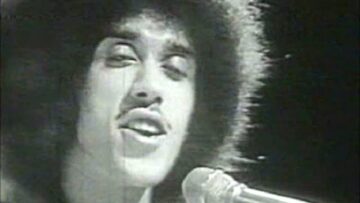
WAR – Low Rider
The Beat That Turned Around and Became a Classic
The most recognizable groove in 1970s funk was, by drummer Harold Brown’s own admission, a mistake. During the session that produced “Low Rider” in 1975, Brown lost the downbeat and landed on the upbeat instead. His instinct was not to fix it — it was to hold it there and keep going until the mistake became the foundation. Saxophonist Charles Miller felt the shift and started singing the melody almost spontaneously. Lee Oskar reached for his harmonica. B.B. Dickerson locked into the bassline. Within minutes, one of the most immediately identifiable songs in the history of American music had assembled itself from an accident that nobody panicked about. “Because as long as you keep doing it over and over and over,” Brown said later, “it won’t be a mistake.”
“Low Rider” was released as a single from Why Can’t We Be Friends? in 1975, peaked at Number Seven on the Billboard Hot 100, and hit Number One on the R&B chart — a commercial peak that reflected where the band was at that precise moment in their arc. War had formed in the mid-1960s in and around Long Beach and Compton, originally as a group of South Los Angeles musicians who first found mainstream exposure as Eric Burdon’s backing band, before quietly becoming one of the most distinctive and unusual acts in American music. Their lineup was deliberately borderless: Black, white, Danish, Latino, drawing from jazz, funk, blues, gospel, Latin, and ska in roughly equal measure. Lonnie Jordan described it simply: “Every individual in the band brought a different style to the table — blues, Latin, ska, funk, jazz, gospel, classical. It was all one big salad bowl.” The sound that came out of that salad bowl was like nothing their contemporaries were making.
The lyric is a celebration of lowrider culture — the practice of hydraulically modifying cars, deeply rooted in the Chicano communities of Southern California, where custom vehicles bounced and glided along boulevards as an expression of identity, craftsmanship, and neighborhood belonging. Most of War had grown up surrounded by that culture — in East L.A., Compton, Watts, and Harbor City — and Jordan described it plainly: Chicanos and Black residents shared one thing in common across those neighborhoods, and lowriders were at the center of it. The band’s intention was celebratory, not metaphorical. When radio listeners heard “take a little trip” and “rides a little higher” and assumed the song was about drugs, the band pushed back consistently. Brown was unambiguous: “We did not want it to sound as if we were referring to drugs.” The whole song was about the cars, the culture, and the people who built both.
The recording took place at Crystal Studios and Sound City in Los Angeles, produced by Jerry Goldstein and Lonnie Jordan — the same team that had guided the band since the Eric Burdon years. Goldstein had arrived at the sessions with prior credits that ranged from “Hang On Sloopy” to “My Boyfriend’s Back,” which made him an unlikely but effective fit for a band that defied every genre boundary the industry relied upon. The finished track runs on a single chord — a G — for its entire duration, which places it in the company of James Brown’s most groove-focused work and underscores how completely War understood that rhythm was the architecture and everything else was decoration. The siren-like saxophone solo Charles Miller plays toward the end was entirely in character for a player whose melodic instincts had animated the band since the beginning. Miller was killed in a robbery outside his Los Angeles home in 1980 — a loss the band never fully recovered from, and one that made the grooves he helped create feel both more precious and more permanent.
Why Can’t We Be Friends? was War’s seventh studio album and the commercial and artistic peak of their first great run. It arrived in a year when the band also placed the title track at Number Six on the Hot 100, making 1975 arguably the single most prolific twelve months of their career. “Low Rider” followed the earlier run of “Slippin’ Into Darkness,” “The World Is a Ghetto,” and “The Cisco Kid” — a four-year sequence of defining funk records that established War as one of the most important bands in America. One more major hit, “Summer,” arrived in 1976, and then the chart run began to taper. The cultural run, however, never stopped.
The song was inducted into the Grammy Hall of Fame in 2014. Its afterlife is impossible to contain in a single paragraph: Cheech & Chong used it in Up in Smoke in 1978. It appeared in Richard Linklater’s Dazed and Confused in 1993 — the film that exposed the song to an entire new generation. The Beastie Boys sampled it. Korn covered it. The Offspring threaded it into “Original Prankster.” It served as the theme to the George Lopez sitcom for six full seasons. There is a lowrider club in Japan that formed specifically because War toured with footage of the cars playing on screen behind them during “Low Rider” — exposing audiences who had never heard of the culture to its full visual power. That is the reach of a song born from a drummer who lost the beat, stayed calm, and told everyone to keep going.
Harold Brown once said the original jam session that produced the basic track would be worth a million dollars on its own. He was right, though the actual number turned out to be considerably higher. “Low Rider” is, by any honest measure, one of the defining recordings of the decade — a track built from a mistake, a saxophone line, and a culture that deserved a song this good. Jordan put the band’s whole philosophy into a single sentence: “We all live under the same sky, the same smog, the same problems.” The groove that expressed it has been rolling ever since.