






Reba McEntire – Turn On The Radio
She Called the Songwriter Personally, Recorded It Within 24 Hours, and Made History All Over Again
The song had only been finished for a matter of days when Reba McEntire’s team stumbled across it. Most artists would have had their manager make the call. McEntire phoned the songwriter herself — Cherie Oakley, a first-time major-label writer who nearly fell off her chair when the voice on the other end of the line said it was Reba. When Oakley said yes, McEntire told her: “You have made my day.” Oakley’s response — “No, YOU have made MY day” — turned out to be the understatement of 2010. Within 24 hours, “Turn On The Radio” had been recorded. Within six months, it was sitting at number one on the Billboard Hot Country Songs chart, and Reba McEntire had done something no female solo artist had ever managed before: scored a number one country hit in four consecutive decades.
The single debuted at number 54 in July 2010 and climbed steadily — the kind of patient, radio-driven ascent that defines the country chart at its most deliberate — finally reaching the top spot at the beginning of 2011. It became her 35th number one on the Billboard Hot Country Songs chart and her 60th Top 10 country single overall, making McEntire the first female country artist in history to accumulate that many Top 10 entries. To put that in perspective: the record she broke was Dolly Parton’s. These are not modest milestones. They are the kind of achievements that require not just talent but a sustained relationship with an audience across half a century of changing tastes, formats, and fashions.
The song itself arrived fully formed from its writers. Cherie Oakley, Mark Oakley, and Bobby Huff — working under Huff’s pseudonym J.P. Twang — sat down in a home studio one morning with a single idea: a woman who had been wronged by her man, who now wanted back in, and whose answer was simple and devastating. If you want to hear from me, turn on the radio. It is a kiss-off song structured as an invitation, which gives it a specific kind of power: the woman isn’t gone, she’s everywhere, and the man just isn’t paying attention. The three writers described the session as one where everything just flowed — melody, attitude, and lyric arriving together in a rush. McEntire recognized it immediately for what it was, describing it as “an up-tempo, strong woman song” that gave her something to really sink her teeth into. She was not wrong.
Producer Dann Huff — no relation to Bobby — brought the track to life with a production that puts the rhythm front and centre before pulling back to let McEntire’s voice do the structural work. The song builds carefully: guitar-driven verses, gathering momentum through the pre-chorus, and a release in the hook that sounds as inevitable as a punchline you knew was coming and still landed perfectly. Cherie Oakley sang background vocals on the final recording — a detail that, for a songwriter hearing her first major cut come to life in a studio, must have felt surreal beyond description. McEntire later ensured Oakley received public credit for the song when Oakley appeared as a coach on *The Voice*, acknowledging on air that one of the contestants had written a number one record.
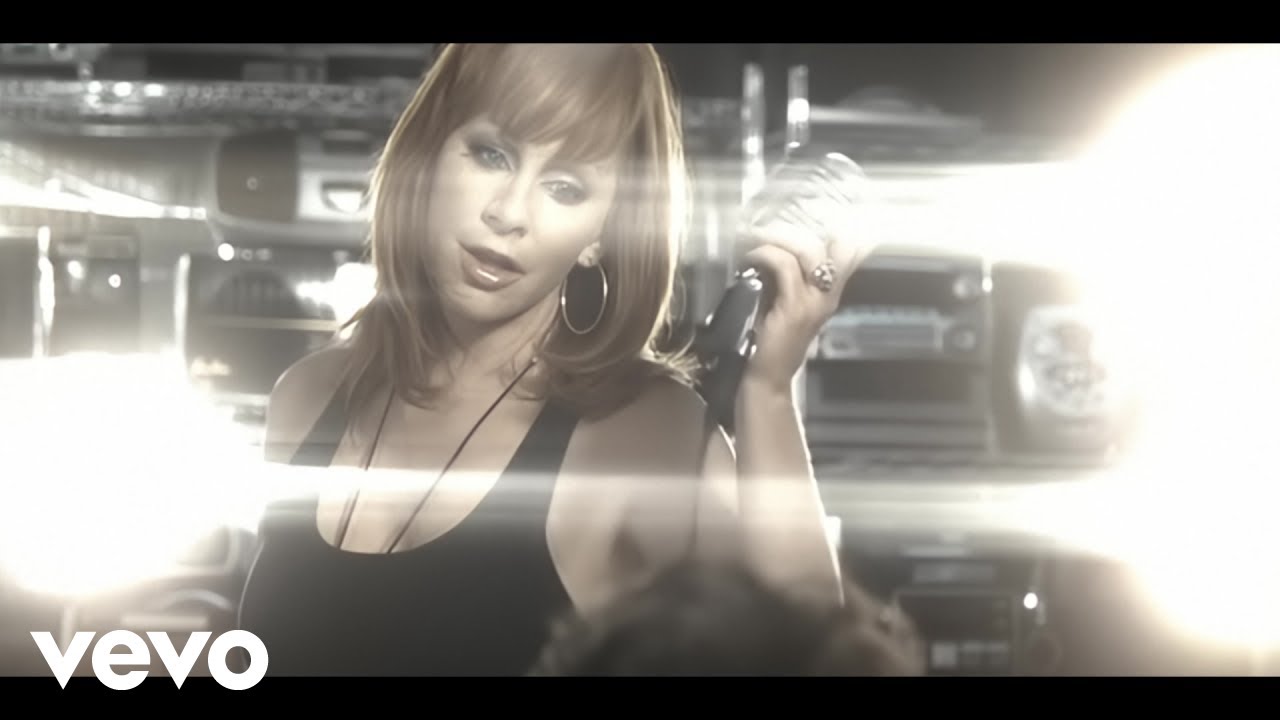
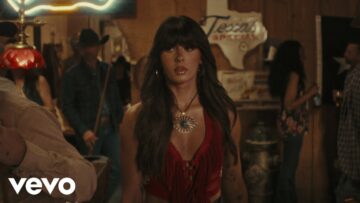
The official video, directed by Randee St. Nicholas and shot over two days in a Nashville warehouse — a lightning storm and tornado warning pushed the shoot an extra day — is one of the tightest pieces of comic storytelling McEntire ever put on screen. She arrives in a black hooded cloak, opens boxes to reveal a rack of radios, and proceeds to sing directly at a man sitting in a chair who stares blankly into space as if she isn’t there. When the final chorus hits, she ties him to the chair with her microphone cord, puts her cloak back on, and walks out. As she drives away, his phone finally buzzes to life — a cascade of text messages from Reba reading “Turn On The RADIO!!!!!!” The video is a three-minute short film about being invisible to the wrong person, and it ends with the best possible revenge: she’s already gone. All the Women I Am, the album it led, was released on November 9, 2010.
McEntire had been making records since 1976, when Red Steagall discovered her singing the National Anthem at the National Rodeo Finals in Oklahoma City. Her first number one — “Can’t Even Get the Blues” in 1983 — came seven years and a label switch later. The decades between that breakthrough and “Turn On The Radio” included a Grammy, an aviation disaster that killed eight of her band members, a television sitcom, a Broadway run, and enough chart history to fill several careers. That she was still making number ones in 2011, with a song she’d recorded the day after a phone call, is less surprising when you understand that McEntire’s relationship with her audience has never really been about the moment — it’s always been about the long game.
Few artists have the kind of credibility that makes a song like “Turn On The Radio” feel earned rather than calculated. The attitude in the lyric — the confidence, the dry wit, the unapologetic sense of self-worth — doesn’t land the same way when it doesn’t come from somewhere real. On McEntire, it lands exactly right, because the audience knows she means every word. For a woman who has spent five decades proving that country music has room for a performer who refuses to shrink, the sentiment of the song could hardly be more fitting: you want to hear from her, you know where to find her. She’ll be on the radio.