



![Tina Turner – Private Dancer (Official Music Video) [4K Upgrade]](https://musicvideosclub.com/wp-content/uploads/2025/11/tina-turner-private-dancer-offic-360x203.jpg.webp)

Kiss – Tears Are Falling
MTV’s Own Viewers Kept It in Heavy Rotation for Months — Until the Network Changed the Rules to Get Rid of It
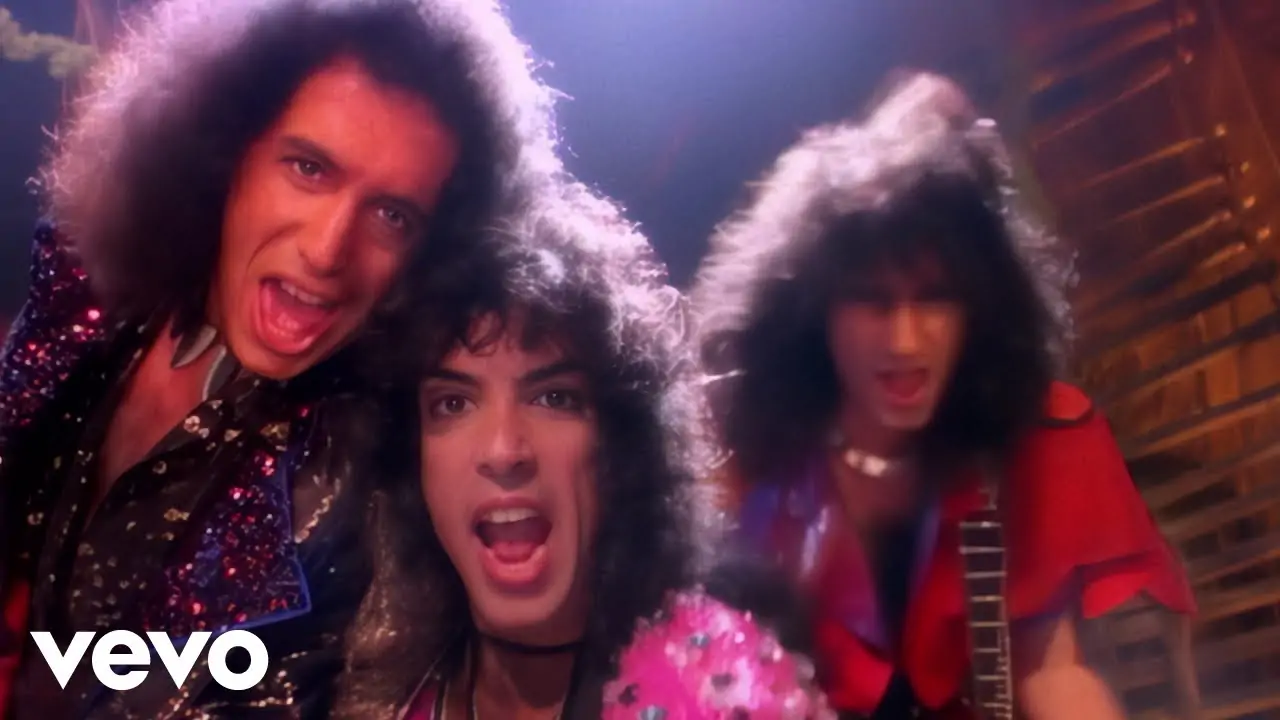
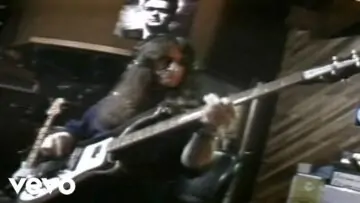
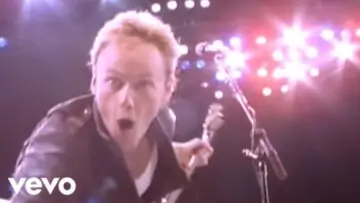
By September 1985, KISS had been operating without makeup for two years, and the transition had worked better than most of their original fanbase had expected. Lick It Up in 1983 had introduced them successfully to a new MTV generation. Animalize in 1984 had gone platinum. Now, with Asylum — the first album to feature lead guitarist Bruce Kulick as a full official member — the band were fully embedded in the mid-decade glam metal landscape that they had, in some ways, helped invent. “Tears Are Falling” was the album’s only commercial single release, written and sung entirely by Paul Stanley — one of his very few solo compositions since the 1970s, and the last he would write alone until his 2006 solo album. He has said the song’s riff drew inspiration from the Motown classics of his youth, particularly the Four Tops’ “I Can’t Help Myself (Sugar Pie, Honey Bunch)” — a bright, propulsive hook designed to carry an emotion that the lyric is otherwise too reserved to state directly. The video, directed by David Mallet and filmed on a set in London in September 1985, was a straightforward performance piece with modest production values. That modesty turned out to be entirely beside the point.
On MTV’s Dial MTV — the viewer phone-in request programme that gave the audience direct control over the playlist — “Tears Are Falling” became a persistent presence. Fans called in for it day after day, week after week, keeping it in heavy rotation long after most singles of its era had cycled out of the system. It held on for months. Eventually, MTV changed their programming rules specifically to address this kind of sustained request activity: videos on Dial MTV would henceforth only be eligible if they were a few weeks old, rather than several months. The rule effectively retired “Tears Are Falling” from the request show. Knopfler’s producer never got a vote on this one — it was the audience, and the network, who made the call. Cash Box called it “a distinctive chorus hook and a pop arrangement,” which was accurate if understated. The song was not trying to be more than it was, which is precisely why viewers kept asking for it.
A New Lineup, a New Sound
The Asylum album arrived in a specific context. Kulick had come into the band during the Animalize tour as a replacement for Mark St. John, who had been forced out by a combination of personality clashes and a debilitating bout of reactive arthritis. Kulick had filled in on two tracks of Animalize but now, with Asylum, he was a full member and recording a complete album with the band for the first time. The lineup of Stanley, Gene Simmons, Eric Carr, and Kulick would remain together until Carr’s death in November 1991 — arguably the most stable and musically coherent configuration the band had operated in since the classic years, and certainly the lineup that produced the most consistent work of the no-makeup era. Asylum was certified Gold by the RIAA in November 1985, and all three of its promotional videos — including the ones for “Who Wants to Be Lonely” and “Uh! All Night” — were filmed during the same London sessions as the “Tears Are Falling” clip. The fact that three separate videos were produced on one London set tells you something about the economics of 1985 music video production: efficient, concentrated, and built for MTV first.
The Asylum World Tour kicked off November 29, 1985 in Little Rock, Arkansas, with “Tears Are Falling” in the set from the opening night. The song became a fixture across all of the band’s non-makeup touring throughout the rest of the decade. On the 1990 Hot in the Shade Tour it was performed in 122 of the 126 shows, with Kulick’s live guitar work expanding on the original’s riff-driven energy in ways that gave the studio recording fresh dimensions each night. At the 1988 Monsters of Rock festival at Castle Donington — a show that drew one of the largest audiences of the band’s entire career — it appeared in the set between “Heaven’s on Fire” and “Cold Gin.” The song made the 1988 compilation Smashes, Thrashes & Hits, which cemented its place as a defining track of the no-makeup period. On the final End of the Road World Tour it returned again, decades after its original release, as one of those songs that carries the weight of a specific era of the band’s history without ever being reduced to nostalgia alone.
What Stanley Didn’t Write Again
The detail that matters most about “Tears Are Falling” in the context of KISS’s broader catalogue is the one that’s easiest to miss: Paul Stanley wrote it entirely alone. In a band where the writing had been increasingly collaborative since the late 1970s, and where Gene Simmons had become the dominant compositional voice across several albums, a pure Stanley solo credit was something that hadn’t happened on a KISS studio album since the earlier part of their career. He would not write another solo KISS composition until his 2006 solo album Live to Win, two decades later. That gap gives “Tears Are Falling” a significance within Stanley’s own creative history that the chart position — number 51 on the Hot 100, number 20 on the Mainstream Rock chart — doesn’t fully reflect. The chart numbers say moderate success. The writing credit, the MTV longevity, and the touring persistence say something closer to a defining statement: this is what Paul Stanley sounds like when he’s the only person in the room.