


![Dua Lipa – Oye Mi Amor (Feat. Fher de Maná) [Live From Mexico]](https://musicvideosclub.com/wp-content/uploads/2026/05/dua-lipa-oye-mi-amor-feat-fher-d-60x60.jpg)

![Van Halen – Everybody Wants Some!! (Live at the Tokyo Dome 2013) [PROSHOT]](https://musicvideosclub.com/wp-content/uploads/2025/10/van-halen-everybody-wants-some-l-360x203.jpg)
Fleetwood Mac – Tusk
After Rumours sold tens of millions of copies, Fleetwood Mac could have made Rumours again. Instead, Lindsey Buckingham handed Warner Bros. a percussion-driven experiment built on a soundcheck riff — and dared the label to release it as a single.
By 1978, Fleetwood Mac had a problem that almost no band in history has had to solve. Their previous album, Rumours, had become one of the best-selling records ever made — it had sold ten million copies within a year of its 1977 release and would keep selling for decades. The expectation, inside Warner Bros. and across the music industry, was simple: make another one. Lindsey Buckingham, the band’s guitarist and increasingly its dominant creative force, had no intention of doing that. He had been listening to punk and new wave, watching a generation of younger bands tear down exactly the kind of polished California studio rock that Rumours represented, and he had decided that the follow-up would be a deliberate refusal of everything the marketplace wanted from Fleetwood Mac. The album would be a sprawling double LP. Buckingham would record several tracks almost entirely by himself, often at home, sometimes lying on the studio floor for the drum sound. And the title track — the song that would announce the whole project — would be the strangest thing the band had ever put its name to.
“Tusk” began as something Buckingham was not even trying to write. It was a riff he played during soundchecks — a nagging, circular guitar figure the band had come to call the “Stage Riff,” something he ran through to warm up and had never developed into a song. Mick Fleetwood, the drummer and the only constant member across the band’s entire history, could not stop thinking about it. The idea of what to do with it came to him on a balcony in Europe, where he had been listening to brass bands and decided that the riff needed not a rock arrangement but a full marching band. He brought the idea back to Los Angeles. “Everyone in the band, including Lindsey, thought I was round the twist,” Fleetwood later said. He set the plan in motion anyway.
One very strange Sunday at Dodger Stadium
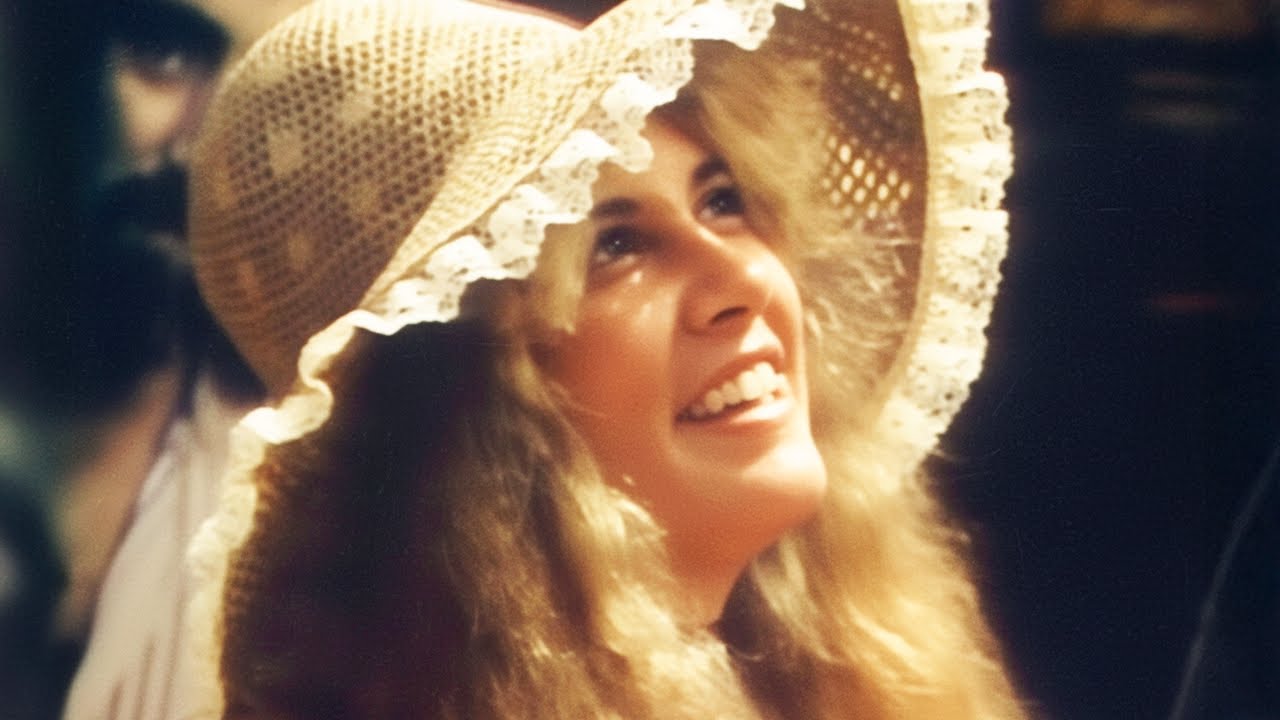
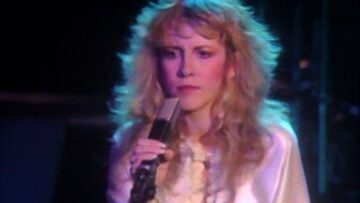
On June 4, 1979, the 112 members of the University of Southern California Trojan Marching Band — the ensemble known as the Spirit of Troy — arrived in full uniform at Dodger Stadium in Los Angeles. Fleetwood Mac had hired the entire empty stadium for the day. The band recorded the marching band’s brass and percussion live in the open air, and a film crew documented the session for what became the song’s music video. The footage is its own piece of Fleetwood Mac history: Stevie Nicks in a band uniform twirling a baton like a drum major, Christine McVie wandering the field with a glass of wine, Buckingham trying to keep Nicks within camera frame as she waved a wide-brimmed hat. Bassist John McVie was not there — he was on holiday in Tahiti during the shoot, having recorded his bass part earlier — so Mick Fleetwood carried a life-size cardboard cutout of him across the stadium turf and propped it in the stands with the rest of the band. “It was one of the big five experiences of my life,” Nicks said of the day. “Seeing these kids play this song in full regalia with the gold lamé boots and the red and the Trojan helmets and screaming and yelling and playing trumpets and marching into this empty stadium was very twilight zone.”
The recording itself was as unconventional as the staging. Producers Richard Dashut and Ken Caillat, working alongside the band, built the track around Mick Fleetwood’s minimalist, almost tribal percussion and the marching band’s brass rather than any of the elements that had made Rumours a radio fixture. Buckingham cut his guitar parts on a Turner Model 1 for the instrument’s bright, cutting tone. The vocal was a clipped, distorted shout rather than a sung lead. “Tusk” was one of the first records released using a digital mixdown taken from an analog source. The marching band session alone cost a reported $50,000; the full Tusk album would cost over a million dollars to produce, making it the most expensive rock album made up to that point. Warner Bros. executives, who had been waiting for a second Rumours, were reportedly horrified by what they heard.
The follow-up that refused to be a follow-up
“Tusk” was released as a single on September 21, 1979, ahead of the double album Tusk, which arrived on October 12, 1979, in the United States. Whatever the label feared, the single performed. It reached No. 8 on the Billboard Hot 100 in the United States, No. 3 in Australia and Canada, and No. 6 in the United Kingdom — Fleetwood Mac’s first British Top 10 single since 1970, the 1973 reissue of “Albatross” aside. The album reached No. 4 on the Billboard 200 and went on to sell roughly four million copies in the United States. By the standard of Rumours, that was a disappointment, and the label treated it as one. By the standard of almost any other band, it was a substantial commercial success — and critically, the verdict has only moved in the album’s favor across the decades since. Tusk now sits on best-of-the-era lists, including NME’s 500 Greatest Albums of All Time, and is widely cited as the moment Fleetwood Mac proved they would not be held hostage by their own biggest record. John McVie said the album sounded like “the work of three solo artists.” Mick Fleetwood has called it his favorite Fleetwood Mac album.
The relationship the song created outlasted the record. The USC Trojan Marching Band joined Fleetwood Mac for all five of the band’s December 1979 concerts at the Forum in Los Angeles. On October 4, 1980, Buckingham, Nicks, and Fleetwood presented “Tusk” to the Trojan band during a football game at the Los Angeles Memorial Coliseum — this time in front of a full crowd. The USC band still plays the song; in an ESPN retrospective published in late 2025, band members described “Tusk” as the song audiences ask for everywhere they go, more than four decades after that empty-stadium Sunday. Fleetwood Mac’s classic five-member lineup continued through 1987 and reunited for tours into the 2010s. Christine McVie died on November 30, 2022; after her death, Stevie Nicks said the band could not continue without her. What remains is the catalog — and inside it, “Tusk” stands as the strangest, most defiant thing the most commercially successful version of Fleetwood Mac ever did. They had every reason to repeat themselves. They hired a marching band instead.