



Peter Paul and Mary – Early Morning Rain
A song Gordon Lightfoot wrote about being homesick at Los Angeles International Airport, sung by a folk trio whose manager also happened to manage Lightfoot — and the Canadian duo who had recorded it first — and Bob Dylan too: a chart hit assembled by one of the canniest men in 1960s music.
The first thing to understand about Early Morning Rain is that it is not, despite a half-century of assumptions, a Canadian song. Gordon Lightfoot wrote it in 1964, when he was twenty-five and working in Toronto, but its real birthplace is Los Angeles in 1960. He had moved to Westlake to study music for a year, was lonely, was poor, and on rainy afternoons he would catch a bus to Los Angeles International Airport to stand at the perimeter fence and watch the jets take off through the weather. The song that grew out of those afternoons is about a man who cannot afford a ticket home, watching the planes leave without him. “You can’t jump a jet plane,” the last line goes, “like you can a freight train.” The song is set in California. The rain is California rain. The freight train was the consolation prize.
By the time it reached Peter, Paul and Mary, it had already passed through several hands — and one man’s office in particular. Albert Grossman, the trio’s manager, was one of the most influential figures in the 1960s folk revival. He also managed Bob Dylan, the Canadian duo Ian & Sylvia, and, by 1965, the still-largely-unknown Gordon Lightfoot. When Lightfoot finished Early Morning Rain, Grossman placed it across three of his own artists in quick succession. Ian & Sylvia recorded it first and released their single on August 31, 1965; the song hit number one on the Canadian Adult Contemporary chart by the end of that summer. Peter, Paul and Mary cut their version that August at Bell Sound Studios in New York for their fifth studio album See What Tomorrow Brings, released by Warner Brothers in October 1965 and produced by Grossman himself with Milt Okun as musical director. Lightfoot would not record his own version until the following year on his debut album Lightfoot!, by which point the song had been on three other artists’ records.
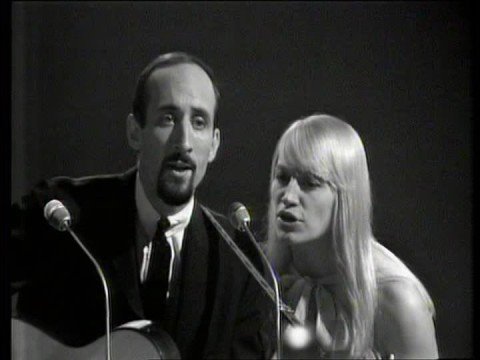
The Peter, Paul and Mary version is the polished one — the cleanest arrangement, the most confident harmonies, the slightly muted reading of the lyric that lets the sadness sit just below the surface rather than crash through it. Peter Yarrow’s fingerpicking on the guitar holds the song’s frame; Paul Stookey, the baritone, adds the second guitar and the second voice; Mary Travers’s contralto, the lowest in the trio, gives the chorus its lift. The single peaked at number 91 on the Billboard Hot 100 and number 39 on the Canadian charts. By the trio’s lofty standards — three previous American number ones, two of them in the prior eighteen months — the chart positions were modest. But the song’s life was just beginning.
The BBC, late 1965, and a Christmas Day broadcast
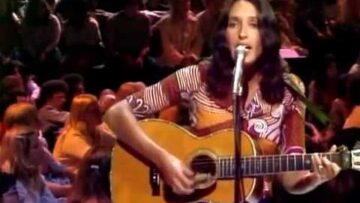
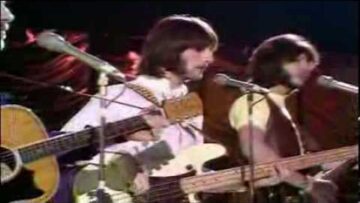
The performance featured here was filmed during Peter, Paul and Mary’s late-1965 visit to Britain — a tour built around the release of See What Tomorrow Brings. They were booked into the BBC’s folk-music series Tonight in Person, a programme broadcast on BBC Two that had been running since 1963 and would continue through 1967, featuring concerts and studio sessions from Joan Baez, Tom Paxton, Judy Collins, the Clancy Brothers, and most of the major figures of the American and British folk revivals. Part 1 of the Peter, Paul and Mary episode aired on Christmas Day 1965; Part 2 on New Year’s Day 1966. The trio ran through a set drawn from their five albums up to that point — When the Ship Comes In, San Francisco Bay Blues, Puff the Magic Dragon, For Lovin’ Me, Blowing in the Wind, Early Morning Rain. The BBC reaired the episodes on BBC Four in January 2009.
What is moving about watching the footage now is how the song has accrued history around it. Within months of the Tonight in Person broadcasts, George Hamilton IV cut a country version of Early Morning Rain that went to number nine on the US country chart; Bob Dylan included it on Self Portrait in 1970; Elvis Presley recorded it for Elvis Now in 1972 and kept it in his live setlist for the rest of his career, singing it on the final tour stop of his life at Market Square Arena in Indianapolis on June 26, 1977. The Grateful Dead played it. Paul Weller took it to number 40 in the UK as a single in 2005. The song that had taken so long to reach Gordon Lightfoot’s own catalogue became one of the most-covered records in folk music — the single thing in his songbook that strangers most often request.
Peter, Paul and Mary’s part in that history is the one that put the song into American living rooms first. The trio’s live recordings have a way of seeming both modest and unimprovable, the way the best things often do. Peter Yarrow died on January 7, 2025, at the age of 86. Mary Travers had died in 2009, the year the group officially dissolved. Paul Stookey, the last surviving member, turned 88 last November. The version they recorded in 1965, and performed for the BBC weeks later, is now what their own recording always was for the song — the version that travels with you. Watch the video.