



![Sinéad OConnor – Nothing Compares 2 U (Official Music Video) [HD]](https://musicvideosclub.com/wp-content/uploads/2025/11/sinead-oconnor-nothing-compares-360x203.jpg)




Serge Gainsbourg & Jane Birkin – Je t’aime… moi non plus
Bardot’s Husband Killed the First Version — So Gainsbourg Asked Everyone Else, and Everyone Said No
The title was stolen from Salvador Dalí. The song was written as a love song, though Gainsbourg called it an anti-love song, and called it pure, though almost no one believed him. The first version was shelved by a jealous husband. The second version was recorded at Marble Arch in London, went to number one in the UK while simultaneously banned by the BBC, was denounced by the Vatican, and allegedly got the Italian record executive who released it excommunicated from the Catholic Church. Gainsbourg’s response to this last development was to tell Jane Birkin that the Pope was “our greatest PR man.” He was not wrong. “Je t’aime… moi non plus” sold three million copies by October 1969. It did all of this while being refused airplay in Spain, Sweden, Brazil, Italy, Portugal, and most of the United States. The BBC banned it and Top of the Pops refused to broadcast it — the first time the programme had ever declined to play a number one single. The song did what banned things reliably do: it made people desperate to hear it.
The chain of events that led to Birkin’s involvement began with a bad date. In late 1967, Gainsbourg was in a relationship with Brigitte Bardot — married, as she was at the time, to the director Gunter Sachs. After a disappointing evening together, Bardot called Gainsbourg the following day and, by way of penance, demanded that he write her the most beautiful love song he could imagine. That night he wrote two songs: “Bonnie and Clyde,” which they recorded and released together in 1968, and “Je t’aime… moi non plus.” He derived the title from a Dalí quote — Picasso is Spanish, me too; Picasso is a genius, me too; Picasso is a communist, me neither — a recursive logic of negation that suited Gainsbourg’s sensibility precisely. Bardot and Gainsbourg recorded the song in a Paris studio in a two-hour session, in a small glass booth, with an arrangement by Michel Colombier. When news of the recording reached the press, France Dimanche reported on the sighs and gasps in clinical detail. Bardot’s husband demanded the record be withdrawn before release. It was.
The Recording That Silenced a Restaurant
With the Bardot version locked in a vault, Gainsbourg began looking for another duet partner. He approached Marianne Faithfull, who later recalled: “Hah! He asked everybody.” He also approached Valérie Lagrange and Mireille Darc. All declined. The solution arrived in 1968 when Gainsbourg met Jane Birkin on the set of the French romantic comedy Slogan, in which both were cast. Birkin was twenty-one, recently separated from the composer John Barry, and knew the Bardot version of the song. She told Gainsbourg that she found it too impressive to follow — and that she was jealous of it. Gainsbourg’s pitch was precise: he would have her sing the song an octave higher than Bardot, so her voice would carry what he described as the quality of a little boy. She said yes immediately. The Birkin version was recorded at a London studio near Marble Arch, with an arrangement by Arthur Greenslade. Birkin later admitted she got carried away during the session — so much so that the producers told her to calm down, and at one point she stopped breathing altogether. She said you can still hear the gap in the finished recording. When Gainsbourg played the completed version in the restaurant of the Hôtel d’Alsace in Paris — the hotel where Oscar Wilde had died — every knife and fork in the room went down simultaneously. Gainsbourg turned to Birkin and said he thought they had a hit.
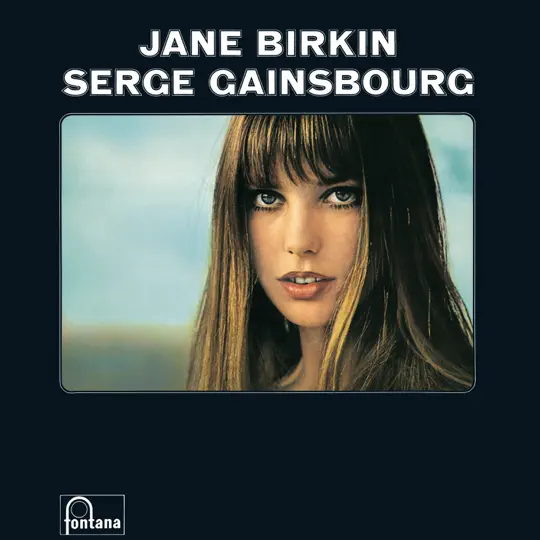
The single was released in February 1969 on Philips’s Fontana subsidiary, with a plain sleeve carrying only the words “Interdit aux moins de 21 ans” — forbidden to those under twenty-one. Philips did not put the main label’s name on the release. The record climbed to number two on the UK Singles Chart, at which point Fontana withdrew it — reportedly because the label boss’s wife was appalled by the content. Gainsbourg took the recording to a small independent label, Major Minor Records, who reissued it. On October 27, 1969, it reached number one. It became simultaneously the first banned record and the first foreign-language single to top the UK chart. Top of the Pops, which had never before refused to broadcast a number one, declined to play it. The BBC banned it outright. Sales continued regardless.
The Version That Shouldn’t Have Survived
By the end of 1969 the single had sold three million copies across Europe. By 1986 that figure had reached four million. Bardot, who had spent seventeen years watching Gainsbourg’s recording with Birkin define the song she had inspired and recorded first, eventually permitted the release of her own version in 1986, after her friend Jean-Louis Remilleux persuaded her to contact Gainsbourg directly. It was released to considerable attention but could not displace what Birkin and Gainsbourg had already made. The Birkin version was the definitive one — not because it was more technically accomplished, but because the relationship between its two performers was audible in every breath, and because the specific texture of Birkin’s voice, pushed by Gainsbourg to the upper edge of its range, produced something that no subsequent recording has managed to replicate.
Gainsbourg described the song as a pure love song and was genuinely frustrated by the reception it received. “For the first time in my life I wrote a love song and it’s taken badly,” he said. The paradox is that the song’s frank depiction of physical intimacy — the two voices intertwined, Birkin’s breathing rising and falling, the lyric moving through imagery of waves and islands and the specific geography of desire — is precisely what made it endure. It was not pornography dressed as pop. It was pop honest enough about what pop usually pretends isn’t happening. Gainsbourg knew that. The Pope, apparently, did not. Jane Birkin, decades later, was still puzzled by the fuss. “It wasn’t a rude song at all,” she told a journalist in 2004. “I don’t know what all the fuss was about. The English just didn’t understand it. I’m still not sure they know what it means.” Birkin died on July 16, 2023, at the age of 76. Gainsbourg had died thirty-two years before her, on March 2, 1991, at sixty-two. The song they made together in a London studio in 1969 has not stopped playing since.
SONG INFORMATION
y