








Bobby Darin – Splish Splash
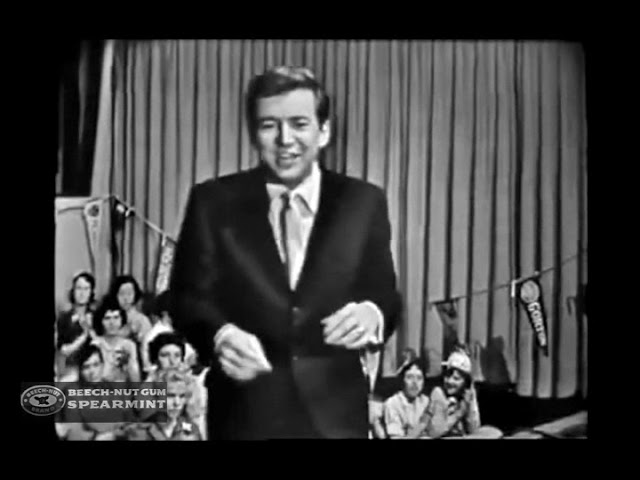
Bobby Darin and Murray the K Were Soaking Their Feet in Basins of Epsom Salts After a Celebrity Softball Game in Central Park When Murray’s Mother Jean — a Former Vaudeville Pianist — Called With a Song Title. An Hour Later They Had Written “Splish Splash.” A Year Later It Had Sold a Million Copies. On the Evening of May 2, 1959, Darin Performed It on Dick Clark’s ABC Saturday-Night Primetime Show.
The performance featured here was filmed at the ABC studios in New York for broadcast on the evening of May 2, 1959. The programme was The Dick Clark Saturday Night Beechnut Show, a primetime variety series the network had launched in February 1958 to capitalise on Clark’s afternoon success with American Bandstand — same host, same teen-pop instinct, larger budget, Saturday-night audience, sponsored by the Beechnut chewing gum company that paid for the name on the marquee. Bobby Darin was twenty-two years old. He had performed on the Beechnut show six times before. The song he sang that evening, Splish Splash, had reached number three on Billboard’s Hot 100 the previous August, sold a million copies before the end of 1958, and given a Bronx kid with a damaged heart and a stalled Decca contract the career he had been promising people he was going to have since he was fifteen. He performed it on the Beechnut stage to a teenage studio audience, in front of the small jazz combo Clark used as house band, in the kind of high-energy choreographed set the show specialised in. Dream Lover, his follow-up, was simultaneously climbing the Hot 100 on its way to number two. Darin was at the exact moment in his career where Splish Splash had stopped being his big single and become his calling card.
The story of how the record came to be made has been told many times, in slightly different versions, by most of the people who were involved. The most consistent account — corroborated by Peter Altschuler at the Murray the K archives, by Murray Kaufman’s son in interviews, and by Darin himself in radio appearances during the 1960s — goes like this. Bobby Darin and Murray Kaufman, the WINS disc jockey who had been championing Darin’s records on New York radio for almost two years without commercial result, played in a celebrity softball game in Central Park one weekend in early April 1958. After the game, both men returned to Kaufman’s apartment just south of the park and recovered from the agony of de feet by soaking them in basins of Epsom salts. As she did every day, Murray’s mother Jean — a former vaudeville pianist who had become, in retirement, a frustrated songwriter herself — called to check on her only son. Murray told her about the game, the soaking feet, the softball-day fatigue. Jean rang back a few minutes later with an idea for a song. She wanted them to write something starting with the line “Splish, splash, take a bath.” Murray and Darin worked through the lyric over the next hour. Jean collaborated on the melody by telephone. Darin took it to Atlantic Records the following morning.
The Atlantic Session, the Engineer, and the Lyric Borrowed With Permission
Darin had signed with Atlantic’s Atco subsidiary in 1957 after Decca had dropped him. His first three Atco sessions, supervised by producer Herb Abramson, had failed to produce a hit. By April 1958, Ahmet Ertegun — co-founder of the label, the man who had built Atlantic on Ray Charles, Big Joe Turner, and the Drifters — had decided to produce Darin himself. The session for Splish Splash took place on the evening of April 10, 1958, at Atlantic Studios in New York, with the label’s senior engineer Tom Dowd at the controls. The musicians on the date were Jesse Powell on tenor saxophone, Al Caiola and Billy Mure on guitars, Wendell Marshall on bass, and Panama Francis on drums. Three songs were cut: Splish Splash, Judy, Don’t Be Moody (which became the B-side), and Queen of the Hop (which became Darin’s third single). The two-and-a-quarter-minute master Ertegun and Dowd cut that night was a clean, propulsive piece of late-fifties rock and roll — driving handclap rhythm, Powell’s saxophone solo punctuating the second verse, Darin’s vocal somewhere between Jerry Lee Lewis’s strut and the smooth pop phrasing he would soon make his real signature. The lyric quoted, without credit but with permission, a line from another 1958 record: “Movin’ and a-groovin'” was the title of a Duane Eddy instrumental from earlier that year. “Bobby asked me,” Eddy would later tell interviewers. “I said yes. That’s just music — sharing little bits of melody and all.”
Atco released the single on May 19, 1958. It entered Billboard’s Top 100 chart in the first week of June at number fifty-one and reached number three in early August, where it spent two weeks before being pushed off the top three positions. It stayed on the chart for twelve weeks in total. It reached number two on the R&B Best Sellers chart and number one on the R&B Most Played by Jockeys for two weeks in August, an unusual cross-format performance for a record by a white singer at the moment when American radio was still racially segregated by format and frequency. It reached number fourteen on the C&W Best Sellers in Stores chart — Bobby Darin’s only career entry on a country chart. It reached number three in Canada on the CHUM survey and number eighteen on the UK Singles Chart, where it spent seven weeks. In Britain, a comedy version recorded by Charlie Drake and produced by the young Parlophone staff producer George Martin — three years before Martin would sign the Beatles — actually outsold Darin’s original. The single passed the one-million-sales mark before the end of 1958. The RIAA certified it Gold. Darin, who had been signed to Atco for less than a year and had begun the year as an unranked hopeful, ended 1958 as the most commercially successful new singer of the rock-and-roll generation.
The Boy From the Bronx, the Beechnut Stage, and What Came Next
Walden Robert Cassotto had been born in East Harlem on May 14, 1936, and raised in the Bronx by the woman he believed was his mother (she was, in fact, his grandmother; the woman he believed was his older sister was his mother, a fact he would not learn until 1968). Severe rheumatic fever in his early childhood had scarred the valves of his heart, and his family had been told, by the time Darin was a teenager, that he was unlikely to live past his twenties. He took the news as license to work at speed. By the time he sat at the Atlantic session in April 1958 he had already, at twenty-one, written commercial jingles, taught himself piano, drums, and guitar, signed and lost a contract with Decca, worked the Catskills Borscht Belt circuit, and been told by his manager that this Atco contract was his last shot. Splish Splash changed everything inside a single summer. By the time he performed it on Dick Clark’s Saturday-night stage on May 2, 1959, the song was almost a year old by Billboard chart timing, and Darin had spent the intervening eight months touring American Bandstand, the Beechnut show, the Ed Sullivan Show, and the major theatres where the rock-and-roll package tours were headlining. Dream Lover, the song Darin had written and produced himself, was at that moment heading for the top of the UK Singles Chart and number two on the American Hot 100. Six months later, in November 1959, his cover of Mack the Knife from Brecht and Weill’s The Threepenny Opera would top the Billboard Hot 100 for nine non-consecutive weeks, win Record of the Year at the 1960 Grammys, and make Darin, at twenty-three, the inaugural winner of the Grammy Award for Best New Artist.
The Beechnut show appearance is, in that sense, a snapshot of a singer at the exact moment he was turning into something else. Darin would record That’s All, the swing-standards album, before the end of 1959. He would star in Come September opposite the seventeen-year-old Sandra Dee in 1960, marry her in December of that year, win a Golden Globe for the performance, get an Academy Award nomination in 1963 for Captain Newman, M.D., work on Robert F. Kennedy’s 1968 presidential campaign, be at the Ambassador Hotel in Los Angeles the night Kennedy was shot, retreat into seclusion in a trailer near Big Sur, learn about his real parentage, found his own protest-folk label Direction Records, write Simple Song of Freedom (a hit for Tim Hardin), and die on December 20, 1973, hours after a six-hour open-heart surgery, at the age of thirty-seven. The Rock and Roll Hall of Fame inducted him in 1990. The Beechnut show audience watching him on May 2, 1959 was watching the second chapter of a life Darin himself had estimated, at fifteen, would not last to thirty. What they were watching, more specifically, was a song that had been written in an apartment on the Upper West Side of Manhattan in roughly an hour — three writers, one telephone, a basin of Epsom salts each, a vaudevillian’s title — and that had paid for everything else.
SONG INFORMATION
Related videos
 Watch LaterAdded
05:23
Watch LaterAdded
05:23  Watch LaterAdded
04:17
Watch LaterAdded
04:17  Watch LaterAdded
04:43
Watch LaterAdded
04:43