


![The Score – Revolution: Lyrics [Assassins Creed: Unity]](https://musicvideosclub.com/wp-content/uploads/2025/10/the-score-revolution-lyrics-assa-360x203.jpg)





![The Dead South – You Are My Sunshine [Official Music Video]](https://musicvideosclub.com/wp-content/uploads/2026/01/the-dead-south-you-are-my-sunshi-360x203.jpg)



![Sister Sledge – Hes the Greatest Dancer (Official Music Video) [4K]](https://musicvideosclub.com/wp-content/uploads/2025/09/sister-sledge-hes-the-greatest-d-360x203.jpg)







Claudine Longet – Nothing to Lose (from “The Party” movie)
The Song Mancini Thought Nobody Would Hear
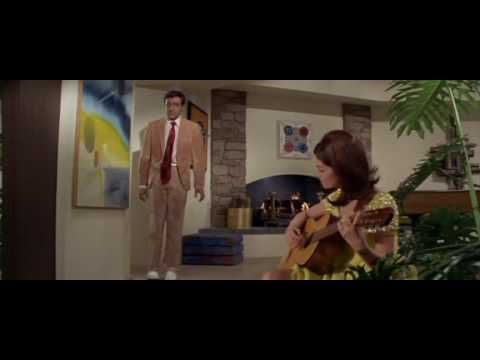
Released in 1968 as a single on A&M Records with “White Horses” on the A-side, “Nothing to Lose” showcased Claudine Longet’s delicate, breathy vocal style on a song composed by Henry Mancini with lyrics by Don Black for Blake Edwards’ comedy film The Party. The track appeared in a pivotal scene where Longet’s character Michele Monet performs an impromptu guitar performance to impress party guests, only to be interrupted by the film’s chaotic comedy. The song never charted as a single, though it became one of the most memorable moments in the film when it premiered on April 4, 1968. What made the performance particularly poignant was composer Henry Mancini’s resigned comment about audience reactions: that’s what I get for writing a nice song for a comedy, nobody’s going to hear a note of it, a prediction that proved both accurate and unfair as the song found new life decades later through rediscovery by lounge music aficionados.
The Party became a modest box office success in 1968, though the film’s improvisational comedy style meant Longet’s musical performance was often overshadowed by Peter Sellers’ physical comedy. The soundtrack album released by RCA Victor in August 1995 gave “Nothing to Lose” a second life, while a 2007 compilation Henry Mancini Songbook included Longet’s version as a standout track. The song achieved better chart performance in Longet’s native France and in easy listening markets, though it never troubled the Billboard Hot 100 during her career peak between 1966 and 1968 when she charted four singles including “Meditation” at number ninety-eight, “Hello, Hello” at number ninety-one, and “Love Is Blue” which spent twelve weeks on the chart peaking at seventy-one. Longet was competing against other breathy French chanteuses including Françoise Hardy and France Gall, while American audiences were captivated by her ethereal, innocent delivery that Andy Williams described as easy-listening songs in that distinctive breath and very sexy accent.
Henry Mancini composed “Nothing to Lose” with Don Black providing the English lyrics, crafting a bittersweet meditation on fleeting romance with lines like both you and I have seen what time can do, we’ll only hurt ourselves if we build dreams that don’t come true. The song’s philosophy matched the character Michele perfectly, a struggling actress at a Hollywood party hoping for her big break while trying to maintain emotional distance from inevitable disappointment. Black’s lyrics walked a fine line between cynicism and hope, suggesting that without expectations there can be no heartbreak, asking what can we lose, we know the score. Mancini’s melody was quintessential late-sixties sophistication, employing jazz-influenced chord progressions and a gentle bossa nova rhythm that complemented Longet’s limited vocal range while showcasing her particular gift for conveying vulnerability through understatement rather than vocal pyrotechnics.
Recording details for the single version remain somewhat obscure, though producer Tommy LiPuma oversaw the session for A&M Records during 1968, likely at one of the label’s Los Angeles facilities. Longet sang with her characteristic featherlight touch, accompanied by acoustic guitar and subtle orchestration that maintained the intimate feeling required for the film scene. The arrangement featured Nick DeCaro, Longet’s regular musical cohort who arranged most of her charting albums during this period. In The Party, Longet performed the song on camera with an acoustic guitar, visibly struggling to keep a straight face during takes as Sellers improvised comedy business around her. Director Blake Edwards used the performance as a moment of genuine emotion amidst the chaos, with Michele’s song serving as the emotional heart of an otherwise anarchic comedy. The contrast between Longet’s sincere delivery and the absurdist humor surrounding it created an unexpectedly touching scene that critic Peter Lehman called one of the film’s most effective moments.
“Nothing to Lose” appeared on several Claudine Longet compilations over the decades, though it was never included on any of her five studio albums for A&M Records released between 1967 and 1970. Her debut Claudine peaked at number eleven on the Billboard pop albums chart in 1967, selling over 500,000 copies and establishing her as a viable recording artist rather than merely Andy Williams’ wife. Follow-ups The Look of Love in 1967, Love Is Blue in 1968, Colours in 1968, and Run Wild, Run Free in 1970 featured covers of contemporary pop songs by the Beatles, Bee Gees, and Donovan arranged in her distinctive lounge-bossa nova style. After divorcing Williams in 1975, she recorded two final albums for his Barnaby Records label, We’ve Only Just Begun in 1971 and Let’s Spend the Night Together in 1972, before retiring from recording. A planned third Barnaby album went unreleased until 1993 when many tracks appeared on the compilation Sugar Me, though some master recordings remain lost.
The song has been covered by several artists drawn to its sophisticated melancholy. British singer Ronnie Carroll recorded a version, while jazz musicians including Janet Seidel, Cory Weeds with The Jeff Hamilton Trio, and Chris Minh Doky have interpreted it as a jazz standard. Isabelle Antena and Tony Foster both released versions, while French-Brazilian artist Magnolia and van Endert created their own take. The song appeared in several film and television contexts beyond The Party, often used to evoke late-sixties sophistication and Continental elegance. Wes Anderson reportedly considered using Longet’s version for The Royal Tenenbaums before ultimately selecting other Mancini compositions. The aesthetic that Longet represented, a specifically sixties brand of childlike European femininity combined with knowing world-weariness, influenced everyone from Stereolab to Air to Lana Del Rey decades later.
Claudine Longet’s career and life took a dramatic turn in 1976 when she fatally shot her boyfriend, Olympic skier Vladimir Spider Sabich, at his Aspen home on March 21. She claimed the gun discharged accidentally while Sabich was showing her how it worked, though ballistics evidence showed the trigger had been pulled more than once. Convicted of criminal negligence rather than murder, she served thirty days in jail after taking a vacation with her defense attorney Ron Austin, whom she later married. Andy Williams stood by her throughout the trial, paying legal costs despite their 1975 divorce, and they remained close friends until his death in 2012. The scandal overshadowed Longet’s artistic legacy completely, with subsequent references to her focusing almost exclusively on the Sabich case rather than her music or acting career. She signed a confidentiality agreement with Sabich’s parents in 1978 after they dropped a civil suit, and has lived in Aspen ever since, maintaining an intensely private life. The Rolling Stones even wrote a song called “Claudine” about her trial, though it remained unreleased for years. Looking back, “Nothing to Lose” stands as a time capsule of a specific cultural moment when French ingenues could become American pop stars through sheer charm and influential husbands, and Henry Mancini could write beautiful songs for comedies that audiences would actually remember decades later, proving the composer’s pessimism wonderfully wrong.
SONG INFORMATION
Related videos
 Watch LaterAdded
03:03
Watch LaterAdded
03:03  Watch LaterAdded
02:25
Watch LaterAdded
02:25  Watch LaterAdded
03:00
Watch LaterAdded
03:00