



![Christopher Cross – Ride Like The Wind (Official Music Video) [45th Anniversary]](https://musicvideosclub.com/wp-content/uploads/2025/12/christopher-cross-ride-like-the-360x203.jpg)
Creedence Clearwater Revival – Travelin’ Band
A Little Richard Tribute That Got Them Sued, Then Stuck At Number Two
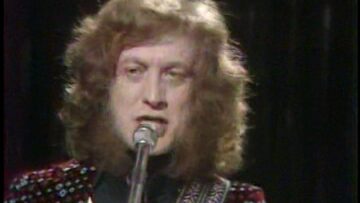
Creedence Clearwater Revival released “Travelin’ Band” on January 31, 1970, as a double A-sided single with “Who’ll Stop the Rain.” The song entered the Billboard Hot 100 on January 25 and climbed to number two on March 1, 1970, where it stayed for two consecutive weeks, spending 10 total weeks on the chart. It reached number eight in the UK, number four in Germany, number five in Canada, and topped the chart in Belgium. What nobody at Fantasy Records anticipated was that John Fogerty’s heartfelt homage to Little Richard would result in a plagiarism lawsuit from Specialty Records—or that Simon & Garfunkel’s “Bridge Over Troubled Water” would block them from the number one spot they’d chase their entire career but never reach.
The song marked CCR’s fifth consecutive record to crack the top ten—following “Proud Mary,” “Bad Moon Rising,” “Green River,” and “Down on the Corner.” Four more would follow: “Up Around the Bend” hit number four, “Lookin’ Out My Back Door” reached number two, “Have You Ever Seen the Rain” peaked at number eight, and “Sweet Hitch-Hiker” climbed to number six. Nine consecutive top ten hits, five of them reaching number two—but never that elusive number one. The album Cosmo’s Factory, released July 8, 1970, spent nine consecutive weeks at number one on the Billboard 200 and earned quadruple-platinum certification. Rolling Stone called it one of the 500 greatest albums of all time, ranking it number 413 on their 2020 list.
Fogerty wrote the song about the frantic life of constant touring—the airports, the lost baggage, the waiting around in heat at festivals like Woodstock. “Seven-thirty-seven comin’ out of the sky / Won’t you take me down to Memphis on a midnight ride?” The lyrics captured 1969’s road warrior reality when CCR was everywhere—concerts, festivals, television. Drummer Doug Clifford later explained that their baggage was constantly getting lost and they spent endless hours waiting around. Things improved when they got their own private plane, but by then the damage was done—the touring lifestyle had begun grinding them down. The song’s driving rhythm and Fogerty’s vocal delivery were deliberate tributes to Little Richard, one of Fogerty’s idols. Specialty Records, which owned Richard’s catalog, saw it differently and sued, claiming the song copied “Good Golly Miss Molly.” Bassist Stu Cook disagreed, arguing it sounded more like “Long Tall Sally.” The lawsuit settled out of court with Specialty earning royalties.
The track was recorded in December 1969 at Studio C of Wally Heider’s Studios in San Francisco and produced by John Fogerty. After the basic track was cut with the full band—Fogerty on guitar and vocals, his brother Tom Fogerty on rhythm guitar, Cook on bass, and Clifford on drums—John returned to the studio alone to overdub additional parts. He played saxophone for the first time on a CCR recording, added piano, and layered horns to fatten the sound. The result was a wall of noise that sounded like ten musicians, not four. Rolling Stone’s John Grissim wrote that Fogerty “lays down a very credible Little Richard vocal and arrangement, substituting a good tenor shriek for a trademark upper register vibrato.” A raw alternate version of the song appeared on the 40th Anniversary CD Edition of Cosmo’s Factory in 2008, revealing how sparse the original tracking was before Fogerty’s overdubs.
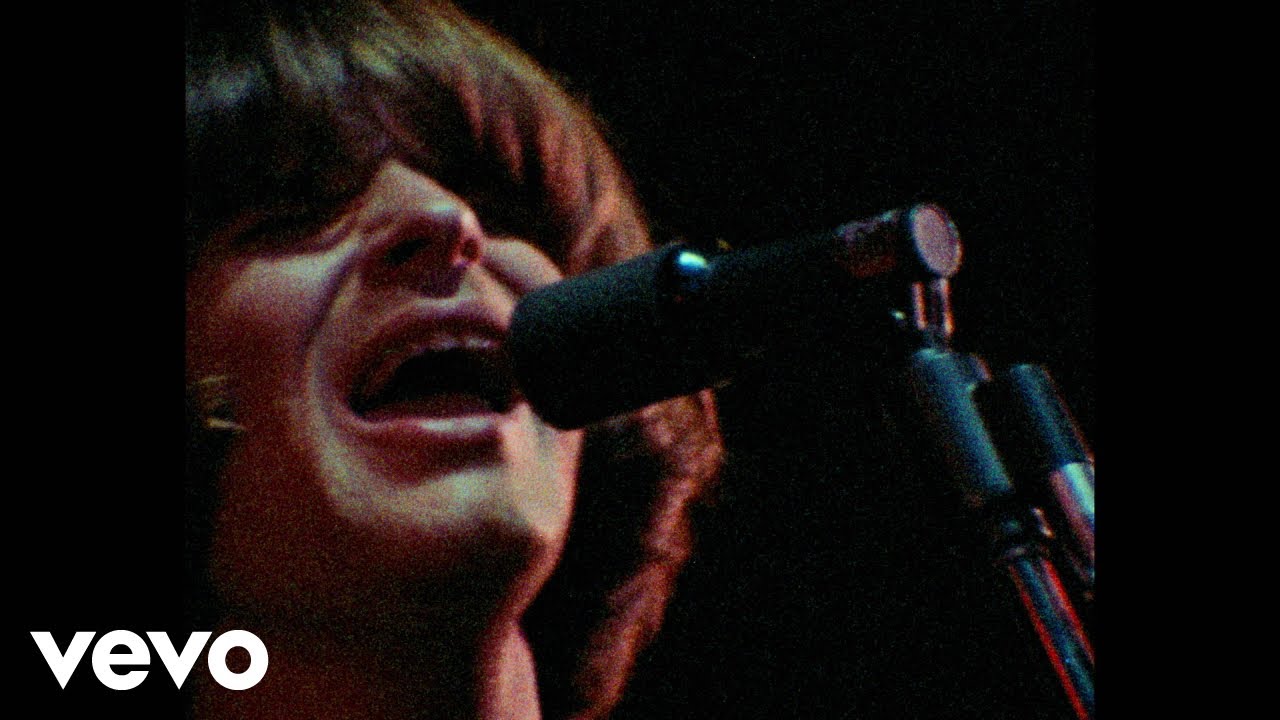
The band performed “Travelin’ Band” live for the first time at their homecoming concert at Oakland Coliseum on January 31, 1970—one day before the single’s release. That performance was captured for The Concert album and later broadcast on television in summer 1971 as In Concert. The trio (without Tom Fogerty, who left in 1971) delivered a blistering version at the closing concert of Fillmore West on July 3, 1971, broadcast live by KSAN-FM in San Francisco. During the band’s 1970 European tour, they opened their legendary Royal Albert Hall show with it—a performance finally released as an album and documentary film in 2022, more than 50 years after the fact. The multitrack tapes were restored and mixed by Grammy-winning producer Giles Martin at Abbey Road Studios.
The song has been covered by Curtis Stigers and The Forest Rangers for the TV show Sons of Anarchy, while The Jeff Healey Band performed it in the 1989 film Road House. It appeared in the Brazilian film O Homem Que Copiava during an armored car robbery sequence, in Pawn Sacrifice starring Tobey Maguire, and during a fight scene in the TV show The Good Guys. The song became available as downloadable content for the Rock Band video game series. John Fogerty continued performing it throughout his solo career, often using it as a concert opener starting with his Blue Moon Swamp Tour in 1997. In 2010, Fogerty performed it at the Academy of Country Music Awards with Miranda Lambert, Carrie Underwood, Brad Paisley, and Charlie Daniels.
For a song about the exhausting grind of life on the road, “Travelin’ Band” never stopped moving. It became CCR’s signature rocker—the song they opened concerts with, the one that captured their raw power better than anything else in their catalog. The lawsuit proved Fogerty had nailed his Little Richard tribute so perfectly that even Richard’s label couldn’t tell where homage ended and plagiarism began. As for never hitting number one? Fogerty later told interviewers he’d made peace with it. Sometimes being stuck at number two for your entire career means you were consistently great—just never lucky enough to release when Simon & Garfunkel weren’t dominating the world. The band that never stopped traveling finally called it quits in 1972, but the song keeps rolling on, forever caught between takeoff and landing.
SONG INFORMATION
Related videos
 Watch LaterAdded
03:14
Watch LaterAdded
03:14  Watch LaterAdded
04:45
Watch LaterAdded
04:45 