






Cyndi Lauper – Heartaches By The Number (LIVE)
Singing Like Ray Price Wasn’t Going To Work For Her
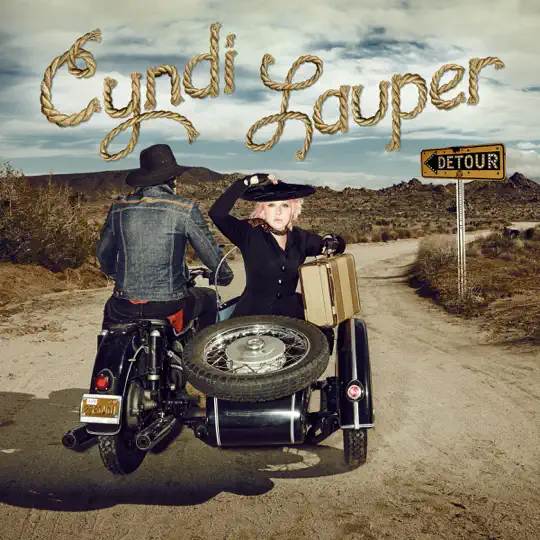
Released on May sixth, 2016, as part of her eleventh studio album Detour, Cyndi Lauper’s cover of “Heartaches by the Number” showcased her rockabilly-infused take on the country classic originally recorded by Ray Price in 1959. The album debuted at number twenty-nine on the Billboard 200, reached number four on the Top Country Albums chart, and sold thirty-six thousand copies in its first six months. The track demonstrated Lauper’s ability to honor tradition while stamping it with her distinctive personality, bringing grittiness that had more in common with Wanda Jackson than the smooth countrypolitan style Price perfected. What most fans don’t know is that Lauper initially tried singing it like Price but quickly realized his approach wouldn’t work for her voice or her vision. Producer Tony Brown encouraged her to embrace her rockabilly roots from her early Blue Angel days, allowing her raspy timbre and punk attitude to transform Harlan Howard’s heartbreak anthem into something entirely her own while remaining faithful to its essence.
The album debuted at number twenty-nine on the Billboard 200 with sixteen thousand one hundred copies sold in its first week and reached number four on Billboard’s Top Country Albums chart, her first appearance on that chart. By September 2016, the album had sold thirty-six thousand eight hundred copies in America. In the United Kingdom, it peaked at number forty-three on the UK Albums Chart. The track received positive reviews from critics who praised Lauper’s ability to maintain her distinctive voice while respecting country traditions. Rolling Stone’s Keith Harris wrote that aging rock and pop stars often seek late-career safe harbor in country music, but sixty-two-year-old Cyndi Lauper tackled the genre with characteristically daring eccentricity. Critics noted how the song’s two-stepping beat and bright fiddle complemented Lauper’s gritty delivery, creating something simultaneously authentic to country tradition and unmistakably Lauper. The recording succeeded precisely because she didn’t try to become a country singer but remained herself within country music’s framework, proving that great interpretations require staying true to one’s own voice.
Seymour Stein, founder of Sire Records and Lauper’s long-time supporter, instigated the project in 2014 after her Grammy-nominated blues album Memphis Blues demonstrated her ability to honor roots music traditions. Stein sent Lauper an extensive list of potential tracks spanning the nineteen-forties through sixties, knowing her history with rockabilly from her early Blue Angel band days before “Girls Just Want to Have Fun” made her a pop icon. Harlan Howard wrote the original song in 1959, and Ray Price’s version reached number two on the country chart that year. When Lauper began working on the track, she initially attempted to emulate Price’s smooth vocal style but found it didn’t suit her instrument. Her voice carries the raspy quality of someone who’s lived through struggles, making it perfect for conveying heartbreak but incompatible with Price’s polished approach. Brown recognized this immediately and encouraged her to lean into her natural grit, suggesting she think more about Wanda Jackson and early rockabilly rather than Nashville Sound countrypolitan smoothness.
Lauper recorded the track in Nashville during 2015 with veteran country producer Tony Brown, known for his work with George Strait and Reba McEntire. Sessions took place primarily at Sound Emporium Studios and Front Stage Studio, with mixing handled at Blackbird Studio. Lauper insisted on recording most tracks live with musicians to capture organic energy rather than building vocals over pre-recorded tracks. The production featured Nashville session elite including guitarist Brent Mason, steel guitarist Dan Dugmore, and pianist Steve Nathan. Brown’s direction emphasized letting the songs breathe while steering away from clinical perfection. Lauper told reporters her main concern was not making things clinical, explaining she didn’t want it clean but wanted it a little dirty, with the beat dirty and sexy as a mix of R&B and country. This philosophy perfectly suited the track, where her slightly rough vocals rode atop a driving rhythm that split the difference between honky-tonk and rockabilly. The arrangement inverted nothing from the original structure but completely transformed its emotional temperature through production choices and Lauper’s performance.
Detour marked Lauper’s first country album after Memphis Blues explored her blues roots. The album featured guest appearances from Willie Nelson on “Night Life,” Vince Gill on “You’re the Reason Our Kids Are Ugly,” Emmylou Harris on the title track, Jewel on “I Want to Be a Cowboy’s Sweetheart,” and Alison Krauss on “Hard Candy Christmas.” These collaborations demonstrated the respect Lauper had earned from country music’s establishment, with legends willing to participate in her exploration of their genre. Beyond this track, the album included covers of “Walkin’ After Midnight,” “I Fall to Pieces,” and “The End of the World,” demonstrating her range across country subgenres. AllMusic’s Stephen Thomas Erlewine gave the album three out of five stars, noting it was equally enamored of cowboy camp as it was Music City craft. Metacritic assigned it a normalized score of sixty-three out of one hundred based on eleven reviews, indicating generally favorable reception from critics who appreciated Lauper’s ambition even when execution didn’t always match intention.
The album spawned the Detour Tour, which ran from May ninth through October eighth, 2016, consisting of forty-eight performances across North America and Europe. The tour kicked off at Nashville’s historic Ryman Auditorium, with select dates co-headlined by Boy George. Lauper mixed songs from Detour with her pop classics, demonstrating how “Heartaches by the Number” could sit comfortably in a setlist alongside “Time After Time” and “True Colors.” The show incorporated Western motifs with simple staging featuring a small staircase, video screens displaying black-and-white Western film footage, and occasional blues-infused elements. Lauper performed the song with infectious energy that proved her interpretation wasn’t studio trickery but genuine affection for the material. When Rolling Stone premiered the track online before the album’s release, they noted it brought distinct rockabilly flavor that the eighties New Wave scene had absorbed from Jerry Lee Lewis and Wanda Jackson decades earlier, connecting Lauper’s current work to her earliest influences before fame found her.
“Heartaches by the Number” stands as proof that the best covers don’t require perfect technical mimicry but rather honest emotional connection filtered through the artist’s unique perspective. Lauper’s admission that singing like Ray Price wasn’t going to work demonstrates the self-awareness required for successful reinterpretation—knowing when to honor the original and when to trust your own instincts. The track showcased how Lauper’s decades of experience across pop, rock, blues, and Broadway prepared her for country music’s storytelling demands, proving genre barriers exist primarily in marketing departments rather than artistic practice. What began as Seymour Stein’s curated list of classic country songs transformed into Lauper’s declaration that rockabilly attitude and country tradition aren’t opposites but cousins, separated only by production choices and cultural assumptions. At sixty-two, Lauper proved she wasn’t seeking safe harbor but new challenges, taking a fifty-seven-year-old heartbreak standard and making it sound freshly written for anyone who’s ever counted their disappointments and kept loving anyway.
Related videos
 Watch LaterAdded
03:36
Watch LaterAdded
03:36  Watch LaterAdded
02:44
Watch LaterAdded
02:44  Watch LaterAdded
03:16
Watch LaterAdded
03:16