





![David Lee Roth – California Girls (Official Video) [HD]](https://musicvideosclub.com/wp-content/uploads/2026/10/david-lee-roth-california-girls-360x203.jpg)

Earth, Wind & Fire – Let’s Groove
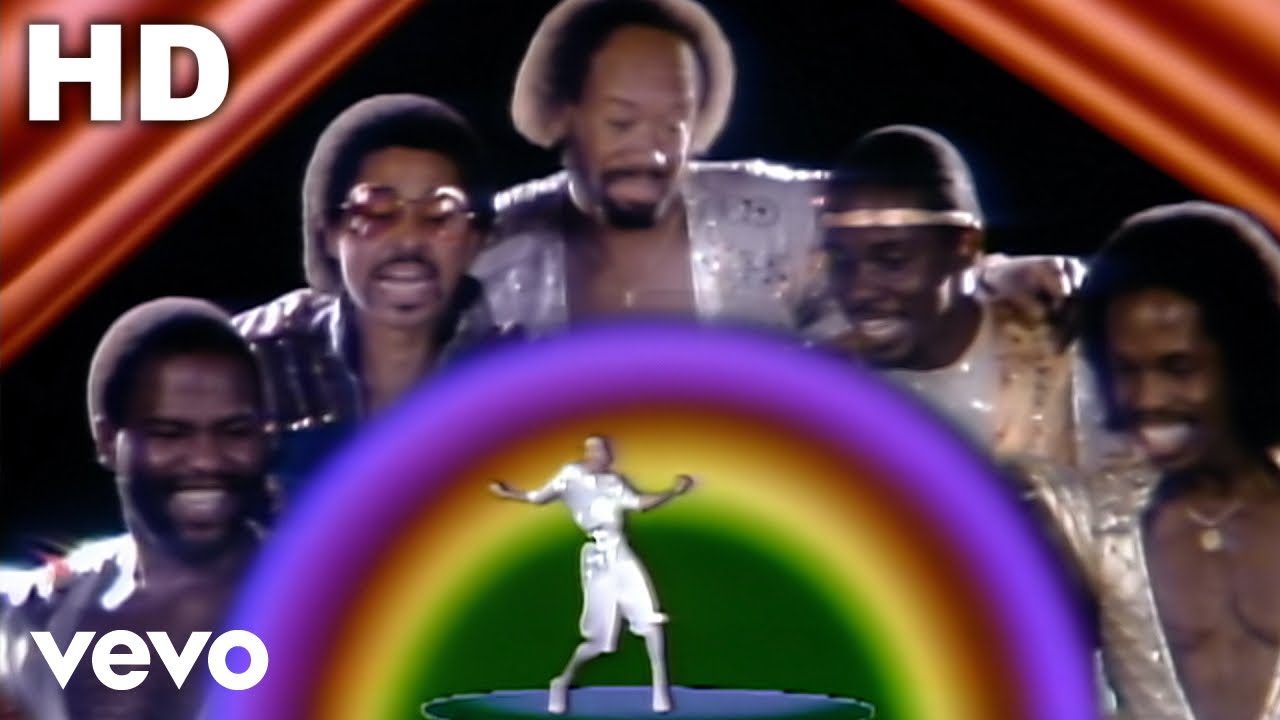
Those effects aren’t early CGI. There is nothing digital in this video at all.
The machine that made this video was called Scanimate, and it did not compute anything. It sat in a room at Image West in Los Angeles, roughly the size of a wall, and it worked by taking a video signal and bending it with voltages — stretching, smearing, colouring and multiplying the image in real time, live, as an operator turned knobs. Every effect in Let’s Groove was produced that way. There is no digital animation anywhere in it, because in 1981 there was essentially nowhere to get any.
Keep watching: Earth, Wind & Fire – September
Ron Hays directed it, and Hays was not a music video man. He came out of experimental film and video art, had worked with Scanimate systems for years, and understood what the machine could do that nothing else could. That is why the video still looks like nothing else. Digital effects age badly because each generation makes the previous one look coarse. Analog video synthesis does not age that way at all — it simply looks like itself, and forty-five years later people watching it still assume they are seeing very early computer graphics rather than a signal being physically distorted.
The song had its own reason to look forward. Disco had collapsed commercially by 1981, and the backlash was fierce enough that bands built on it were quietly rebranding or disappearing. Maurice White went the other way. He kept the dance floor and re-tooled the sound around it, bringing in guitarist Roland Bautista and writing with Wayne Vaughn, and the result opens on a vocoder — a machine voice, in 1981, on a record by a band with a nine-piece horn tradition behind it.
Number three, and the last one
Everything under that vocoder is still played by people. Verdine White’s bassline carries the whole track and never repeats itself lazily. Fred White is on drums, Philip Bailey’s falsetto sits above the arrangement where it always did, and Billy Meyers and Tom Tom 84 wrote horn parts sharp enough that Ken Tucker, reviewing it in Rolling Stone, said the section “screams like a car running a red light.” It was cut across the summer of 1981 in two Los Angeles rooms and released that September, ahead of Raise! in October.
It reached No. 3 on the Hot 100 for the week ending December 19, 1981 and stayed on the chart for twenty-three weeks. On the R&B chart it went to No. 1 and held for eight straight weeks into 1982. Britain also sent it to No. 3. It sold past a million copies in America, which at the time was the threshold for a gold single rather than a platinum one, and picked up a Grammy nomination. It was also the seventh top ten hit Earth, Wind & Fire had in America, and the last.
The video did something the numbers do not show. It was the first video ever broadcast on Video Soul when BET launched the programme, and it was among the earliest by a Black act to get serious rotation on MTV — a network that in its first years was widely and correctly accused of not playing any.
The part that came back
In 2017 Calvin Harris built Feels around an interpolation of it, with Pharrell Williams, Katy Perry and Big Sean on the record, and Maurice White and Wayne Vaughn were credited as writers on a global hit thirty-six years after they wrote the original. An Australian group had already taken a straight cover of it to No. 2 there in 1995. The song keeps returning because the thing it is built on — a bassline, a horn stab, and a chorus everybody can sing at the second attempt — does not depend on the production era it arrived in.
The video is the opposite case. It is completely of its moment, made on a machine that was already being displaced by digital systems when Hays pointed it at this song, and within a few years Scanimate rooms were being shut down and scrapped. Fewer than a handful of the machines survive anywhere. What plays on this page is one of the last things the technology was pointed at while it still had a job.
SONG INFORMATION
Related videos
 Watch LaterAdded
03:46
Watch LaterAdded
03:46  Watch LaterAdded
03:13
Watch LaterAdded
03:13  Watch LaterAdded
04:41
Watch LaterAdded
04:41