



![The Score – Revolution: Lyrics [Assassins Creed: Unity]](https://musicvideosclub.com/wp-content/uploads/2025/10/the-score-revolution-lyrics-assa-360x203.jpg)












![George Benson – Give Me The Night (Official Music Video) [HD Remaster]](https://musicvideosclub.com/wp-content/uploads/2026/02/george-benson-give-me-the-night-360x203.jpg)











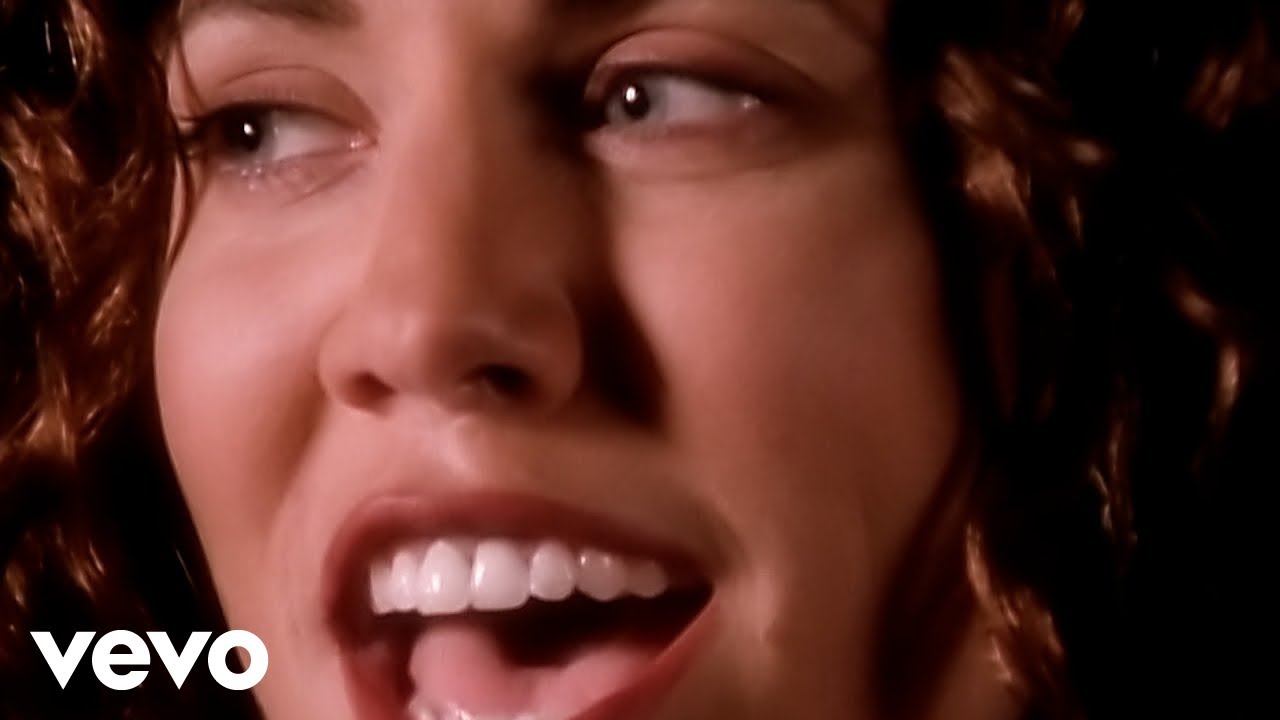


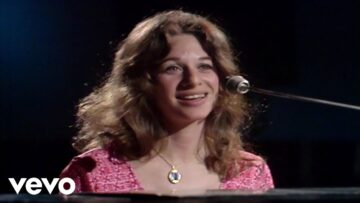



Sheryl Crow – All I Wanna Do
Found In A Used Bookstore Next To The Studio—Based On A 1987 Poem
Released in July 1994 as the third single from Tuesday Night Music Club, “All I Wanna Do” peaked at number two on the Billboard Hot 100 for six consecutive weeks from October 8 to November 12, blocked from the top by Boyz II Men’s “I’ll Make Love to You.” The song topped charts in Australia for one week, Canada for four weeks, and the Adult Contemporary chart in both countries, spending 28 weeks on various charts and becoming Crow’s biggest hit. It won Grammy Awards for Record of the Year and Best Female Pop Vocal Performance at the 1995 ceremony, where Crow also won Best New Artist. The track helped propel Tuesday Night Music Club from its debut at number 173 to peak at number three on the Billboard 200, spending exactly 100 weeks on the chart and selling over ten million copies worldwide. What nobody knew was that producer Bill Bottrell had discovered the song’s lyrics in a used poetry book he’d randomly pulled from dusty shelves at Cliff’s Books in Pasadena during a Tuesday Night Music Club session break, adapting Wyn Cooper’s 1987 poem “Fun” into what would become the most unlikely hit of the decade.
While “All I Wanna Do” dominated charts and airwaves throughout 1994 and 1995, A&M Records hadn’t initially recognized its potential. The label released “Run Baby Run” as the debut single, which peaked at number 24 in the UK, followed by “Leaving Las Vegas,” which stalled at number 66. Seven months after the album’s October 1993 release, audience response at Crow’s live shows convinced A&M to finally issue “All I Wanna Do” as the third single in April 1994. Entertainment Weekly ranked it number 30 on their 2009 list of “The 100 Greatest Summer Songs,” calling it “the most literary-minded mindless summer single ever,” while Billboard placed it number three on their list of the greatest Sheryl Crow songs in 2017 and number 405 on their “500 Best Pop Songs of All Time” in 2023. The song’s breezy country-pop sound, complete with slide guitars and twang, stood in stark contrast to the grunge and hip-hop dominating mid-1990s radio, proving audiences were hungry for something different.
The Tuesday Night Music Club began as an informal collective of Los Angeles musicians gathering weekly to drink, write songs, and escape the commercial pressures of the industry. Producer Bill Bottrell, who’d worked on Michael Jackson’s Dangerous album, assembled the group including David Baerwald from the duo David & David, multi-instrumentalist Kevin Gilbert, guitarist David Ricketts, bassist Dan Schwartz, and drummer Brian MacLeod. Crow joined after her previous attempt at a debut album had been shelved by A&M, who found it unmemorable. She’d already traveled the world as a backup singer on Michael Jackson’s Bad tour and signed with A&M in 1991, only to see her first record scrapped. The Tuesday sessions represented her last chance. During one break, the group walked to Cliff’s Books on Pasadena’s East Colorado Boulevard. Bottrell grabbed a stack of poetry books from the dusty shelves, including The Country of Here Below by Wyn Cooper, an obscure poet teaching at small colleges.
Cooper had written “Fun” in 1987 after a friend uttered the first line—”All I want is to have a little fun before I die”—at a party. Cooper took note and started writing the poem the next day, creating characters who symbolized people trapped in dead-end lives, drinking beer at noon on Tuesday in a bar facing a giant car wash. Cooper later explained the poem wasn’t really about his friend or himself, but objective correlatives representing what they could have been if they’d continued drinking and doing nothing with their lives. When Bottrell brought the book back to Toad Hall Studio, located next door to Pasadena Playhouse, he showed it to the group. Crow, Baerwald, Bottrell, and Gilbert adapted Cooper’s verses, changing some lines and adding the infectious chorus hook that transformed the melancholic poem into a summer anthem. Cooper had published the poem in a small poetry collection that sold modestly in academic circles. He never imagined it would become a massive pop hit.
Recording sessions at Toad Hall Studio featured the loose, collaborative atmosphere that defined the Tuesday Night Music Club’s approach. The production emphasized jangly guitars, slide guitar riffs, toe-tapping beats, and Crow’s friendly vocal delivery that made the barfly poetry accessible to mainstream audiences. Engineers captured a live-sounding jam that felt spontaneous despite careful arrangement, with Crow’s vocals mixed prominently over the instrumentation. The track opened with that distinctive guitar riff before settling into a mid-tempo groove that evoked sunny California afternoons and aimless summer days. Critics praised how the song balanced literary sophistication with pop accessibility—verses name-checking Santa Monica Boulevard and describing “good people of the world” washing their cars on lunch breaks in “skirts in suits,” creating vivid imagery that felt cinematic. The bridge featured Crow almost speaking the lines about Billy being “plain ugly,” giving the performance an intimate, conversational quality that drew listeners into the narrative.
Tuesday Night Music Club, released in October 1993, eventually sold over 4.5 million copies in the United States alone. Beyond “All I Wanna Do,” the album produced hits including “Strong Enough,” which reached number five on the Hot 100, and “Can’t Cry Anymore.” The album showcased Crow’s distinctive vocals across tracks like “Leaving Las Vegas,” “The Na-Na Song,” and “We Do What We Can.” AllMusic’s Stephen Thomas Erlewine noted the album’s “loose, ramshackle charm,” while Record Collector called it “a stone cold 90s classic,” crediting Crow’s vocals for catching ears despite the collaborative songwriting. NPR ranked it number 94 on their 2017 list of the 150 greatest albums made by women. The album’s success, however, sparked bitter disputes about authorship. Crow’s relationship with Kevin Gilbert, whom she’d been dating during recording, became acrimonious. Gilbert and Baerwald publicly castigated Crow, claiming she hadn’t co-written the songs and was wholly the creation of the men in the room.
The music video, directed by David Hogan and Roman Coppola, won Best New Artist Clip at the 1994 Billboard Music Video Awards. The original version featured actor Gregory Sporleder playing Billy, the character mentioned in the song, but a second edited version removed his appearances. The clip showcased Crow in the bar setting described in the lyrics, creating visual representations of the dive-bar culture and Santa Monica Boulevard atmosphere. MTV played both versions constantly throughout 1994, helping establish Crow’s image as an accessible, girl-next-door rocker who could write literate pop songs without pretension. A third music video was released for the 2009 deluxe edition reissue of Tuesday Night Music Club, featuring on-the-road, backstage, soundcheck, and live footage from Crow’s early 1990s tours, documenting her transformation from struggling artist to Grammy-winning star.
The authorship controversies intensified after Crow won three Grammy Awards in 1995. According to Crow, none of the Tuesday Night Music Club players wanted to tour, having their own projects. She returned to Missouri and assembled a new band. Once the record took off, resentments grew. Baerwald told SFGate, “Everybody was equal, except Sheryl. She wasn’t one of us. We helped her make a record.” Kevin Gilbert’s journal revealed his bitterness: “I don’t know if I can ever forgive her.” After Gilbert’s accidental death in 1996, Baerwald said “He hated that Sheryl Crow record and that’s all he’s going to be known for.” Producer Bill Bottrell later softened his position, telling reporters in 2008, “The truth is hard to describe, but it lies between what all the people were shouting.” Despite the acrimony, songwriting credits remained as originally listed, with Crow, Cooper, Baerwald, Bottrell, and Gilbert all sharing royalties.
Wyn Cooper’s life changed dramatically. The professor went on to collaborate with other musicians as a lyricist and recorded his own CD with fellow writer Madison Smartt Bell. But success brought complications. The friend who’d inspired “Fun” by uttering its first line tried to sue Cooper for a large sum, arguing he deserved compensation. Even though conversations cannot be copyrighted, Cooper’s royalties were frozen for nearly a year during legal proceedings. Cooper eventually prevailed, keeping his royalties from what became a lucrative catalog piece. Amy Studt covered the song in 2004 with backing vocals from Crow herself, reaching number 21 on the UK Singles Chart before being dropped by Polydor for poor sales. The song has appeared on countless compilations representing the 1990s and remains a karaoke favorite, wedding reception staple, and summer playlist essential three decades after its release.
Sheryl Crow built a remarkable career on the foundation “All I Wanna Do” provided. Her 1996 self-titled album debuted at number six and spawned hits including “If It Makes You Happy” and “Everyday Is a Winding Road.” She contributed “Tomorrow Never Dies” to the James Bond soundtrack in 1997, earning Golden Globe and Grammy nominations. Her 2003 compilation The Very Best of Sheryl Crow sold over four million copies in the United States. She transitioned successfully to country music in 2013 with Feels Like Home on Warner Music Nashville. Throughout her career, Crow has sold over 50 million records worldwide, won nine Grammy Awards from 32 nominations, and established herself as one of the most consistent female artists of her generation. As Crow reflected in a 2019 interview, the Tuesday Night Music Club sessions were “pretty debauched”—they drank heavily, considered themselves smarter than everyone else, totally overlooked and insanely talented. That mixture of confidence, resentment, and genuine camaraderie produced an album that captured lightning in a bottle, with “All I Wanna Do” standing as proof that sometimes the most unlikely songs—adapted from obscure poetry found in used bookstores—become the ones that define an era.
SONG INFORMATION
Related videos
 Watch LaterAdded
02:39
Watch LaterAdded
02:39  Watch LaterAdded
 Watch LaterAdded
02:47
Watch LaterAdded
02:47