





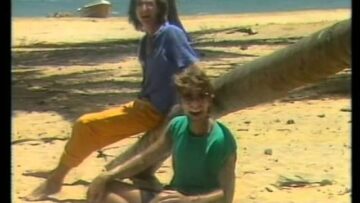
Soft Cell – Tainted Love
Label Said It Would Be Their Last Single If It Flopped—Then It Spent 43 Weeks On The Charts
Released on July 7, 1981, Soft Cell’s synth-pop reimagining of “Tainted Love” reached number one in the UK on September 5, holding the top spot for two weeks and becoming the second-bestselling single of 1981 with 1.05 million copies sold—a total that reached 1.35 million by August 2017. The song topped charts in 17 countries including Australia, Belgium, Canada, Germany, and South Africa, reached number two in Ireland and New Zealand, and peaked at number eight on the Billboard Hot 100 after spending a then-record-breaking 43 weeks on the chart. It took 19 weeks to crack the American Top 40, initially debuting at number 90 in mid-January 1982, appearing to peak at number 64, then falling to number 100 before remarkably climbing back up the chart. The track won Single of the Year at the 1982 BRIT Awards and was listed as the 59th bestselling single of all time in the UK as of 2023. What nobody at Phonogram Records knew was that their threat to make this Soft Cell’s final release if it didn’t sell would become one of music’s great miscalculations—the Northern Soul obscurity they’d given the duo one last chance to record would define the entire synth-pop era.
While “Tainted Love” dominated charts worldwide throughout 1981 and 1982, its American chart performance became legendary among chart enthusiasts. After spending two weeks stuck at number 100—which almost never happens—the song started climbing again and eventually reached number eight in mid-July 1982, six months after its Hot 100 debut. The 43-week run set a Guinness World Record that stood for seven years until 1989 when a re-release of Moving Pictures’ “What About Me” matched it. The song’s incredible longevity placed it at number 22 on Billboard’s year-end Hot 100 for 1982 despite only peaking at number eight. The track’s second-wave success in America came after it had already dominated clubs for months, with the 12-inch version becoming one of the most requested dance tracks. In 2013, VH1 ranked Soft Cell’s version number five on their 100 Greatest One-Hit Wonders of the 1980s, while in 2015 the British public voted it the nation’s fourth favorite 1980s number one.
The song’s origin traced back to 1964 when Ed Cobb, formerly of vocal group The Four Preps, wrote “Tainted Love” for Gloria Jones, a teenage soul singer he’d discovered. Glen Campbell played lead guitar on the original recording. The track was released in 1965 as the B-side to Jones’ single “My Bad Boy’s Comin’ Home,” which flopped commercially and failed to chart. Jones later joined Motown’s writing team, became a backing singer for T. Rex, and entered a relationship with Marc Bolan. In 1976, Jones and Bolan re-recorded “Tainted Love” for her album Vixen, speeding it up to emphasize the coked-up Northern Soul club energy, but it also failed to chart. One year later, Jones was driving when the car crashed into a tree, killing Bolan instantly. Meanwhile, the 1965 original had been discovered in 1973 by UK club DJ Richard Searling during a record-buying trip to America. He recognized its potential as a Northern Soul stomper and started playing it at Wigan Casino, where it became one of the scene’s most popular tracks.
Marc Almond and David Ball, performing as Soft Cell, became aware of “Tainted Love” through its Northern Soul status. DJ Ian Dewhirst claimed in 2010 that he was the first person to play the song for Almond, though Almond himself stated their version was inspired more by a 1975 cover by English singer Ruth Swann than by Gloria Jones. The duo had met at Leeds Art College and had been performing together for a couple of years when they started including “Tainted Love” in their live sets, choosing it instead of Frankie Valli and the Four Seasons’ “The Night”—a song they’d eventually record in 2003. Their first single “Memorabilia” had been a nightclub success but didn’t chart, leaving Phonogram Records skeptical about the duo’s commercial potential. The label gave them one more chance, with representatives implying this would be Soft Cell’s final release on Some Bizzare if it didn’t sell. Phonogram A&R manager Roger Ames convinced the band to record “Tainted Love” at Advision Studios in London with producer Mike Thorne.
Recording sessions took place in December 1980 and were completed remarkably quickly—producer Thorne later explained the track was recorded in a day and a half, with the first of two vocal takes being ultimately used on the record. Ball and Almond transformed the uptempo Northern Soul track into something darker and more menacing, slowing the tempo dramatically and stripping away all instrumentation except synthesizers and drum machines. Ball programmed the synthesizers to create sparse, icy textures that felt almost claustrophobic, while Almond’s arch, theatrical vocal delivery added sleaze and desperation. Thorne mixed the track to just over two-and-a-half minutes for the single version, though the 12-inch extended dance version ran longer and featured a medley that transitioned halfway through into a cover of The Supremes’ “Where Did Our Love Go.” Almond later complained about this decision, saying if they’d put their own song on the B-side instead they’d be considerably richer, while Ball called the medley the most costly idea of their career since royalties had to be split with additional songwriters.
Non-Stop Erotic Cabaret, released in November 1981 via Some Bizzare Records and Phonogram, reached number five on the UK Albums Chart and went platinum. The album explored themes of squalor, sleaze, and suburban hypocrisy across tracks including “Seedy Films,” about long nights in porno cinemas, “Frustration” and “Secret Life” dealing with suburban boredom, and “Sex Dwarf,” which BBC Radio 1 banned entirely. Three additional singles from the album became major UK hits. “Bedsitter” reached number four in November 1981 with lyrics about the loneliness of a young man living in a bedsit while partying hard—AllMusic later called it one of the best, most realistic portrayals of urban life ever recorded. The ballad “Say Hello, Wave Goodbye” peaked at number three in February 1982. “Torch,” released after the album, reached number two and proved the closest the band ever got to a second number one. The album’s success demonstrated Soft Cell could maintain commercial momentum beyond their massive hit.
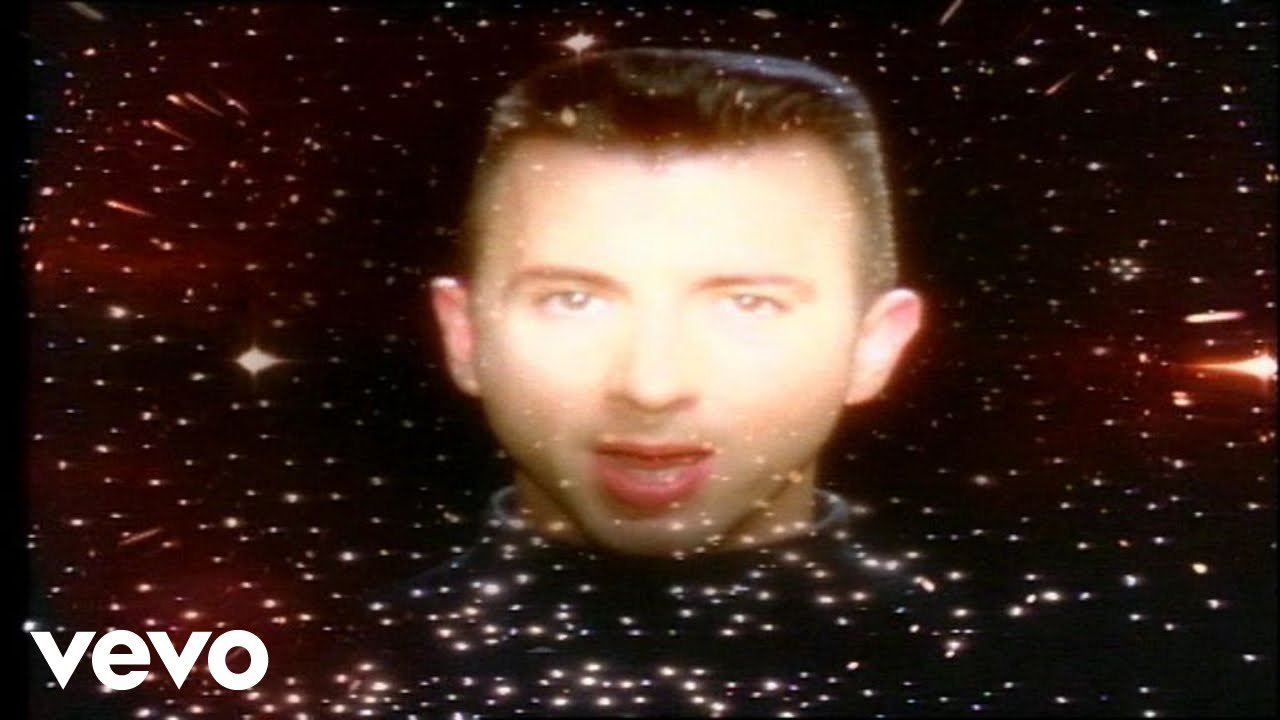
The music video, directed by Tim Pope who’d later work extensively with The Cure, leaned heavily into theatrical surrealism. The clip shows Ball dressed as a cricketer who stumbles upon Almond in a toga, perched on what looks like Mount Olympus. The bizarre imagery matched the duo’s aesthetic perfectly—combining high camp with genuine emotional darkness in ways that felt both absurd and deeply affecting. The performance on BBC’s Top of the Pops became legendary, with Almond’s dramatic stage presence and Ball’s deadpan synthesizer work creating a template for how electronic music could be performed on television. MTV played the video constantly throughout 1982, helping drive the song’s extended American chart run. The track was heavily sampled by Rihanna for her 2006 single “SOS” from A Girl Like Me and by The Veronicas for their 2007 single “Hook Me Up.” Marilyn Manson’s heavy metal version reached number five in the UK in 2002, becoming his biggest British hit.
After Non-Stop Erotic Cabaret, Soft Cell spent much of 1982 in New York City, where they met a woman named Cindy Ecstasy who introduced them to the nightclub drug of the same name. Their follow-up albums The Art of Falling Apart in 1983 and This Last Night in Sodom in 1984 showed a band increasingly consumed by excess and darkness. Almond struggled with drug addiction while Ball retreated from the spotlight. The duo split in 1984, with Almond pursuing a solo career that yielded hits like “Something’s Gotten Hold of My Heart” with Gene Pitney, which reached number one in the UK in 1989. Ball formed The Grid with Richard Norris, scoring dance hits throughout the 1990s. In 1991, seven years after Soft Cell’s dissolution, a re-recorded “Tainted Love ’91” was released to promote the compilation Memorabilia – The Singles, which reached number eight on the UK Albums Chart.
Soft Cell reunited in 2001 for touring and released Cruelty Without Beauty in 2002, followed by European and American tours. The duo performed at the opening of London’s Ocean nightclub in March 2001, with a mini-tour following later that year. Their 2003 cover of The Four Seasons’ “The Night” reached number 39 in the UK—the song they’d almost chosen instead of “Tainted Love” back in 1981. Ball later reflected to the BBC that history had shown they made the right choice. The duo held what they called their final UK reunion concert in London on September 30, 2018, though they stated they might still perform abroad and record together. In 2022, they embarked on a farewell tour titled Say Hello, Wave Goodbye, performing across the UK and Europe. Rolling Stone ranked “Tainted Love” alongside “Where Did Our Love Go” at number 170 on their 200 Greatest Dance Songs of All Time list in 2022. In 2014, the BBC named it the greatest cover version of all time in a public poll.
As music historians have noted, Soft Cell’s “Tainted Love” represents one of the most successful artistic reinventions in pop history—taking an obscure soul B-side and transforming it into something that captured the emotional isolation and technological anxiety of the early 1980s. The production stripped away Motown’s warmth and optimism, replacing it with cold synthesizers and drum machines that made the lyrics about toxic love feel genuinely threatening rather than melodramatic. Almond’s vocal delivery balanced camp theatricality with real vulnerability, creating a performance that worked simultaneously as high art and guilty pleasure. The song proved that great covers don’t just reinterpret material—they completely reimagine it, finding meanings the original writers never intended. Ed Cobb wrote a 1960s soul song about a bad relationship. Soft Cell turned it into the sound of 1980s alienation, proving that sometimes the best way to honor the past is to dismantle it completely and build something entirely new from the wreckage.
SONG INFORMATION
Related videos
 Watch LaterAdded
 Watch LaterAdded
 Watch LaterAdded
03:29
Watch LaterAdded
03:29