







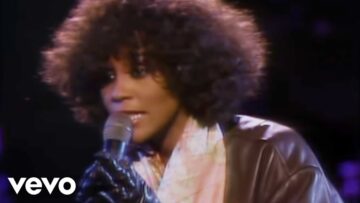

Whitney Houston – Greatest Love Of All (Official 4K Video)
Masser Heard Her Singing His Song At Sweetwater’s
Released on March 18, 1986, as the seventh and final single from her debut album, “Greatest Love of All” reached number one on the Billboard Hot 100 on May 17, staying there for three consecutive weeks. The song made Houston the first female artist to score three number one singles from a single album, following “Saving All My Love for You” and “How Will I Know”. Michael Masser walked into Sweetwater’s club around 1981 or 1982 when Houston was 19 and unknown, hearing someone singing his song. Two and a half years later when doing a duet for Teddy Pendergrass, everybody wanted him to use a known person, but only because he had heard Whitney singing this song, he chose her. Clive Davis was initially against Houston recording it for her debut album, arguing George Benson’s 1977 version was too well-known.
The track dominated charts worldwide, reaching number one in Australia and Canada and topping the Adult Contemporary chart for five consecutive weeks, Houston’s longest stay at the top of that chart at the time. It peaked at number three on the Hot Black Singles chart, making Houston the first solo recording artist to score six consecutive top ten R&B hits with her first six singles, a feat not achieved since the Jackson 5 in 1970-71. The same week it topped the Hot 100, Houston’s debut album returned to number one on the Billboard 200, unseating Van Halen’s 5150 and making Houston the first female artist to accomplish this since Kim Carnes with “Bette Davis Eyes” in 1981. The song became Houston’s third biggest American hit behind “I Will Always Love You” and “I Wanna Dance with Somebody”, and following her death in 2012, it re-entered the Hot 100 at number 49.
Composer Michael Masser traveled to Jerusalem even though he wasn’t a religious man to get the feelings for writing the Muhammad Ali biopic theme. After being asked to write the song for 1977’s The Greatest, Masser told the Los Angeles Times he felt drawn to Jerusalem to get the feelings, not just his own. He saw Ali as representing a tremendous athlete who suffered prejudice from the white man’s world but didn’t give up what he believed even though he lost his title. Masser also drew personal meaning from the song, having given up a legal career to pursue music, with people thinking he was crazy and his marriage breaking up. Lyricist Linda Creed was battling breast cancer when she wrote the words, drawing inspiration from her family while crafting lyrics about coping with great challenges and being strong during those challenges. Creed passed away in April 1986 at age 36, just as Houston’s version was topping international charts.
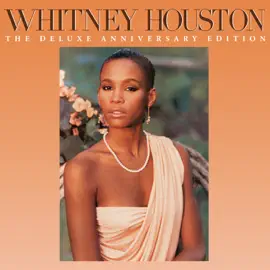
Houston’s version was produced for her self-titled debut album released on Valentine’s Day 1985, initially appearing as the B-side to “You Give Good Love” in February 1985. The album version featured a piano intro while the single version began with a keyboard intro, with the single version replacing the album version on subsequent pressings after becoming a hit. Jermaine Jackson, Michael Masser, Kashif, and Narada Michael Walden handled production duties across the album. George Benson’s original 1977 recording had reached number two on the Billboard R&B chart, becoming the first R&B top ten hit for Arista Records and the first time Arista founder Clive Davis heard the song he wanted to sign the rights. Houston’s church-honed five-octave range and pretty girl-next-door persona made her interpretation more accessible to mainstream audiences than Benson’s jazz-inflected original.
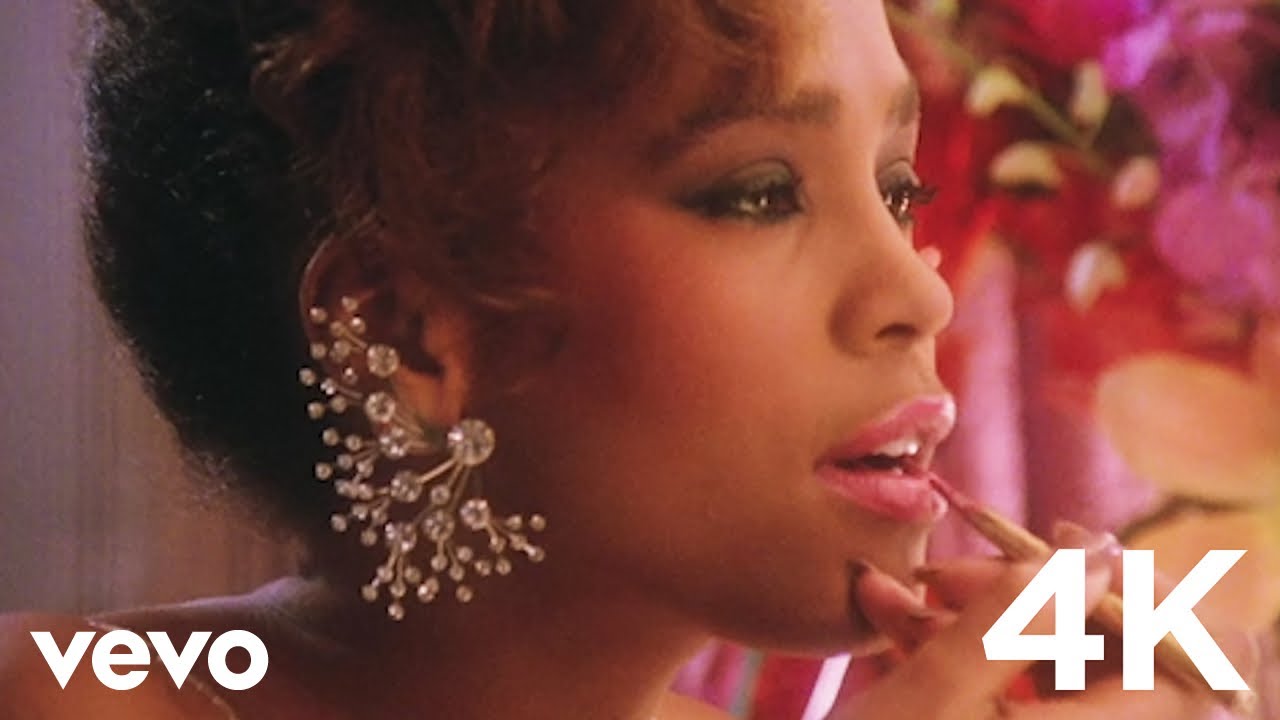
“Greatest Love of All” came from Houston’s debut album Whitney Houston, released February 14, 1985, which spent fourteen non-consecutive weeks at number one on the Billboard 200 and was certified 14 times platinum. The album generated three consecutive number one singles and became only the fourth album after Saturday Night Fever, the Bee Gees’ Spirits Having Flown, and Wham’s Make It Big to accomplish this milestone. Houston won her first Grammy for Best Pop Vocal Performance, Female at the 28th Grammy Awards for “Saving All My Love for You”, and the album received nominations for Album of the Year and Record of the Year for this track at the 29th Grammy Awards. The video was filmed at Harlem’s Apollo Theater featuring Houston reminiscing about performing as a child, with her real mother Cissy Houston playing herself supporting young Whitney in a talent competition.
The song has been covered extensively, with the George Benson version covered 24 times and Houston’s version covered 53 times according to WhoSampled. Shirley Bassey recorded it in 1979, while Oleta Adams, Alexandra Burke, and Deborah Cox released notable versions. In April 1987, Gordon Lightfoot filed a lawsuit against Michael Masser alleging the song stole twenty-four bars from Lightfoot’s 1970 hit “If You Could Read My Mind”, though Lightfoot dropped the suit when he felt it was having a negative effect on Houston. The song became what many called the centerpiece of Houston’s debut album and an unofficial theme for black Americans. Stephen Holden of The New York Times called Houston’s performance a forceful directness that gave its message of self-worth an astounding resonance and conviction.
“Greatest Love of All” remains one of Whitney Houston’s signature songs and the track that completed her historic triple crown from a debut album. The song proved that sometimes the greatest performances come from artists who’ve been discovered by the very songwriters whose work they’re singing, creating a circle of recognition that started in a Manhattan jazz club. Linda Creed’s lyrics about learning to love yourself and believing the children are our future took on tragic poignancy when she died of breast cancer the same month the song was an international hit. Houston told Rolling Stone in 1986 that she felt inspired by her mother Cissy, cousin Dionne Warwick, and family friend Aretha Franklin, describing it as that kind of gut feeling where she could make herself feel good and make everybody else feel good. The song that Michael Masser wrote in Jerusalem about Muhammad Ali became Houston’s declaration of self-worth, proving that the greatest love of all truly is learning to love yourself.
SONG INFORMATION