



![Led Zeppelin – Stairway To Heaven (Live at Earls Court 1975) [Official Video]](https://musicvideosclub.com/wp-content/uploads/2025/01/led-zeppelin-stairway-to-heaven-360x203.jpg)
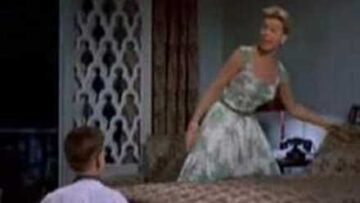
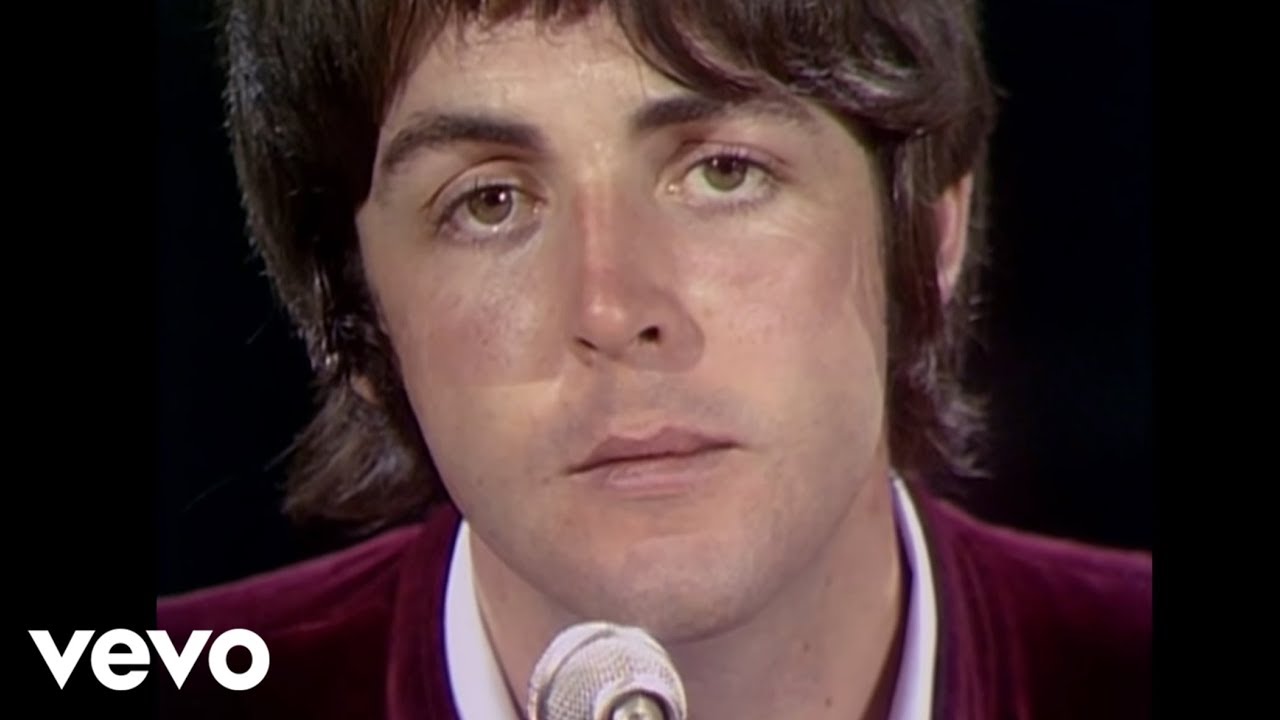
The Beatles – Hey Jude
Hey Jules, Don’t Make It Bad
Released on August 26, 1968, “Hey Jude” entered the Billboard Hot 100 on September 14 and climbed rapidly through the autumn. On September 28, it reached number one, where it stayed for nine consecutive weeks. The single spent 19 weeks on the chart and became the number one song of 1968 on Billboard’s year-end tally. Paul McCartney wrote this as “Hey Jules”, a song meant to comfort John Lennon’s five-year-old son Julian as his parents were getting a divorce. The change to “Jude” was inspired by the character Jud in the musical Oklahoma!, as McCartney loves show tunes. At over seven minutes, it was the longest single to top the British charts up to that time and held the record for longest stay at number one in America until 1977.
The track became The Beatles’ 16th American number one and dominated charts in over a dozen countries, reaching the top in the United Kingdom for two weeks, Australia for 13 weeks, Canada for three weeks, and across Europe. The nine-week run at number one tied the all-time American record and wouldn’t be broken until Debby Boone’s “You Light Up My Life” in 1977. In Australia, it held the record for longest stay at number one until ABBA’s “Fernando” in 1976. By November 1968, sales had reached nearly six million copies worldwide, eventually selling approximately eight million copies. The single was certified four times platinum by the RIAA in 1999, representing four million units shipped in the United States. The song silenced critics who had relished attacking the band for their December 1967 television special Magical Mystery Tour and their trip to Rishikesh in early 1968.
In 1987, Julian ran into Paul in New York City when they were staying at the same hotel and he finally heard Paul tell him the story of the song firsthand. He admitted to Paul that growing up, he’d always felt closer to him than to his own father. In Steve Turner’s book The Stories Behind Every Beatles Song, Julian said that Paul told him he’d been thinking about his circumstances, about what he was going through and what he’d have to go through. Paul and Julian used to hang out quite a bit, more than Julian and his dad did, with far more pictures of Julian and Paul playing at that age than Julian and his father. Julian added that he’d never really wanted to know the truth of how his dad was and how he was with him, noting there was some very negative stuff like when John said that Julian had come out of a whisky bottle on a Saturday night, which was tough to deal with. Julian wondered where the love was in that statement and said it surprises him whenever he hears the song. He finds it strange to think someone has written a song about him, and it still touches him.
The Beatles recorded “Hey Jude” over five days beginning July 29, 1968, at both Abbey Road Studios and Trident Studios in London. They chose Trident for its eight-track recording facilities, a significant upgrade from EMI’s four-track equipment. After initial rehearsals at Abbey Road on July 29 and 30, they moved to Trident on July 31 for the first proper take. The band recorded four takes of the rhythm track with Paul McCartney on piano and guide vocals, John Lennon playing acoustic guitar, George Harrison on electric guitar, and Ringo Starr on drums. Take one was selected as the master. Ringo famously tiptoed past Paul’s back to get to his drums because he’d gone to the toilet just as they started the take, and Paul hadn’t noticed he’d left. On August 1, they added overdubs including McCartney’s lead vocal and bass part, Starr’s tambourine, three-part backing vocals, and a 36-piece orchestra arranged by George Martin. The orchestra featured ten violins, three violas, three cellos, two flutes, contrabassoon, bassoon, two clarinets, contrabass clarinet, four trumpets, four trombones, two horns, two string basses, and percussion. The musicians were asked for a double fee to clap their hands and sing along during the extended coda, though one reportedly refused, saying he wasn’t going to clap his hands and sing Paul McCartney’s bloody song.
“Hey Jude” was The Beatles’ first release on their Apple record label and one of the First Four singles by Apple’s roster of artists, marking the label’s public launch. The band shipped gift-wrapped boxes labeled Our First Four, including this single, to Queen Elizabeth II and the prime minister. The single was backed with “Revolution”, and at one point Record World had “Hey Jude” at number one and “Revolution” at number two because some American charts counted A-sides and B-sides separately. The song was released as a non-album single rather than appearing on The Beatles (The White Album), which came out three months later in November 1968. The single in America was the first Beatles release issued in a plain company sleeve rather than their usual picture sleeve. The success of “Hey Jude” brought an end to speculation that The Beatles’ popularity might be diminishing after “Lady Madonna” had peaked at number four earlier that year.
The Beatles did not record their promotional film until “Hey Jude” had been on sale in America for a week. They returned to Twickenham Film Studio, using director Michael Lindsay-Hogg who had worked with them on “Paperback Writer” and “Rain”. Earlier still, Lindsay-Hogg had directed episodes of Ready Steady Go!, and a few months after the film for “Hey Jude” he made The Rolling Stones Rock and Roll Circus TV special that featured John and Yoko but wouldn’t be shown until 1996. To help with the filming, an audience of around 300 local people, as well as some of the fans that gathered regularly outside Abbey Road Studios, were brought in for the song’s finale. Their presence had an unlikely upside for The Beatles in their long-running saga with the Musicians’ Union in that the MU were fooled into believing the band were playing live, when in fact they were miming for the vast majority of the song. Paul, however, sang live throughout the song. The video was first broadcast on David Frost’s Frost On Sunday show, four days after it was filmed. At that point transmission was in black and white although the promo was originally shot in colour. It was first aired in America a month later on October 6, 1968, on The Smothers Brothers Comedy Hour.
The song has been covered extensively across genres, most famously by Wilson Pickett in 1968 with a guitar solo by a young Duane Allman that session musician Jimmy Johnson said created Southern rock. Eric Clapton called Allman’s work the best rock guitar playing on an R&B record he’d ever heard. Pickett’s version reached number 23 on the Hot 100 and number 13 on the R&B chart. Elvis Presley performed it during his 1969 Las Vegas comeback, while Aretha Franklin, Tom Jones, and Bing Crosby all recorded versions. In 2001, the song was inducted into the Grammy Hall of Fame and the National Academy of Recording Arts and Sciences Grammy Hall of Fame. Rolling Stone ranked it number eight on their 2021 list of The 500 Greatest Songs of All Time. In 2013, Billboard magazine named it the tenth biggest song of all time in terms of chart success. McCartney has continued to perform “Hey Jude” in concert since Lennon’s murder in 1980, leading audiences in singing the coda.
“Hey Jude” remains The Beatles’ most commercially successful single and one of the defining songs of the 1960s. The song captured something specific about hope and healing during a year marked by assassinations, riots, and war. Music journalist Paul Du Noyer called the song’s monumental quality amazing to the public in 1968. John Lennon told Playboy in 1980 that Paul said it was written about Julian, explaining that he knew John was splitting with Cynthia and leaving Julian then, that Paul had been like an uncle and came up with “Hey Jude” while driving to see Julian. But Lennon always heard it as a song to him, adding that he thought it was about Paul and Yoko, that Paul was subconsciously saying go ahead, leave me, though on a conscious level Paul didn’t want him to go ahead. In April 2020, the handwritten lyrics used during the original recording sold for 910,000 dollars at auction via Julien’s Auctions. Julian Lennon and McCartney have each purchased memorabilia related to the song’s creation over the years. The song proved that sometimes the greatest messages of comfort come not from elaborate statements but from simple encouragement to take a sad song and make it better, to let someone into your heart so you can start to make it better.
SONG INFORMATION
![Stevie Nicks – Stop Draggin My Heart Around (Official Video) [HD Remaster]](https://musicvideosclub.com/wp-content/uploads/2025/09/stevie-nicks-stop-draggin-my-hea-360x203.jpg)