


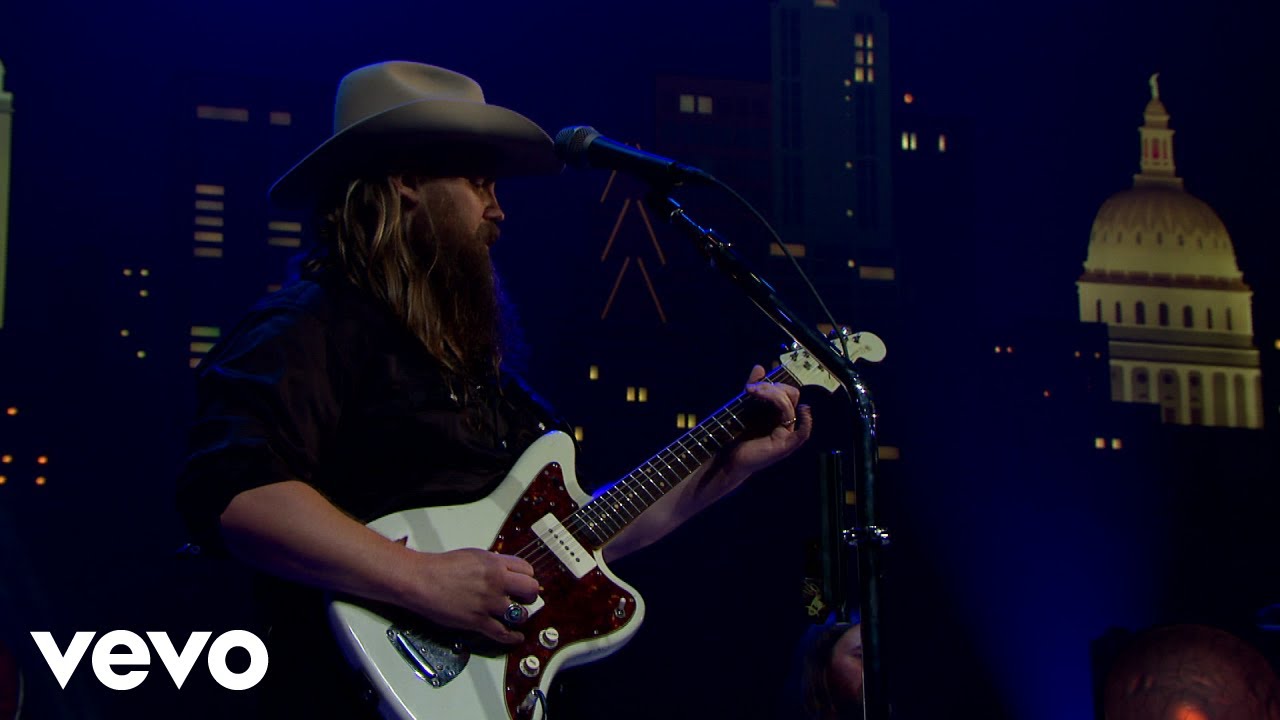


Chris Stapleton – Tennessee Whiskey (Austin City Limits Performance)
He Started Singing It During a Soundcheck — Then One Night at the CMA Awards Changed Everything
The story of Chris Stapleton and “Tennessee Whiskey” begins not in a studio but in a parking lot. Before a show in Charlottesville, Virginia, Stapleton and his band were killing time at soundcheck when they drifted into the groove of a song he had always loved. He started singing it. The band locked in. “For whatever reason, I started singing ‘Tennessee Whiskey,'” he told The Fader in 2015. “We decided to do the song that night and every night since.” The song in question had a forty-year trail behind it: written in 1981 by Dean Dillon and Linda Hargrove after the two met at Nashville’s Bluebird Café, first offered to George Strait who declined it, then recorded by David Allan Coe, then turned into a number two hit by George Jones in 1983. By the time Stapleton picked it up in soundcheck, it had been largely dormant for a generation. What the Austin City Limits performance captures is what came after he brought it back.
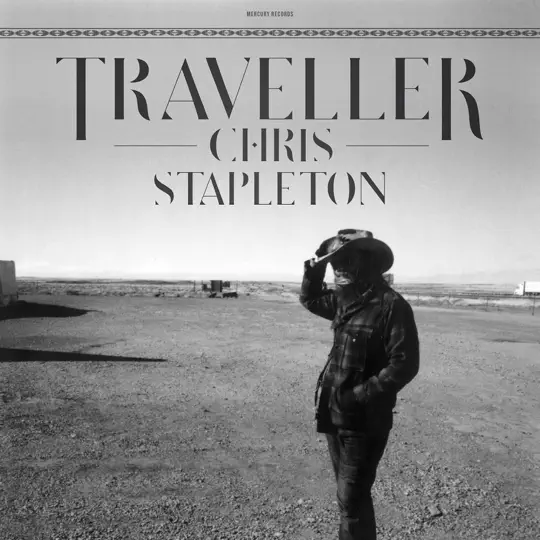
Producer Dave Cobb heard Stapleton playing the song as a warm-up during the Traveller recording sessions at RCA Studio A in Nashville and told him to record it for the album. Engineer Vance Powell hit the red light while the band was running through it informally, and that is, essentially, what you hear on the released version. Stapleton’s rearrangement borrowed the slow-burning melodic approach from Etta James’ 1967 recording “I’d Rather Go Blind,” stretching the original’s tempo into something that moved like heavy smoke — a blues-inflected, soul-soaked groove anchored by Stapleton’s voice, which operates in a register somewhere between raw confession and volcanic force. The backing band on the record included J.T. Cure on bass, pedal steel from Robby Turner, drummer Derek Mixon, Mickey Raphael on harmonica, and Morgane Stapleton providing harmonies throughout. The same Morgane who had helped Stapleton sift through fifteen years of songs to choose nine worth recording for what would become his debut album.
Traveller came out on May 5, 2015, earned critical acclaim and reached number two on the country albums chart, then fell off the Billboard 200 by September. Stapleton arrived at the 2015 CMA Awards on November 4 with three nominations — Album of the Year, Male Vocalist of the Year, New Artist of the Year — and won all three. He also took the stage with Justin Timberlake for a medley of “Tennessee Whiskey” and Timberlake’s “Drink You Away.” The room, which included Keith Urban filming on his cellphone and Hillary Scott singing along, had rarely seen anything like it. Based solely on two days of sales after the broadcast, “Tennessee Whiskey” hit number one on the Hot Country Songs chart and number 23 on the Billboard Hot 100, selling 131,000 copies. The following week it peaked at number 20 on the Hot 100 with a further 118,000 copies sold. Traveller re-entered the Billboard 200 at number one. That one night, in Saving Country Music’s assessment, was the single most important moment in country music of the decade — a dagger in the heart of the Bro-Country era, delivered from an Austin, Texas stage in a suit.
The Show That Made It a Permanent Record
The Austin City Limits performance captures Stapleton at a specific altitude: riding the momentum of Traveller and its follow-up From A Room: Volume 1, commanding a stage with a band that had spent years learning to follow his instincts in real time. The Moody Theater in Austin — home of the ACL tapings since 2011 — provides one of the most precisely calibrated live recording environments in American music television, and the show functions as a document in a way that arena footage cannot. Stapleton closed his ACL debut set with “Tennessee Whiskey,” positioned where it has always sat in his live sets: at the end, the emotional weight of the evening gathering into those four minutes and fifty-three seconds. Morgane Stapleton’s harmonies move through the performance the way they do on the record — not ornamentation but structure, the shape of the song partially built from her voice. Mickey Raphael, on harmonica, had been in Willie Nelson’s Family Band since 1973. The company Stapleton keeps in performance has always told you something specific about where his music comes from.
By 2024, when Stapleton returned to Austin City Limits for Season 50 — his first appearance on the ACL stage since the debut — “Tennessee Whiskey” had been certified 2× Diamond by the RIAA, a certification that requires twenty million units in the United States and makes it one of the highest-certified recordings in the history of country music. It had passed one billion streams on Spotify. Rolling Stone ranked it number 90 on their 2024 list of the 200 Greatest Country Songs of All Time. It had appeared in the pilot episode of Yellowstone and in George Clooney’s film The Midnight Sky. It had been nominated for ACM Song of the Year in 2017. Stapleton described the song’s pull in straightforward terms: it had been a favourite of his for years, it was part of the fabric of things that had influenced him, and by the time they got into the studio it was something they all enjoyed playing. The soundcheck accident that preceded everything else was simply the moment when what was already true became visible.
What Dean Dillon Wrote at Four in the Morning
The song’s authorship deserves its own frame. Dean Dillon and Linda Hargrove wrote it at four in the morning at Hargrove’s house after meeting at the Bluebird Café. Dillon had been carrying the idea for some time. It was offered to George Strait first; Strait declined. Coe recorded it. Jones took it to number two. Stapleton turned it 2× Diamond. Stapleton told Rolling Stone about Dillon specifically: “I’m not sure everybody is as aware of Dean as they should be. He’s written hit on top of hit, standard on top of standard. He wrote 50 songs for George Strait.” The observation says something about how Stapleton thinks about the tradition he stands in — not as a revival or an exercise in authenticity politics, but as a genuine inheritance. What the Austin City Limits footage shows is that inheritance being claimed in real time, in front of a live audience, with the full weight of the voice that made it matter all over again.
SONG INFORMATION