


Peter Frampton – Show Me The Way
Three Weeks Before His Double Live Album Changed Everything, He Walked Onto The Midnight Special With a Tube in His Mouth Connected to His Guitar — and Most of America Had Never Seen Anything Like It’
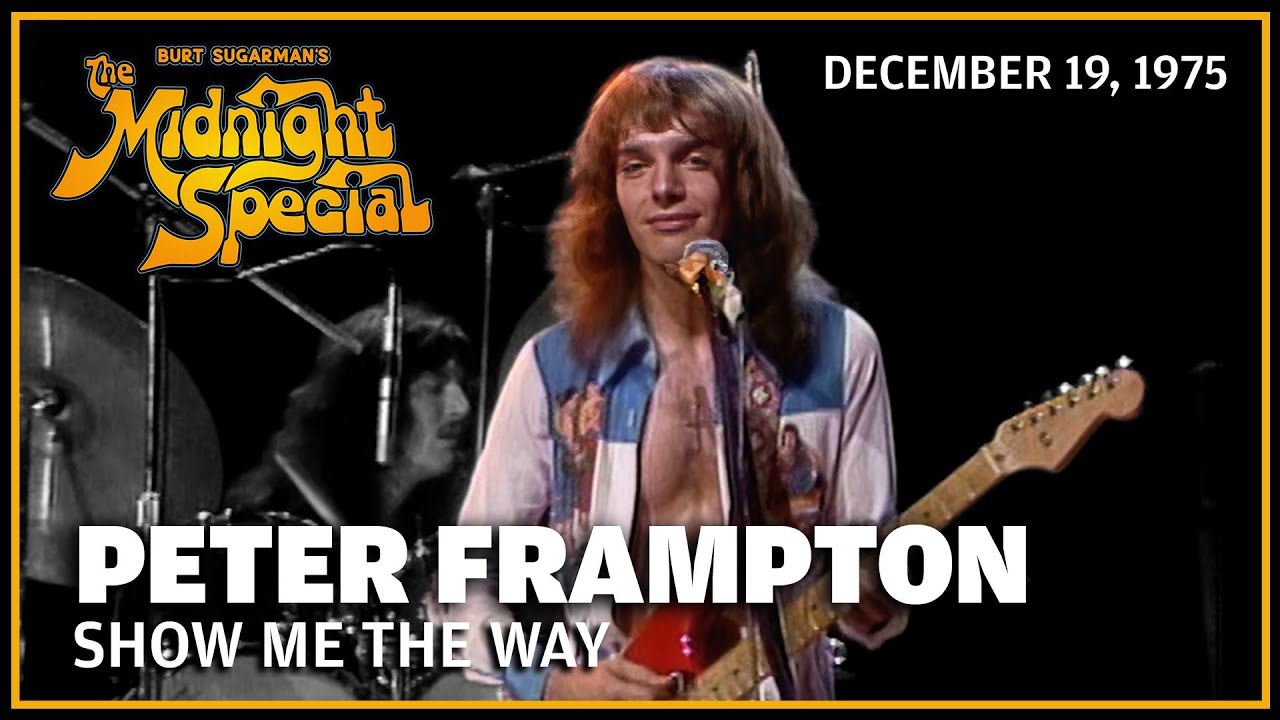
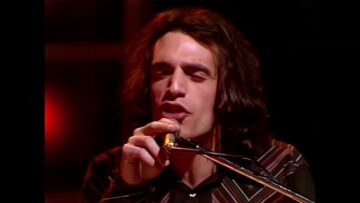
The date was December 19, 1975. Frampton Comes Alive! would be released on January 15, 1976 — less than four weeks away. Peter Frampton was twenty-five years old, had made four solo studio albums that had each failed to break commercially, and was still best known in America as a former member of Humble Pie. What he had, building steadily through a year of relentless touring, was a live audience who understood something the record-buying public had not yet caught up with. When he walked onto The Midnight Special that December night and performed “Show Me The Way,” the talk box at his side, the tube running from the amplifier to his mouth, the guitar beginning to speak in something that sounded like human vowels — that was the moment a vast television audience got their first real glimpse of what 1976 was going to sound like.
The story of the talk box begins not in a guitar shop but at Abbey Road Studios in 1970, during the sessions for George Harrison’s All Things Must Pass. Frampton was there as a session guitarist. Pete Drake, a Nashville pedal steel player who had been using a version of the device for years, pulled it out during a slow moment in the studio and demonstrated it. Frampton later described his jaw dropping to the floor — he had heard similar effects on Radio Luxembourg as a teenager and never known where the sound was coming from. Drake had built his own and wasn’t sharing. But Bob Heil, who had been running the PA system for Humble Pie and knew Frampton well, had been building talk boxes for live use. Frampton’s girlfriend called Heil looking to buy one. Heil simply gave her one to pass on as a Christmas present. That device — the Heil Talk Box — went on to become one of the most recognisable sounds in 1970s rock.
The First Time It Went on Record
Frampton had been using the talk box in live performances since around 1974, increasingly making it central to the experience of seeing him play. When the time came to record his fourth studio album, simply titled Frampton, in 1975, he decided to put the effect on tape for the first time. “Show Me The Way” was the song he chose. He tried it, heard it back, and kept it. The studio version — produced by Frampton and Chris Kimsey, who would later become known for his work with the Rolling Stones — was released in June 1975 as the lead single from that album. The record went almost nowhere commercially. The album peaked at number 32 on the Billboard 200 and was certified Gold, a respectable result but not the breakthrough the music clearly deserved. The live shows told a different story. Night after night through the summer and autumn of 1975, playing at the Winterland Ballroom in San Francisco, the Long Island Arena in Commack, SUNY Plattsburgh, and elsewhere, Frampton was building something that the studio version had only suggested: the talk box as theatre, as spectacle, as the thing audiences would talk about the following morning.
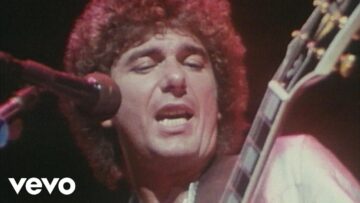
The Midnight Special performance on December 19, 1975 sits at a precise hinge point in that story. Frampton had appeared on the show once before, in September 1975, performing material from the studio album alongside the Ohio Players, Petula Clark, and Helen Reddy. The December appearance was different in register and weight — by then the Frampton Comes Alive! album had been recorded and mixed, and everyone involved knew it was exceptional. What the television audience saw that night was not a preview of a promising artist; it was the first public broadcast of a fully formed live act that had spent years perfecting its craft in rooms that didn’t yet know they were watching something historic. The talk box on “Show Me The Way” — the guitar shaping vowels through the tube, the melody riding the effect with enough melodic clarity to function as a second vocal — was not a novelty. It was a compositional choice, and it worked differently on television than it had in the club and arena shows because the close-up camera could show exactly what Frampton was doing: the tube, the mouth, the hand, the guitar. The mechanics of the effect, visible and comprehensible, made it more extraordinary rather than less.
Ninety-Seven Weeks and What Followed
Frampton Comes Alive! was released on January 15, 1976, debuted on the Billboard 200 at number 191, and by April 10 was at number one — displacing the Eagles’ Greatest Hits 1971–1975 compilation. It spent ten non-consecutive weeks in the top spot through October. It was the best-selling album of 1976. It has sold over eight million copies in the United States and remains one of the best-selling live albums ever recorded. “Show Me The Way,” released as a single from the live album in February 1976, reached number six on the Billboard Hot 100 and number ten on the UK Singles Chart — his biggest US hit until “I’m in You” the following year. The album was voted Album of the Year in Rolling Stone’s 1976 readers poll, inducted into the Grammy Hall of Fame in 2020, and Frampton himself was inducted into the Rock and Roll Hall of Fame in 2024. One detail from the recording that Frampton has shared publicly points to the controlled chaos of the whole enterprise: during the live performance of “Show Me The Way” used on the album, the engineer failed to position the microphone correctly, so the electric rhythm guitar track had to be overdubbed in the studio afterward. Most people who have heard the record ten, twenty, fifty times have never noticed.
The Midnight Special performance that December predated all of that. It shows Frampton at the precise moment before the avalanche — the live act already at full power, the songs already in final form, the talk box already doing exactly what it would do for millions of people in 1976, but the audience watching still small enough that the performance felt like discovery rather than confirmation. He was twenty-five, had been working since he was sixteen, had been named the Face of ’68 by Rave magazine while still a teenager with The Herd, had co-founded Humble Pie with Steve Marriott, had made four solo albums that didn’t connect, and was three weeks from the album that would change the rest of his life. The Midnight Special camera caught him right there: the guitar, the tube, the sound that asked a question the whole of 1976 would spend answering.