





![Eric Clapton – I Shot The Sheriff [Crossroads 2010] (Official Live Video)](https://musicvideosclub.com/wp-content/uploads/2026/09/eric-clapton-i-shot-the-sheriff-360x203.jpg)
Three Dog Night – Mama Told Me Not to Come
Randy Newman Wrote It for Eric Burdon in 1966. Eric Burdon Recorded It. The Animals Recorded It. P.J. Proby Recorded It. Randy Newman Himself Recorded It in 1970. None of Them Had a Hit. Three Dog Night’s Cory Wells Pushed Hard to Cut It with the Band, Donna Summer Sang Uncredited Backing Vocals, and the Producers Discovered the Right Echo Was Coming From the Studio Bathroom.
Randy Newman had written Mama Told Me (Not to Come) in 1966 for Eric Burdon, the former lead singer of the Animals, who was assembling his first solo album. Newman was twenty-three years old and had not yet released an album of his own. The song he gave to Burdon was, like most of his work, a piece of character writing rather than confession — a sheltered, straitlaced young man encounters his first wild party in the big city, is shocked by the whiskey and the marijuana and the loud music, and remembers, helplessly, that his mother had warned him exactly this would happen. Newman would tell Rolling Stone half a century later that the song had come out of his own ambivalent reflections on the Los Angeles music scene of the late 1960s — and his earliest experience of an adult party. “I’ll tell you, I never liked parties much. I remember the first thing I went to when I was like eleven: boys and girls at somebody’s house or something, real loud, kids were smoking. It was alien. I can still hear the ringing in my ears.” The song, like much of Newman’s writing, sat between irony and sincerity in a way that made it difficult to know which singer would do it best. Eric Burdon and the Animals recorded it for Eric Is Here in 1967. A scheduled single release in September 1966 was withdrawn. The song appeared as an album track. P.J. Proby covered it in 1967. Neither version produced a hit. Newman would not release his own recording until 12 Songs in 1970, by which point the song had been in the world for four years and was still waiting for a singer who could make it land.
The singer turned out to be Cory Wells. Wells was one of the three lead vocalists of Three Dog Night — the Los Angeles vocal trio founded in 1967 by Wells alongside Chuck Negron and Danny Hutton, the band built around three interlocking lead voices rather than a single front man. Wells had heard Mama Told Me (Not to Come) with one of his previous bands and had been carrying the song around mentally for years, looking for the right band and the right arrangement to bring it back. The other two singers in Three Dog Night were initially resistant. They had heard Randy Newman’s own talk-sung delivery on his 1970 album and could not see how to make a commercial pop record out of it. Wells pushed back. He had an arrangement in his head. He could hear Jimmy Greenspoon’s Wurlitzer electric piano carrying the ghostly opening figure. He could hear Michael Allsup’s guitar bending and threading through the verses like a violin. He could hear his own voice — ham-bone, half-spoken, half-shouted — selling the lyric’s straitlaced narrator with comic conviction the song had been missing in earlier versions. The band, after extensive discussion, agreed to try it.
The Bathroom Echo and the Uncredited Backing Vocal
The session was produced by Richard Podolor, the Los Angeles producer who had become Three Dog Night’s primary studio collaborator. Podolor and the band were looking for a specific spooky, reverberant echo on Wells’ vocal — a sound that would make the narrator’s predicament feel claustrophobic in the way a small-town visitor’s first big-city party might feel. Nothing they tried in the control room produced what they were hearing in their heads. During a break in the session, one of the band members went to the studio bathroom, noticed that the bathroom’s natural acoustic decay was producing exactly the effect they had been chasing, and called the others in. The vocal was, by multiple accounts, partially re-recorded with the singer in or near the studio bathroom. The bathroom echo was what ended up on the radio cut — one of the more famous accidental engineering decisions in early-1970s American pop.
The session also featured a backing vocal that would go uncredited on the released single. Donna Summer — at that point a young singer working session dates in Los Angeles before her transformation into the queen of disco — sang background harmony on the track. She would not be credited on the album sleeve, and the fact of her presence on the recording would only emerge in later band interviews and discographical research. Five years after the session, Summer would record Love to Love You Baby with Giorgio Moroder, would release I Feel Love two years after that, and would become one of the central voices of 1970s disco. In 1970, she was a session singer adding harmony to a Randy Newman cover. The Three Dog Night recording, when finished, ran two minutes and fifty-eight seconds — substantially longer than Newman’s own 2:12 version, with an extended instrumental passage and a longer outro that gave Allsup’s violin-toned guitar room to stretch out. The single was released by Dunhill Records in May 1970.
Number One and the First American Top 40
The song entered the Billboard Hot 100 in late May 1970 and climbed steadily through June. It reached number one the week of July 11, 1970, and held the position for two weeks. It was Three Dog Night’s first number-one single — their previous Top 10 entries had been One (#5 in 1969) and Easy to Be Hard (#4 in 1969) — and it would be followed by Joy to the World in 1971 and Black and White in 1972, the band’s three career number-ones. It reached number three on the UK Singles Chart and number two in Canada. Billboard ranked it the eleventh-biggest song of 1970. It was certified Gold on July 14, 1970, the same day the album It Ain’t Easy received its own Gold certification. And — in a piece of timing that gave the song an additional layer of historical resonance — it was the very first number-one song played on the premiere broadcast of Casey Kasem’s American Top 40 syndicated radio program, which went on the air on July 4, 1970. The week the show launched, Mama Told Me (Not to Come) was at the top of the chart Casey Kasem was about to begin counting down for the next twenty-five years.
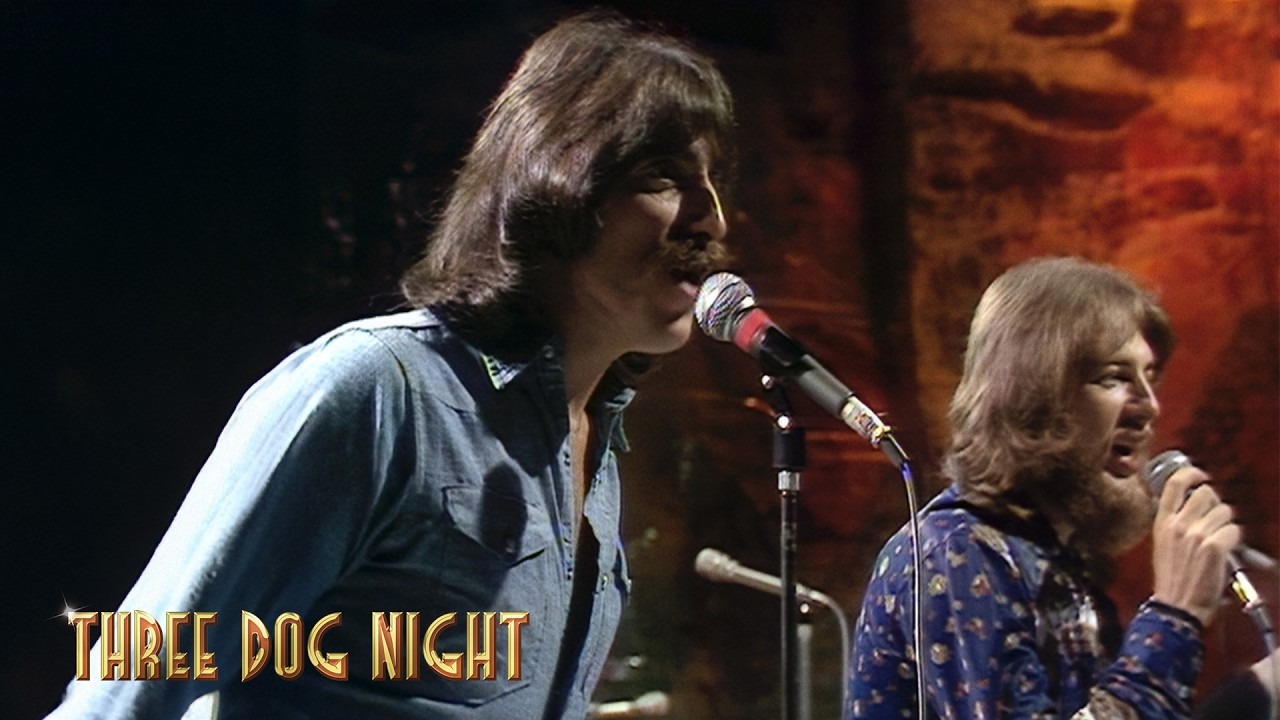
The Three Dog Night performance featured here was recorded for the BBC’s BBC in Concert programme on December 7, 1972, in London — eighteen months after the song had reached number one in America, with the band’s full seven-member lineup still intact and at the absolute peak of their commercial run. The setlist that night included most of their hits. Wells’ performance of Mama Told Me (Not to Come) is the same arrangement he had pushed for in the 1970 studio session — Greenspoon’s Wurlitzer opening the track, Allsup’s guitar threading through the verses, Wells leaning into the spoken-shouted vocal style that had made the recording work. The BBC footage is one of the best-preserved video documents of Three Dog Night in their working prime. The song that Randy Newman had written for Eric Burdon in 1966, that nobody had been able to make into a hit for four years, that Cory Wells had championed past his own bandmates’ resistance, and that an unknown Donna Summer had sung uncredited backing vocals on — became one of the defining American number-ones of summer 1970. Cory Wells died in 2015. Chuck Negron died on February 2, 2026, aged eighty-three, at his home in Studio City, Los Angeles, of heart failure and complications from chronic obstructive pulmonary disease. Danny Hutton, as of 2026, is the last living original member of the trio. The song the three of them had argued about in 1970 has outlasted, as Randy Newman songs tend to, the men who first turned it into a hit.