



![Three Degrees – When Will I See You Again [HQ stereo]](https://musicvideosclub.com/wp-content/uploads/2024/10/three-degrees-when-will-i-see-yo-360x203.jpg)

![The Manhattan Transfer – Chanson DAmour [Restored]](https://musicvideosclub.com/wp-content/uploads/2025/03/the-manhattan-transfer-chanson-d-360x203.jpg)




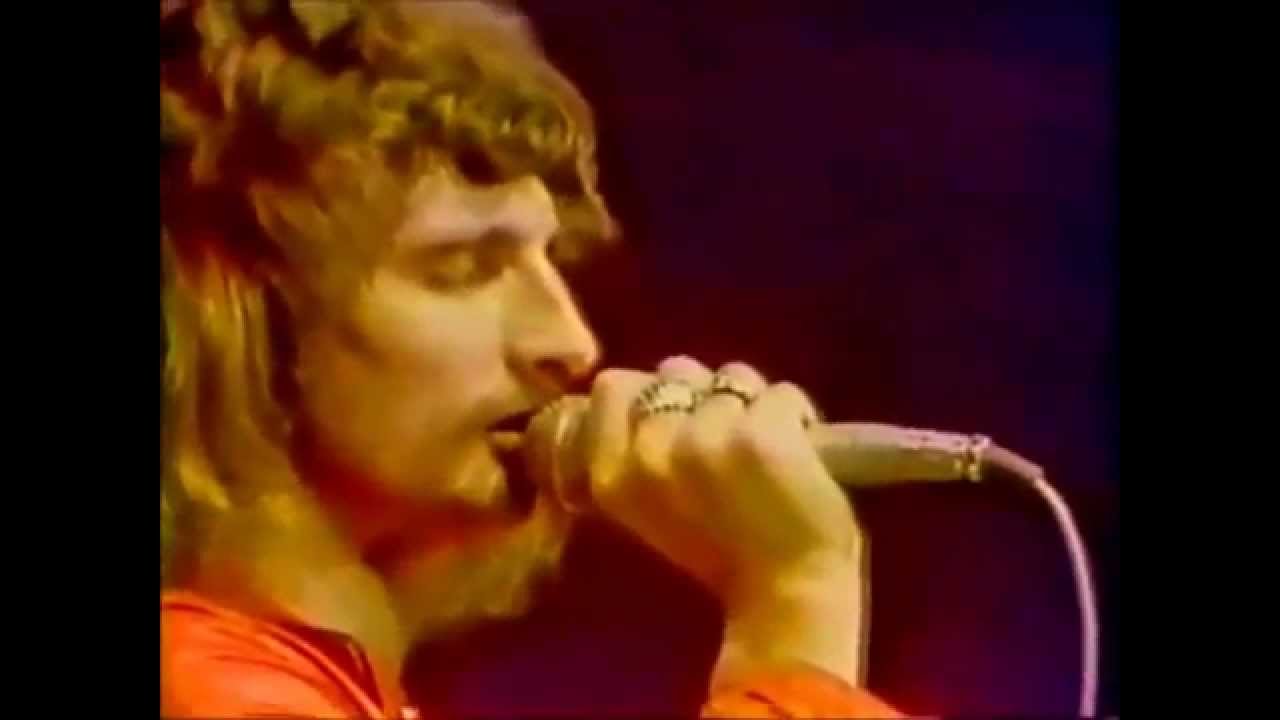
Uriah Heep – July Morning (Live)
Born From Boredom On A Tour Bus With Sha Na Na
Released in October 1971 as the third track on Look at Yourself, “July Morning” never became a hit single in the conventional sense, though it reached Japanese and Venezuelan audiences through special releases and appeared on the US charts via a live version in May 1973. The ten-minute epic wasn’t designed for radio play. What made this track legendary was something far stranger than chart positions. In Bulgaria during the early 1980s, young people living under communist censorship discovered the song years after its release and transformed it into an act of quiet rebellion, gathering secretly on Black Sea beaches every June 30th to sing it at sunrise on July 1st, creating a tradition that still draws twelve thousand people annually to places like Kamen Bryag where former Uriah Heep vocalist John Lawton performed it until his death in 2021.
The album Look at Yourself peaked at number 39 in the UK for one week in October 1971, becoming Uriah Heep’s first domestic chart appearance after their debut and sophomore albums had both failed to chart at home. In America, the album reached number 93, continuing the band’s slow build toward mainstream recognition after their first two records had stalled at 186 and 103 respectively. The live version of “July Morning” from Uriah Heep Live became the song’s only American single release in 1973, as Mercury Records understood the track’s power came from its extended arrangement rather than radio-friendly brevity. By that point, the band was selling out arenas across Europe and building toward their commercial peak with Demons and Wizards and The Magician’s Birthday.
Ken Hensley wrote the song’s core in July 1970 during a UK tour where Uriah Heep was sharing a bus with American doo-wop revival act Sha Na Na. Forced to wait for the opening band to finish before heading home, Hensley sat alone and bored on the bus one morning and picked up his acoustic guitar to pass time. The opening line came as pure fact before imagination took over: there I was on a July morning. He worked out the verses and choruses over the next few days, then brought it to the band at their rehearsal space. David Byron contributed vocal refinements and additional lyrics, turning Hensley’s meditation into something grander. The magic happened when they realized they had three separate musical ideas, all in C minor, floating around the studio during the Look at Yourself sessions. Following the Beatles’ example of combining disparate sections, they fitted these pieces together like a puzzle, creating the majestic organ intro, the verse sections, and the chorus buildups that give the song its epic sweep.
Recording took place at Lansdowne Studios in London during summer 1971, with the band capturing the track in a single day despite its complexity. Manager Gerry Bron made a controversial decision that would haunt the sessions. He brought in Manfred Mann to play Moog synthesizer on the track, reportedly the first time Mann was recorded using the instrument that would become his signature with the Manfred Mann’s Earth Band. Hensley was furious at being set aside for another keyboardist on his own composition, especially when Mann received such prominent placement in the final mix. The resentment deepened during an American tour when Mann opened for Uriah Heep and received enthusiastic applause, only for the headliners to be booed when they took the stage. Hensley was in tears backstage, creating a lasting animosity between the two musicians. Despite the tension, Mann’s synthesizer work became integral to the track’s grandiose arrangement, his playing described by critics as a playful mixture of pomposity and ceremoniality that elevated the entire performance.
Look at Yourself was Uriah Heep’s third studio album, released on Bronze Records in the UK and Mercury Records in the US. It marked the point where the band found their unified sound after the more scattered approach of their debut Very ‘Eavy Very ‘Umble and the overly ambitious Salisbury with its sixteen-minute orchestral title track. “July Morning” demonstrated the band’s ability to blend hard rock power with progressive rock ambition without losing their way in pretension. The album also featured the title track “Look at Yourself” and eight-minute “Shadows of Grief,” both showcasing the growing chemistry between Hensley, Byron, and guitarist Mick Box, who had become the creative nucleus of the band. This was the last Uriah Heep album to feature founding bassist Paul Newton, who left in November 1971 after feeling marginalized and recovering from a car accident in Germany.
The song has been covered across surprisingly diverse territories. Soviet Georgian group VIA Iveria recorded it on their 1975 album Iveria, one of the first behind the Iron Curtain to embrace the track. German heavy metal guitarist Axel Rudi Pell included his version on the 2000 album The Masquerade Ball, while Polish rock band Kult created their own interpretation. Japanese actor and singer Hideki Saijo performed it at his stadium concert Big Game ’80 in Tokyo and Osaka. The band themselves re-recorded it for their 2009 fortieth anniversary album Celebration, giving the track a modern production while maintaining its epic structure. The song’s organ introduction has even been used as a wedding march on various occasions, its majestic opening deemed appropriate for processional grandeur.
Ken Hensley reflected on the song’s creation decades later, calling it magic when the band took his acoustic guitar sketch and transformed it into the beloved epic by the end of that first rehearsal day. The track stands as AllMusic contributor Dave Thompson’s choice for the best song Uriah Heep ever produced, praising its magnificent arrangement and performance, particularly David Byron’s operatic vocal style that became a model for later metal vocalists including Rob Halford of Judas Priest. What nobody could have predicted was that this song about a solitary morning moment would become a national tradition in Bulgaria, where John Lawton’s ashes were scattered at Kamen Bryag after his death, ensuring his eternal connection to the sunrise celebration he helped popularize. Forty years on, “July Morning” remains proof that sometimes the most enduring music comes from the simplest moments: a bored musician on a tour bus, picking up his guitar to pass the time.
SONG INFORMATION
David Byron – lead vocals
Mick Box – lead guitar, acoustic guitar
Ken Hensley – keyboards, backing vocals
Paul Newton – bass guitar
Ian Clarke – drums
Manfred Mann played Moog synthesizer on the song during recording.

Related videos
 Watch LaterAdded
 Watch LaterAdded
 Watch LaterAdded
04:43
Watch LaterAdded
04:43