




![Fleetwood Mac – Dont Stop (Official Music Video) [4K]](https://musicvideosclub.com/wp-content/uploads/2026/01/fleetwood-mac-dont-stop-official-360x203.jpg)

Journey – Just the Same Way
The Only Song on Journey’s 1979 Album “Evolution” Not Written by Steve Perry. The Co-Lead Vocal Belonged to Gregg Rolie — the Keyboardist Who Had Been the Band’s Original Lead Singer Since the 1973 Santana Spin-Off Days. Within a Year He Would Leave the Band Entirely.
Journey had been a band for six years by the time they recorded Just the Same Way at Cherokee Studios in Los Angeles in the late autumn of 1978. The five musicians in the studio that day were Neal Schon on lead guitar, Gregg Rolie on keyboards and co-lead vocals, Ross Valory on bass, Steve Perry on lead vocals and co-lead vocals, and Steve Smith on drums — Smith having just joined the band in September after manager Herbie Herbert fired the previous drummer Aynsley Dunbar at the end of the Infinity Tour. The producer was Roy Thomas Baker, the British music industry veteran who had produced Queen’s A Night at the Opera in 1975 (including Bohemian Rhapsody) and the Cars’ self-titled debut in 1978, and who had been brought in by Columbia Records to refine the more commercial direction Journey had begun on the 1978 album Infinity — the record that had introduced Steve Perry to the lineup and reached number twenty-one on the Billboard 200. Evolution, the follow-up album, was scheduled for release in March 1979. The band needed a complete set of new songs. They had nine. The tenth slot on the album, the band’s manager and Columbia’s A&R department had agreed, would be reserved for whatever the band’s keyboardist and original lead singer Gregg Rolie wanted to contribute.
What Rolie wrote, alongside Schon and Valory, was Just the Same Way — a propulsive mid-tempo rocker in the Bay Area style the band had been built around since their 1973 formation as the Golden Gate Rhythm Section, the post-Santana spin-off project Schon and Rolie had launched after both leaving Santana in 1972 and 1973 respectively. The song’s construction is deliberately built around a call-and-response between Rolie and Perry on the chorus, with Rolie carrying the lead in the verses and Perry answering him on the hook line. The vocal trade is the song’s structural and emotional centre. The recording captures both singers at their respective peaks — Rolie’s husky, blues-rooted Bay Area mid-tenor at the front of the verses, Perry’s slightly higher, more arena-shaped delivery answering on the chorus. Schon’s guitar arrives on the bridge with the kind of compressed melodic figure Rolie and Schon had been writing together since the Santana III sessions. Smith’s drums underneath are the more economical, jazz-trained Steve Smith style that immediately distinguished the new drummer from the technically virtuosic Aynsley Dunbar he had replaced. Roy Thomas Baker’s production sits on top of the whole thing with the clean, layered, harmony-heavy mix he had perfected on the Queen records — vocals stacked in dense Queen-style backing arrangements, guitars panned hard left and right, keyboards locked tight to the kick drum. The result is three minutes and six seconds of working-band rock and roll that, in the half-century since the recording, has remained one of the most-played album cuts on American FM classic-rock radio rotation.
The Evolution Album, the Commercial Trajectory, and the Position of “Just the Same Way” in the Catalogue
Columbia Records released Evolution on April 5, 1979. The album peaked at number twenty on the Billboard 200 — at the time the highest position Journey had reached on any major American chart. The first single, Lovin’, Touchin’, Squeezin’ — written by Steve Perry alone and inspired by Perry’s own admission by Sam Cooke’s 1962 ballad Nothin’ Can Change This Love — became Journey’s first US Top 20 hit, reaching number sixteen on the Billboard Hot 100. The follow-up single from the album, Too Late, hit Number Seventy. The third single was Just the Same Way. It entered the Hot 100 in the autumn of 1979 and peaked at number fifty-eight — significantly lower than its FM radio rotation suggested. Album cuts in Journey’s catalogue have always been measured by two parallel commercial metrics: the Hot 100 single ranking, which captures pop-radio rotation, and the FM album-rock rotation, which captures the kind of long-form classic-rock airplay the band’s working career has been built around. Just the Same Way performed modestly on the first metric and substantially on the second. The album itself was certified three-times platinum by the RIAA on the strength of three million American copies sold — a sales figure Journey would eventually triple on the 1981 follow-up Escape and quadruple again on the 1983 album Frontiers.
The deeper significance of Just the Same Way in the Journey catalogue is what the song represents in the band’s transition. The pre-Perry Journey — the 1973 to 1977 incarnation that had recorded three albums of jazz-fusion-influenced Bay Area rock with Gregg Rolie as lead singer — had been a critical favourite that never broke through commercially. The post-Rolie Journey — the 1981 onward incarnation with Jonathan Cain on keyboards and Steve Perry as full-time front man — would become one of the biggest selling American rock acts of the entire decade. Between those two incarnations sat the brief, transitional period of Infinity (1978) and Evolution (1979), where Rolie and Perry shared the lead vocal duties in a working configuration that could not last. Rolie was reportedly uncomfortable with how completely Perry had been pushed to the front of the band’s commercial image. He left after the 1980 follow-up album Departure, citing his desire to spend more time with his young family and a reluctance to commit to the touring schedule the band’s commercial trajectory was about to require. The song he had written and co-led on Evolution — the song that would not be a chart-topper, the song that captured exactly the kind of band Journey had been before Escape and Don’t Stop Believin’ changed everything — was, in working terms, his farewell letter.
The Roy Thomas Baker Connection and the Producer’s Death in April 2025
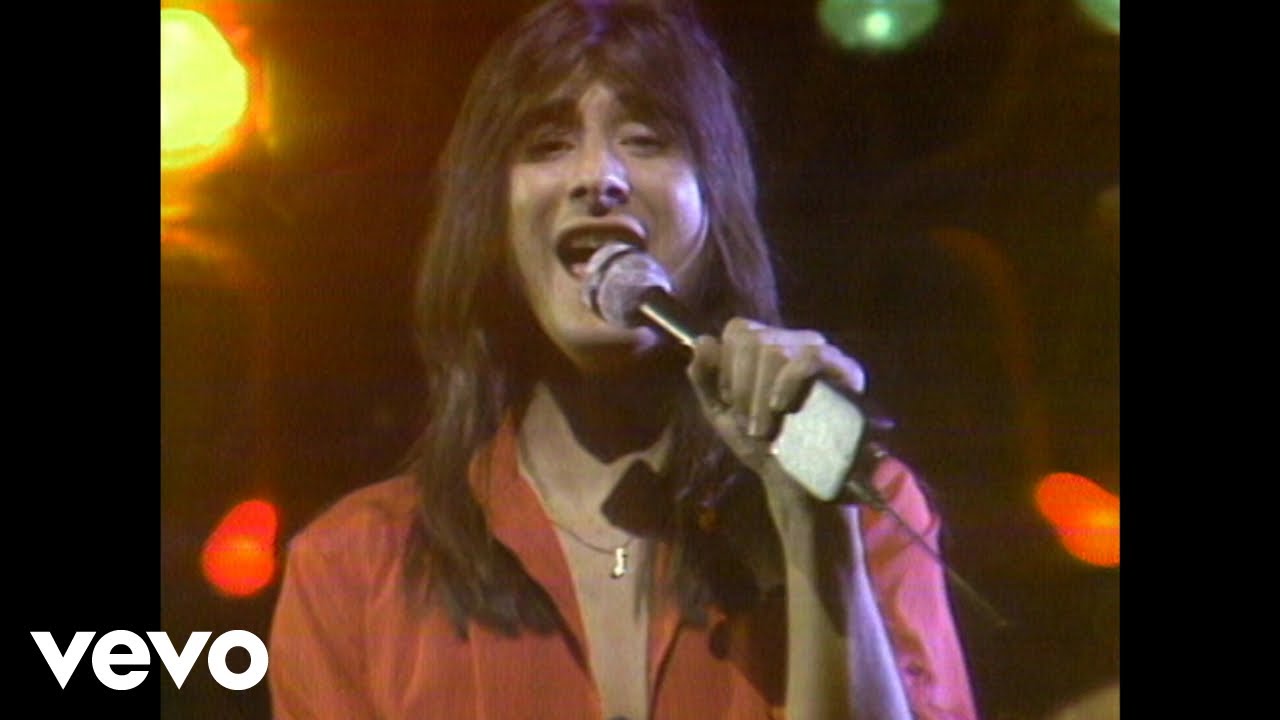
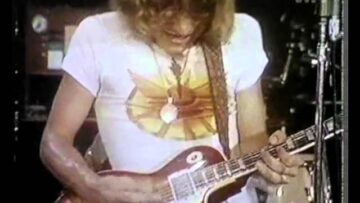
Roy Thomas Baker — the man who had recorded the song, mixed it, layered the vocal stacks, panned the guitars, and shaped the arena-clean Cherokee Studios sound that defined Journey’s commercial breakthrough — died on April 12, 2025, at his home in Lake Havasu City, Arizona, at the age of seventy-eight. Baker had been born in Hampstead, London, on November 10, 1946. He had begun his music career at Decca Studios at the age of fourteen. By the time he produced Evolution for Journey, he was thirty-two years old and had already engineered Free’s All Right Now, T. Rex’s Bang a Gong (Get It On), the first four Queen studio albums, the Cars’ self-titled debut, and Foreigner’s Head Games. Evolution was, in Baker’s discography, sandwiched between Queen’s News of the World and Mötley Crüe’s Too Fast for Love. Across the rest of his working life he would produce records by Alice Cooper, Cheap Trick, Ozzy Osbourne, Smashing Pumpkins, the Darkness, Devo, the Stranglers, and dozens of others, and would, as a senior A&R executive at Elektra Records in the 1980s, oversee the signings of Metallica, Simply Red, and 10,000 Maniacs. The producer who had given Just the Same Way its working sound is no longer alive. The recording itself remains. The official 1979 music video for the song, still available on Journey’s official YouTube channel, captures the five-piece lineup of the Evolution era performing the song with the band’s full late-seventies stage configuration — Schon on lead guitar at the front, Rolie behind the keyboards and microphone stage right, Perry at centre stage, Valory on bass at the left, Smith at the drums behind them. Forty-seven years later, the song the five of them recorded at Cherokee Studios in the late autumn of 1978 is still in continuous American FM radio rotation, has been added to thousands of Spotify playlists, and continues to be performed live by the working version of Journey on the band’s current 2026 world tour. Gregg Rolie — now seventy-eight years old — has guested with Journey on the song on multiple occasions over the past decade.