







Barbra Streisand – Woman In Love
Barry Gibb Was Terrified—His Wife Threatened Divorce If He Said No
Released on August 16, 1980, “Woman in Love” reached number one on the Billboard Hot 100 on October 25, holding the top spot for three consecutive weeks and becoming Barbra Streisand’s fifth and final number one hit on that chart. The song also topped charts in 17 countries including the UK for three weeks, Australia, Austria, Belgium, Canada, Finland, France, Germany, Iceland, Ireland, Netherlands, Norway, South Africa, Spain, Sweden, Switzerland, and Zimbabwe. It spent five weeks at number one on the Adult Contemporary chart and sold over 2.5 million copies by the end of 1981, earning Streisand her fourth platinum single. On October 25, 1980, Streisand simultaneously topped the Billboard 200 with the Guilty album and the Hot 100 with the single, making history with this double achievement. What nobody knew was that Barry Gibb had been terrified to work with Streisand, having heard countless stories about how tough and intimidating she was, but his wife told him to accept the project or she’d divorce him, forcing him to call Neil Diamond for reassurance before finally agreeing.
While “Woman in Love” dominated charts worldwide, it replaced Queen’s “Another One Bites the Dust” at number one and was itself replaced by Kenny Rogers’ “Lady.” The song was nominated for Record of the Year at the 23rd Annual Grammy Awards, ultimately losing to Christopher Cross’s “Sailing.” Barry and Robin Gibb won the 1980 Ivor Novello Award for Best Song Musically and Lyrically, validating their craftsmanship despite the Bee Gees’ disco backlash. The Guilty album shipped five million copies in the United States, becoming the biggest-selling studio release of Streisand’s career. Two additional singles from the album reached the Top 10—the Grammy-winning title track “Guilty,” a duet with Barry Gibb that peaked at number three, and “What Kind of Fool,” another duet that reached number 10. In 2023, American Songwriter ranked “Woman in Love” as the greatest Barbra Streisand song of all time, while The Guardian placed it at number seven on their list, cementing its legacy as her signature solo performance.
The collaboration began in 1979 when Streisand saw the Bee Gees in concert and approached Barry Gibb about writing and producing an album for her. At that point, both artists were at career peaks—Streisand had scored eight consecutive Top 40 hits in just two years, including the number ones “You Don’t Bring Me Flowers” with Neil Diamond and “No More Tears (Enough Is Enough)” with Donna Summer. Barry Gibb had just notched six straight number one singles with the Bee Gees between 1977 and 1979 before disco’s backlash began. But when Streisand’s offer arrived, Gibb was paralyzed with fear. He told Billboard in 1983 he was very nervous at first because of Streisand’s reputation and enormous star power. His wife Linda finally delivered an ultimatum—accept the job or face divorce. Still uncertain, Gibb called Neil Diamond to ask what it was like working with Streisand, and Diamond had nothing but glowing reports. That reassurance gave Gibb enough confidence to accept.
Once recording sessions began, Gibb’s fears evaporated. He told Billboard that working with Streisand turned out to be wonderful, praising how she wanted his ideas and gave him leeway while also expecting him to listen to her suggestions. He called her perfectly nice and a true lady in every sense of the word. Gibb wrote or co-wrote every song on Guilty with his brother Robin, produced the album with his regular Bee Gees collaborators Karl Richardson and Albhy Galuten, sang background vocals, played guitar, and created the horn and string arrangements. The album was essentially a Bee Gees record with Streisand singing lead, though nobody was hiding that fact—the album cover featured Streisand and Barry Gibb in blinding white clothes, all hugged up together. Barry Gibb told Billboard that Streisand initially felt “Woman in Love” was a little bit liberationist and might be too strong for a pop song, expressing uncertainty about its commercial potential despite recognizing the quality of the composition.
Columbia Records and producer Charles Koppelman made a crucial strategic decision regarding the album’s rollout. They felt it was very important for the first single not to be a duet, wanting “Woman in Love” to establish itself before audiences heard the full collaborative effort. They released the single five weeks before the album on August 16, 1980, giving it time to take hold in the market. The song debuted at number 49 on Billboard’s Hot 100 chart in early September, then climbed steadily for seven weeks before reaching number one. The production featured lush orchestration that was pure Barry Gibb—strings, horns, guitars, drums, and backing vocals layered into an overwhelming wall of sound with occasional guitar twang cutting through the polished arrangement. Streisand’s vocals showcased remarkable technical control, holding notes with passion and emotion that elevated the material beyond its workmanlike lyrics. The chorus packed particular punch, with Streisand diving in completely and giving audiences a dramatic declaration of devotion that felt both universal and intensely personal.
Guilty, released on September 23, 1980, via Columbia Records, became Streisand’s 22nd studio album and her most commercially successful. The 11-track record featured Barry Gibb prominently throughout, including duets on the title track, “What Kind of Fool,” and “Run Wild.” Other standout tracks included “Make It Like a Memory,” “Promises,” and “Never Give Up.” The album reached number one on the Billboard 200 and dominated Adult Contemporary charts, proving that Streisand and Gibb’s chemistry translated across demographics. Critics noted how Gibb’s production gave Streisand a contemporary edge without abandoning her theatrical roots, creating a hybrid sound that appealed to both her longtime fans and younger pop audiences. The success validated Streisand’s instinct to collaborate with Gibb despite industry skepticism about pairing a theatrical diva with a disco producer. Guilty spent weeks atop charts worldwide and became one of 1980’s biggest-selling albums, demonstrating that both artists could transcend the genres that had defined them.
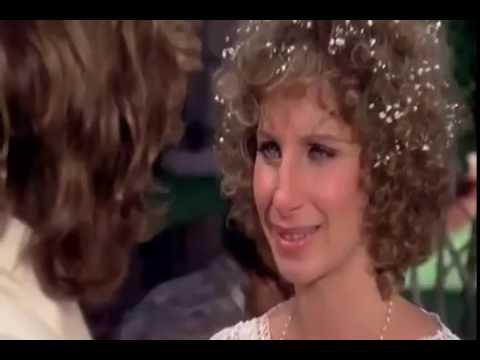
The music video for “Woman in Love” took an unusual approach, incorporating clips from Streisand’s 1976 film A Star Is Born with Kris Kristofferson and other movies she’d made throughout the 1970s. Rather than creating original footage, the video served as a greatest-hits montage of Streisand’s cinematic work, positioning the song as part of her broader artistic legacy. MTV, which launched in August 1981, played the video regularly despite it predating the network by nearly a year, helping introduce Streisand to younger viewers who knew her primarily through parents’ record collections. The strategy of repurposing film footage proved cost-effective and allowed Streisand to avoid the elaborate production typical of music videos, maintaining her focus on vocals and emotional delivery rather than visual spectacle. The approach reinforced Streisand’s identity as a multi-hyphenate entertainer whose music existed alongside her film and theater work rather than in isolation.
The song’s influence extended across decades and genres. Atomic Kitten member Liz McClarnon covered “Woman in Love” in 2006 after the band’s split, with original songwriter Robin Gibb producing the version. Released as a double A-side with a cover of Jackie Wilson’s “I Get the Sweetest Feeling,” McClarnon’s version peaked at number five on the UK Singles Chart. Royce Da 5’9″‘s 2002 track “Life” featuring Amerie sampled “Woman in Love,” introducing the melody to hip-hop audiences. Reggae artist King Jammy and Wayne Smith released a 1981 take titled “Life Is A Moment In Space” that transformed Streisand’s declaration into a roots reggae meditation. The song appeared on countless wedding playlists and became a karaoke favorite for singers attempting to showcase vocal power, though few could match Streisand’s technical precision and emotional depth.
Streisand continued recording and touring throughout the 1980s and 1990s, though she never matched the commercial heights of Guilty. Her 1985 album The Broadway Album became an unexpected success, reaching number one and earning quadruple platinum certification despite Columbia Records’ objections that the songs weren’t pop-friendly. In 1994, Streisand embarked on her first concert tour in decades, charging ticket prices from $50 to $1,500 and becoming the highest-paid concert performer in history at that time. The tour grossed record-breaking amounts and earned five Emmy Awards. In 2005, Streisand and Gibb reunited for Guilty Pleasures, a sequel album that reached number five on the Billboard 200 and demonstrated their chemistry remained intact 25 years later. Streisand was inducted into the Rock and Roll Hall of Fame in 2025, recognized for her contributions across pop, rock, and theatrical music over six decades. As Barry Gibb reflected years later, “Woman in Love” represented the perfect convergence of two artists at their peak, creating something that transcended both of their individual styles and became timeless—proof that sometimes the most intimidating collaborations produce the most extraordinary results.
SONG INFORMATION
Related videos
 Watch LaterAdded
04:02
Watch LaterAdded
04:02  Watch LaterAdded
 Watch LaterAdded
03:18
Watch LaterAdded
03:18