
![The Score – Revolution: Lyrics [Assassins Creed: Unity]](https://musicvideosclub.com/wp-content/uploads/2025/10/the-score-revolution-lyrics-assa-360x203.jpg)




![Lady Antebellum – Silent Night [4K]](https://musicvideosclub.com/wp-content/uploads/2025/12/lady-antebellum-silent-night-4k-360x203.jpg)


![Sister Sledge – Hes the Greatest Dancer (Official Music Video) [4K]](https://musicvideosclub.com/wp-content/uploads/2025/09/sister-sledge-hes-the-greatest-d-360x203.jpg)
![Bruno Mars – I Just Might [Official Music Video]](https://musicvideosclub.com/wp-content/uploads/2026/01/bruno-mars-i-just-might-official-360x203.jpg)
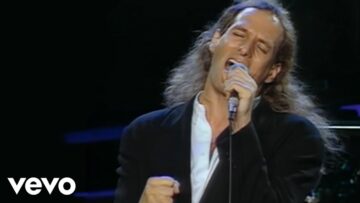


George Michael – Faith
Recorded On The Wrong Guitar By Complete Accident
Released on October 12, 1987 as the second single from his debut solo album, “Faith” hit No. 1 on the Billboard Hot 100 for four consecutive weeks starting December 12, becoming the best-selling single of 1988 in the United States. But here’s the kicker: the song’s signature guitar sound came from an aluminum-bodied acoustic guitar that punk band The Damned had accidentally left behind at Denmark’s Puk Studios. Engineer Chris Porter called to have another acoustic delivered, but by the time it arrived, George Michael and guitarist Hugh Burns had already recorded the track. That horrible metal guitar became the defining sound of one of the eighties’ most iconic recordings. The single reached No. 2 in the UK for two weeks, blocked from the top by Pet Shop Boys’ “Heart”, while hitting No. 1 in Canada and Australia.
The commercial dominance was staggering and unprecedented for a British male solo artist. When the single jumped from No. 54 to No. 37 on Billboard the week of October 31, 1987, nobody predicted it would spend nine weeks in the top ten, 11 weeks in the top 20, and 15 weeks in the top 40. The parent album Faith spent 12 weeks at No. 1 on the Billboard 200 and 51 non-consecutive weeks in the top ten, becoming the first album by a white solo artist to hit No. 1 on Billboard’s Top Black Albums chart. Michael spawned four Billboard Hot 100 chart toppers from Faith, making him the only British male solo artist to achieve this feat. The album won the Grammy for Album of the Year in 1989, sold over 20 million copies worldwide, and earned Michael both the year’s number one album and number one single, something that hadn’t happened since Simon and Garfunkel’s Bridge Over Troubled Water in 1970.
The origin story reads like a masterclass in spontaneous creativity. Publisher Dick Leahy suggested Michael write a rock and roll pastiche, and Michael began working at Puk Studios in May 1987 with just a two-bar LinnDrum loop. He wanted a Bo Diddley-style rhythm similar to Buddy Holly’s “Not Fade Away” and U2’s “Desire”, describing the feel to Burns while singing the melody since he didn’t really play guitar himself. The 34-second organ intro that opens the track was actually Wham!’s 1984 single “Freedom” played on a cathedral organ preset. Keyboard player Chris Cameron had demonstrated how Michael’s harmonic writing still worked brilliantly when stripped down to basics, playing it on a Yamaha DX7. Michael had never considered his music from that perspective before, so he immediately taped it, creating the perfect bridge from his Wham! past into his solo future.
Recording took place across two studios with engineer Chris Porter, who noted Michael typically wrote lyrics in front of the mic, building lead vocals line by line while Porter rewound tape for emotional precision. For this track, Michael wanted vocals dry and in-your-face like Prince’s songs at the time, achieved through tight delay making him sound growly but aggressive. The original recording was only two minutes long with no guitar solo, never intended as a single but rather as a small album track. When everyone kept saying it was great but too short, Michael resumed work on September 1, 1987 at Sarm West Studio 2 in London. Burns added a new bridge and 1950s-inspired guitar solo played on a Giffin custom Stratocaster, constructing it bar-by-bar over four hours similar to how Michael recorded vocals. Porter drenched the solo in reverb, creating that Sun Records Scotty Moore sound that became instantly recognizable.
“Faith” opened Michael’s debut solo album released October 30, 1987 by Columbia Records in the US and Epic Records in the UK. Other singles included the controversial “I Want Your Sex” which peaked at No. 2 in the US and No. 3 in the UK, plus chart toppers “Father Figure”, “One More Try”, and “Monkey”, along with “Kissing a Fool” which reached the top five in America. The album took over a year to complete, with most material recorded at Puk’s residential facility near Randers, Denmark, chosen for its seclusion and state-of-the-art SSL console and Mitsubishi 32-track machines. Michael played most instruments himself, including bass, keyboards, drums via LinnDrum programming, plus handclaps and fingersnaps. The album represented Michael’s conscious attempt to compete with contemporaries Michael Jackson and Prince, admitting he absolutely wanted to be in the same stratosphere after Jackson had just done Thriller.
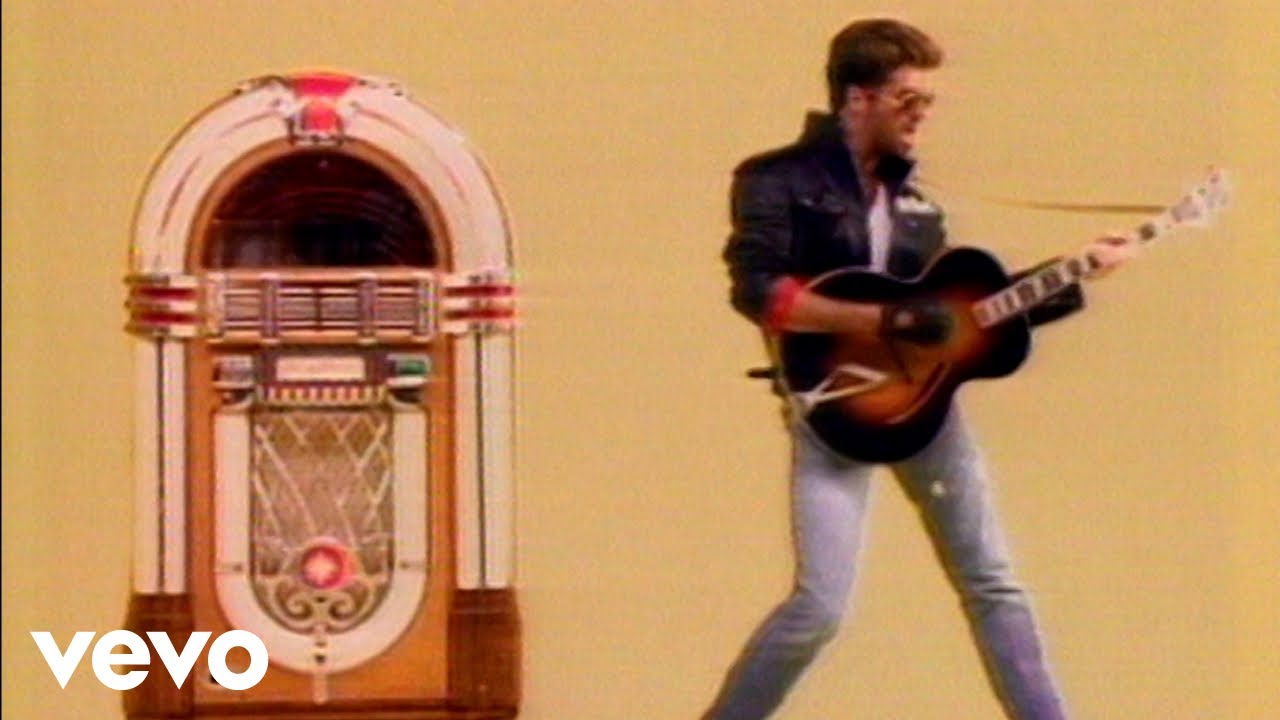
The music video became equally iconic, directed by Andy Morahan and featuring Michael with noticeable stubble, wearing a black leather jacket with Rockers Revenge and BSA logo he’d bought the previous night with his sister on LA’s Melrose Avenue. The Ray-Ban Aviators, Levi’s jeans his mum used to sew but now refused to fix, cowboy boots, and an old Gretsch guitar from a pawn shop that he didn’t know how to play created one of the eighties’ most memorable images. The video opens with “I Want Your Sex” playing before a jukebox interrupts it with “Faith”, cleverly referencing both singles. Michael later reflected in 2009 that he’d been so overly conscious of his image and insecure that he’d developed a costume for real life, admitting there was a camp aspect he was aware of since by then he’d had sex with men and was less clueless about self-portrayal.
The song’s cultural reach extended across genres and decades. Limp Bizkit covered it for their 1997 debut album Three Dollar Bill, Y’all, with Fred Durst enthusiastically telling Rolling Stone he grew up on Michael’s stuff from the Wham! days. Producer Ross Robinson initially opposed recording it, but Durst’s aggressive nu-metal version impressed him, incorporating heavier guitars, drumming, and DJ scratching. The cover peaked at No. 28 on Billboard’s Alternative Chart and became crucial to Limp Bizkit’s initial success, though guitarist Wes Borland later admitted he was totally sick of it. George Michael’s arrest in Beverly Hills in April 1998 for lewd conduct ironically boosted the cover’s visibility, with Durst acknowledging they couldn’t have asked for more buzz. The song placed at No. 322 on the Songs of the Century list in 2001, and the 2011 remastered edition featured deluxe box sets with unreleased material, proving its enduring appeal.
When engineer Chris Porter reflected on the sessions, he admitted they had no idea the album would sell as well as it did, but they knew it would make people see Michael in a different light. Michael himself explained the song represented how he felt at that moment, describing it as another word for his hope and optimism. The track accomplished what Queen’s “Crazy Little Thing Called Love” had done years earlier: it blended past and present pop brilliantly through rockabilly pastiche while sounding utterly contemporary. That accidental aluminum guitar, the cathedral organ callback to Wham!, the Bo Diddley rhythm, and Michael’s conflicted lyrics about sexual desire versus emotional commitment created something timeless. As one critic observed decades later, this could have been released in 1962, 1987, or 2013 and topped charts in any context, the ultimate compliment for a song born entirely from creative accidents and instinctive genius.
SONG INFORMATION
Related videos
![Rush – Spirit Of The Radio [Live] – 1989](https://musicvideosclub.com/wp-content/uploads/2025/08/rush-spirit-of-the-radio-live-19-360x203.jpg) Watch LaterAdded
05:00
Watch LaterAdded
05:00  Watch LaterAdded
04:19
Watch LaterAdded
04:19  Watch LaterAdded
04:51
Watch LaterAdded
04:51