The riff that stopped the world: Roy Orbison finds swagger in “Oh, Pretty Woman”.
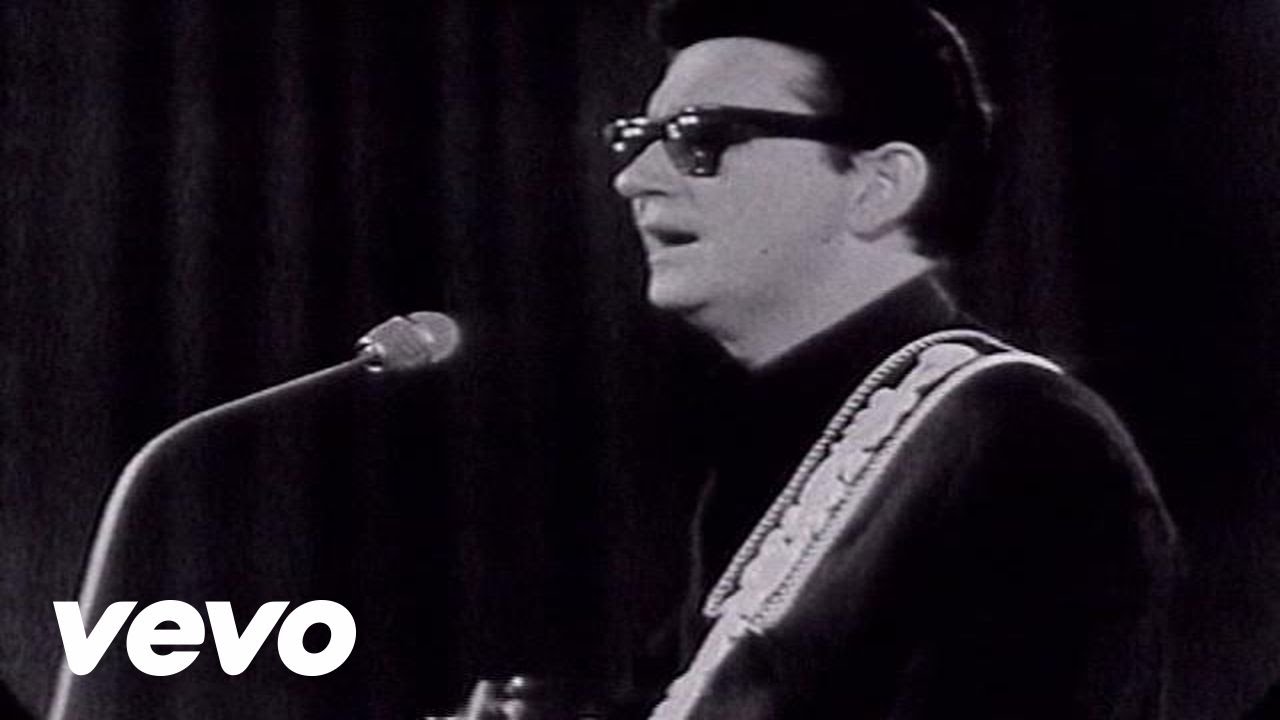
In the summer of 1964, Roy Orbison and his co-writer Bill Dees sat in the kitchen of Orbison’s Nashville home, trading ideas over coffee and small talk. Claudette, Orbison’s wife, was heading out to shop, and he joked, “A pretty woman never needs money.” Dees threw the line back, and by the end of the session they had the bones of “Oh, Pretty Woman.” A week later, they were in the studio with producer Fred Foster and a team of Nashville session players turning that throwaway remark into one of rock’s most instantly recognizable hits.
Everything about the record moves with confidence. The opening guitar figure—half riff, half hook—lands like a door opening onto a new kind of rock & roll: smoother than the early-’60s beat scene but still raw at the edges. Orbison’s vocal carries that same duality, gliding from conversational cool to full-throated power without losing composure. Beneath it, the rhythm section keeps a steady, teasing shuffle that drives the song without ever rushing it.
Released on Monument Records in August 1964, the single went straight to No. 1 on both sides of the Atlantic. It marked the peak of Orbison’s chart run and, for many listeners, defined the balance he struck between drama and restraint. The lyric’s simple premise—a man catching sight of a woman on the street—turns into a miniature story told through tone and phrasing rather than detail. It’s everyday life lifted into song by pure instinct.
“Oh, Pretty Woman” has lived several lives since then. It’s been covered, quoted, and reimagined across decades—from arena rock versions in the early ’80s to Orbison’s own late-career revival performances. Every time it returns, that opening riff still hits like a time stamp: a reminder of how a song written in one afternoon can outlast the era that birthed it.
For all its familiarity, the record remains a study in precision. No wasted motion, no excess production—just a voice, a riff, and a rhythm that never stops walking. Sixty years on, it still feels alive, as if that woman is turning the corner again and Orbison is about to sing the first line all over.
Musicians:
Roy Orbison — lead vocal, composer
Bill Dees — composer, lyricist
Nashville session players — guitars, piano, rhythm section Produced by Fred Foster for Monument Records (1964)



![The Score – Revolution: Lyrics [Assassins Creed: Unity]](https://musicvideosclub.com/wp-content/uploads/2025/10/the-score-revolution-lyrics-assa-360x203.jpg)




![Kid Rock – All Summer Long [Official Music Video]](https://musicvideosclub.com/wp-content/uploads/2025/12/kid-rock-all-summer-long-officia-360x203.jpg)




![Sister Sledge – Hes the Greatest Dancer (Official Music Video) [4K]](https://musicvideosclub.com/wp-content/uploads/2025/09/sister-sledge-hes-the-greatest-d-360x203.jpg)








![The Supremes – Where Did Our Love Go (TAMI Show 1964) [Restored]](https://musicvideosclub.com/wp-content/uploads/2025/08/the-supremes-where-did-our-love-360x203.jpg)

![a-ha – Take On Me (Official Video) [4K]](https://musicvideosclub.com/wp-content/uploads/2025/11/a-ha-take-on-me-official-video-4-360x203.jpg)