


![The Score – Revolution: Lyrics [Assassins Creed: Unity]](https://musicvideosclub.com/wp-content/uploads/2025/10/the-score-revolution-lyrics-assa-360x203.jpg)






![Kid Rock – All Summer Long [Official Music Video]](https://musicvideosclub.com/wp-content/uploads/2025/12/kid-rock-all-summer-long-officia-360x203.jpg)



![Sister Sledge – Hes the Greatest Dancer (Official Music Video) [4K]](https://musicvideosclub.com/wp-content/uploads/2025/09/sister-sledge-hes-the-greatest-d-360x203.jpg)







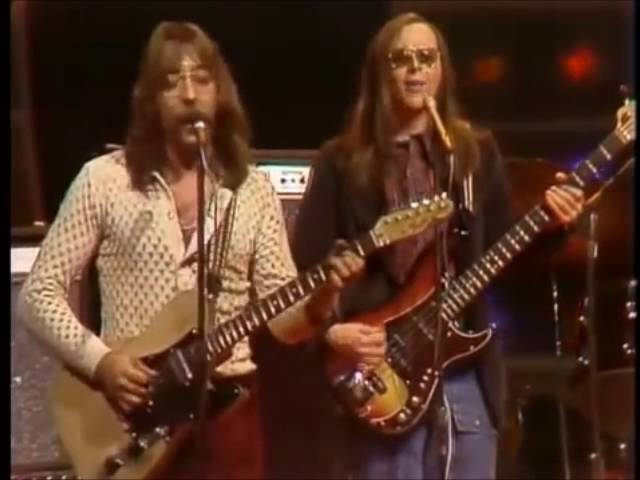



Steely Dan – Reelin’ in the Years
The Engineer Forgot To Record The First Take
Released in March 1973, “Reelin’ in the Years” entered the Billboard Hot 100 at number 82 and climbed to number 11 for three consecutive weeks in May, spending 16 weeks on the chart. The single also reached number 15 in Canada and became Steely Dan’s second top 20 hit after Do It Again. What makes this recording legendary is that session guitarist Elliott Randall created the solo in one continuous take using his 1963 Stratocaster plugged straight into an Ampeg SVT bass amp because there wasn’t a guitar amplifier in the studio, but the assistant engineer thought it was a practice run and forgot to hit record. His brilliant second take became the solo Jimmy Page later rated 12 out of 10 and called his favorite of all time.
The single peaked at number 11 during the week of May 6, 1973, matching the position achieved by its followup Peg five years later. By comparison, Do It Again reached number six and Rikki Don’t Lose That Number would hit number four in 1974, making this their third-biggest chart success. The song spent nine weeks climbing before hitting its peak, where it stayed blocked by Paul McCartney and Wings’ My Love at number one and Tony Orlando and Dawn’s Tie a Yellow Ribbon Round the Ole Oak Tree at number two. At a moment when soft rock dominated American radio alongside the emerging sounds of funk and early disco, this sardonic breakup narrative with jazz-inflected guitar work proved that sophistication could compete with simplicity. Producer Gary Katz later admitted he had totally discounted the song’s commercial potential until radio programmers started requesting it.
Donald Fagen and Walter Becker wrote the song as what Rolling Stone later described as a sardonic kiss-off to an ex, though its bouncy shuffle groove disguised the bitterness beneath. The narrator confronts someone who hasn’t learned anything despite years passing, questioning whether they’re gathering up the tears and storing away the time. Fagen later dismissed it by saying the song is dumb but effective, while Becker said it’s no fun, though both comments came decades later when the duo had perfected more complex material. The title refers to reflecting on past years, though not with nostalgia but with critical examination of someone who refused to grow. Randall read the lyrics before recording and modeled his solo after a saxophone performance, creating what became one of rock’s most recognizable guitar moments despite being invited to the session almost as an afterthought by Jeff Baxter.
Recording took place in August 1972 at the Village Recorder in Los Angeles with Gary Katz producing and Roger Nichols engineering. Randall had just finished playing in the orchestra pit for the Broadway production of Jesus Christ Superstar when Baxter invited him to stop by the studio. The band had been struggling to find the right solo flavor, with both Baxter and Denny Dias attempting versions that didn’t satisfy Becker and Fagen. Randall arrived to find no guitar amplifier available, so he plugged his Strat with its PAF humbucker in the neck position directly into an Ampeg SVT bass amp with 400 watts and eight speakers. Engineer Roger Nichols cranked it to find the sweet spot while covering his ears, and Randall played what he thought was a warmup. When Katz asked if they got it, the assistant engineer admitted he hadn’t been recording. For the second take, Randall’s imagination fired up and he delivered the entire solo, intro to outro, in one continuous performance. Nobody suggested trying again.
Can’t Buy a Thrill arrived in November 1972 through ABC Records and became Steely Dan’s commercial breakthrough, peaking at number 17 on the Billboard 200. The album featured an unusual vocal arrangement with David Palmer handling leads on several tracks because Fagen remained uncertain about his own voice. Drummer Jim Hodder sang Midnite Cruiser, while Fagen finally took full lead vocal duties on this track alongside Do It Again. The album’s cover featured a photomontage including prostitutes standing in a red-light district in Rouen, France, chosen for its connection to the title about what money can’t purchase. The image was banned in Francisco Franco’s Spain and replaced with a concert photo. The band name itself came from a steam-powered device mentioned in William S. Burroughs’ novel Naked Lunch, reflecting Becker and Fagen’s love of Beat Generation literature.
The guitar solo achieved legendary status beyond the chart success, with the quadraphonic mix containing extra lead fills not heard in the standard stereo version. Jimmy Page told Classic Rock magazine in 1999 that it was his favorite solo of all time, and in 2016 told a YouTuber he’d rate it 12 out of 10. Guitar World readers ranked it the 40th greatest guitar solo of all time in 2016, while Q magazine placed the entire recording at number 95 in their list of 100 Greatest Guitar Tracks in 2005. Randall later declined offers from Becker and Fagen to join Steely Dan permanently, predicting correctly that the band dynamics would cause dissolution after the third album. He did return to play on their fourth and fifth albums, Katy Lied and The Royal Scam, before pursuing session work with artists ranging from Peter Frampton to Irene Cara’s Fame.
Reelin’ in the Years represents Steely Dan at their most accessible, the moment before they disappeared into perfectionist studio obsession and stopped touring for two decades. It’s the song that became a retirement party staple despite being a bitter assessment of wasted time, the track people sing along to without catching the contempt in the lyrics. Randall later said the song virtually played itself, that creating the solo was actually very easy because everything fell into place naturally. The fact that he accomplished it in a single take using a bass amp he never would have chosen, that the assistant engineer missed the first attempt, that Baxter invited him casually rather than through formal channels, makes the whole thing feel like accidental magic. Sometimes the greatest moments in music happen when nobody’s trying that hard, when a session guitarist stops by to say hello and ends up creating the solo that Led Zeppelin’s Jimmy Page calls the best ever recorded.
Related videos
 Watch LaterAdded
 Watch LaterAdded
06:00
Watch LaterAdded
06:00  Watch LaterAdded