


![Fleetwood Mac – Go Your Own Way (Official Music Video) [HD]](https://musicvideosclub.com/wp-content/uploads/2026/02/fleetwood-mac-go-your-own-way-of-360x203.jpg)
![Fleetwood Mac – Gypsy (Official Music Video) [HD]](https://musicvideosclub.com/wp-content/uploads/2025/10/fleetwood-mac-gypsy-official-mus-360x203.jpg)
Uriah Heep – Easy Livin’
Ken Hensley Wrote “Easy Livin'” in Ten to Fifteen Minutes During a Studio Break in the Spring of 1972, Sparked by a London Taxi Driver Telling Him Musicians Must Have Easy Lives. Two Years Later, Don Kirshner Filmed Uriah Heep Performing It at Shepperton.
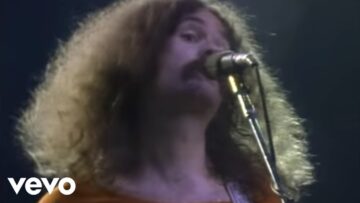
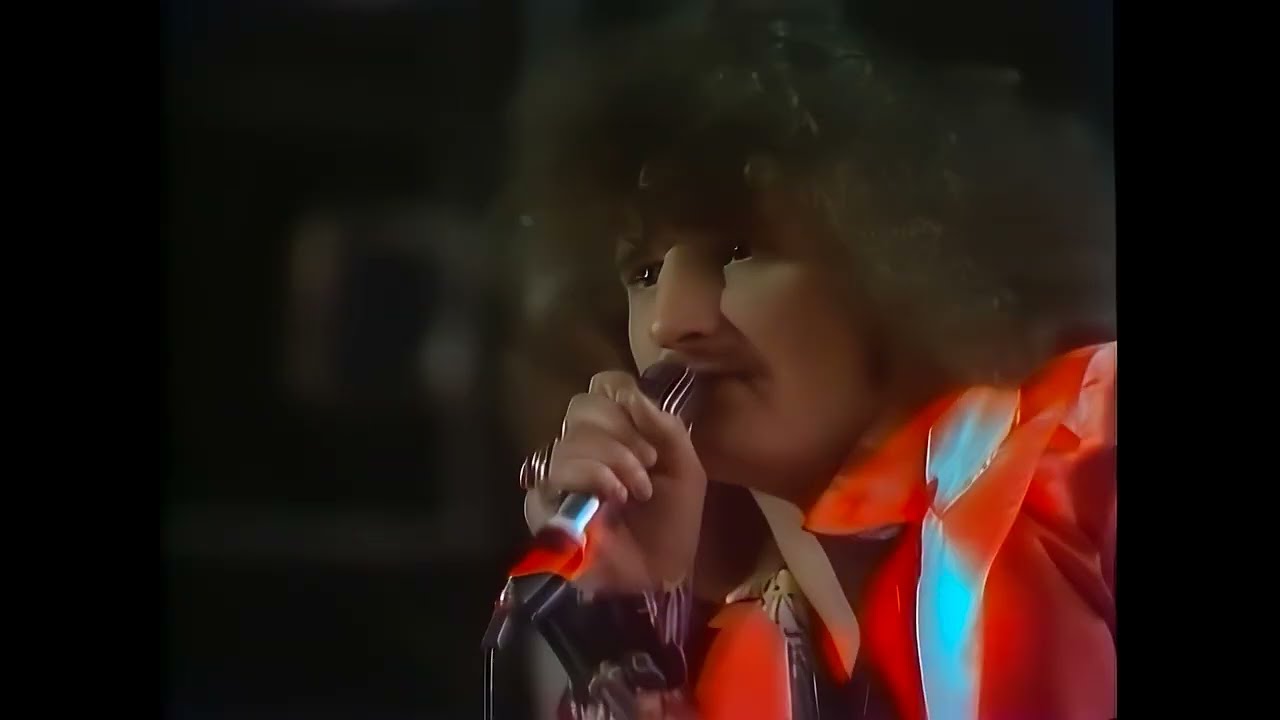
The performance featured here was filmed at Shepperton Film Studios in west London at some point in 1974 and broadcast on the American syndicated television programme Don Kirshner’s Rock Concert on the evening of Tuesday, September 30, 1974. The programme — created and presented by the Brill Building song publisher and music-industry impresario Don Kirshner, who two years earlier had launched the show as a serious-rock answer to ABC’s lighter-weight In Concert — had already, by autumn 1974, become the principal American television showcase for visiting British hard-rock acts. Uriah Heep, finishing a North American tour behind Wonderworld, their seventh studio album, were invited by Kirshner’s production team to perform a full set in front of a small invited Shepperton audience for the cameras. The set they played opened with Easy Livin’, the song they had been opening live shows with for almost two and a half years by that point, and the only Uriah Heep single ever to enter the American Top 40. The performance — David Byron in white, throat thrown back at the microphone with the showman’s delivery the song demanded; Mick Box stage-right on guitar; Ken Hensley at the Hammond organ; Gary Thain on bass; Lee Kerslake on drums — is the version of the song that was eventually released, in audio form, on the 1988 album Live at Shepperton ’74 and, in video form, on the Easy Livin’ — The History of Uriah Heep VHS and laserdisc compilation. It is the most-circulated archival film of the band’s classic line-up.
The song itself had been written, by Hensley alone, in roughly ten to fifteen minutes during a break in the recording sessions for the band’s fourth studio album at Lansdowne Studios in London in the spring of 1972. Hensley has told the story in interviews several times since, with the same details across the retellings. A London taxi driver, on the way to or from the studio, had said something to him about how musicians like Uriah Heep must have an easy life — touring, recording, no real work involved. The phrase “easy life” stuck in Hensley’s head. He took it back into the studio. He sat down at the Hammond organ. Within about ten minutes the song was finished. Mick Box would later credit Hensley’s working method during this period with most of the band’s commercial breakthrough: by 1972, Hensley had become Uriah Heep’s primary composer, and the songs he was writing — fast, melodic, hook-led, built around the organ rather than the guitar — were what gave the band their identity. Easy Livin’ was the most distilled product of that working method. Producer Gerry Bron, the band’s manager and the owner of Bronze Records, the British independent label they recorded for, captured the song in its finished form during the same March–April 1972 sessions that produced Demons and Wizards. The whole record runs two minutes and thirty-six seconds. There is no extended introduction. There is no guitar solo. There is no organ solo. The opening organ riff arrives immediately, the drums and bass drop in at full speed within four beats, and the song goes from there. It was, in early 1972, an unusually compressed piece of British hard rock for a band that had been writing six- and twelve-minute progressive epics on its previous three albums.
The Chart Performance, the American Breakthrough, and the Roger Dean Sleeve
Demons and Wizards was released by Bronze in the United Kingdom and by Mercury Records in the United States on May 19, 1972, with the gatefold cover artwork commissioned from the British fantasy illustrator Roger Dean, who was at that moment in the middle of his career-defining work for the band Yes. The first single from the album was The Wizard. The second, released in July 1972 in the United States and several months later across Europe, was Easy Livin’. The single entered the Billboard Hot 100 in late summer 1972 and reached number thirty-nine on the chart dated late September of that year. That number-thirty-nine peak — modest by the metrics of stadium hard rock — was, in fact, Uriah Heep’s only career entry into the American Top 40. Every subsequent single the band released in the United States stalled outside the top fifty. Easy Livin’ reached number five in the Netherlands, number fifteen in Germany, and the top twenty in Norway, Denmark, and Finland. The parent album reached number twenty in the United Kingdom, number twenty-three in the United States, and, in a chart performance that has never been repeated by any other Uriah Heep record, number one in Finland for fourteen consecutive weeks beginning in May 1972. The RIAA certified Demons and Wizards Gold on October 27, 1972 — the first Uriah Heep record to be certified at that level in the American market. It has since gone Platinum and is estimated to have sold over three million copies worldwide.
The commercial breakthrough transformed the band’s working circumstances. By the time they recorded The Magician’s Birthday in late 1972, Uriah Heep had moved from playing British clubs and the lower halves of American support-act bills to headlining theatres and small arenas across both markets. By the time the Don Kirshner cameras arrived at Shepperton in 1974, they had released six studio albums in three and a half years, completed two double-LP live recordings, and were one of the most successful British rock exports working the American radio circuit. The classic line-up — David Byron on lead vocals, Mick Box on guitar, Ken Hensley on Hammond organ and keyboards, Gary Thain on bass, Lee Kerslake on drums — had cohered, in the words of biographer Kirk Blows, into the configuration where “everything just clicked into place.” It was also, by the time of the Shepperton filming, already beginning to come apart. Gary Thain — the New Zealand-born bassist whose melodic, fluid bass lines had been central to the band’s recorded sound since he joined in 1972 — had been electrocuted on stage during a concert in Dallas in September 1974, days before the Don Kirshner filming. The electric shock left him with what would be, by the accounts of his bandmates, recurring neurological problems and an escalating relationship with prescription opiates. He was dismissed from Uriah Heep at the start of 1975 and died of a heroin overdose in his London apartment on December 8 of that year. He was twenty-seven.
The Years That Followed, the Members Who Left
The Shepperton filming sits in that specific moment — the band at the height of their commercial powers, the song that had carried them into the American Top 40 leading the set, and the rhythm section that defined their classic recordings still in place but already, in private, beginning to fracture. Of the five musicians on the Shepperton stage that day, three have since died. David Byron — dismissed from the band in 1976 over alcohol-related performance issues — died on February 28, 1985, at his home in Reading, England, of alcohol-related complications at thirty-eight. Lee Kerslake — who left the band in 2007 to manage the cancer treatments that would eventually kill him — died on September 19, 2020, at seventy-three. Ken Hensley — who had left Uriah Heep in early 1980 and spent the next four decades as a working solo artist, Blackfoot member, and Christian-rock writer — died on November 4, 2020, at seventy-five. Mick Box, the guitarist and the only musician from the band’s earliest days who has remained continuously in Uriah Heep, has now held the band’s name and recorded catalogue together for fifty-seven years, the longest unbroken tenure of any founding member of any British hard-rock band of his generation. The current line-up, with vocalist Bernie Shaw, keyboardist Phil Lanzon, drummer Russell Gilbrook, and bassist Dave Rimmer, has been touring and recording with Box since 2007.
What survives, beyond the catalogue itself, is the recording. Easy Livin’ has been included on every Uriah Heep compilation released since 1976. It has been covered by W.A.S.P. on their 1989 album The Headless Children. The song’s organ figure — fast, four-chord, rhythmically locked to the kick drum — has become a working template for the strain of hard rock that runs from Uriah Heep through Deep Purple’s Jon Lord and the early Whitesnake records into the eighties keyboard-led metal of bands like Europe and the Scandinavian hard-rock revival of the 2010s and 2020s. The Don Kirshner film, broadcast once on American television in 1974 and re-released on home video in 1988, captures the song at its peak — the band in their twenties, two months past their American Top 40 chart peak, performing it to a small studio audience in west London with the unhurried confidence of musicians who had been opening with it for two and a half years and knew exactly what it could do in front of a live crowd. The song was written in ten minutes. The performance is two minutes and forty-three seconds. The career, the catalogue, the line-up changes, and the four-decade afterlife are all built on top of those two figures.
SONG INFORMATION
#Uriah Heep – Easy Livin’ (Live on Don Kirshner’s Rock Concert, 1974) video.