










Brian Burns with Gary P Nunn & Bobby Rambo – Angels & Outlaws
Brian Burns – Angels & Outlaws
In 1999, Texas singer-songwriter Brian Burns released his second album, Angels & Outlaws, a collection that would reveal the intellectual and introspective side of an artist who’d already spent over a decade on rough roads and honky-tonk stages across America. The title track became a meditation on redemption that would resonate across Texas radio for years to come.
The Song That Captures Texas Mysticism
The title track “Angels & Outlaws” opens with one of the most striking images in Texas songwriting: God driving a ’69 Chevy Impala with stained-glass windows and hyper-strobe headlights, his engine whining on the edge of the radio dial. It’s Saturday night in Piedras Negras, the Mexican border town across from Eagle Pass, where there’s nothing to do but drink cheap tequila and wonder whether life is a treasure or a trial.
And we’ll fly away to some far, distant land
Where angels and outlaws can walk hand in hand”
The song tells the story of a man living by the pistol while the woman he loves lives by the Bible. He thinks of her as an angel above him, counting the times she’s told him she loves him, but he’s bound to live out his days on the run. The chorus promises redemption at that river where angels and outlaws can finally walk together—a place where salvation isn’t lost to survival.
The Album That Changed Everything
Angels & Outlaws arrived two years after Burns’ debut solo album, Highways, Heartaches, and Honky-Tonks, which had summarized his musical journey up to that point with the declaration in its title cut: “Music’s not a choice I made, I believe the choice made me.” After his first million-or-so miles of rough road and half-a-lifetime of impressive musical accomplishments—yet not much to show for it financially—Burns had planted his Texas roots firmly back in Lone Star soil.
While the album produced the venomous yet humorous Texan anthem “Welcome To Texas (Now Don’t Forget To Go Back Home),” which dominated FM heavy rotation lists in the nation’s largest country music markets for many months, it was the depth of songs like “Angels & Outlaws” that met critical acclaim and enlightened a discriminating listening audience to Burns’ more contemplative side.
A Central Texas Storyteller
Brian Burns grew up in Central Texas listening to the western ballads of Marty Robbins and the progressive country music of Willie Nelson and Waylon Jennings. Early on, he developed an appreciation for musical depth along with a knack for storytelling. As his passion for music grew, he began exploring styles ranging from pop to reggae. At age 16, Burns hit the road on a musical journey that would eventually find him sharing stages with some of America’s top performers.
By the time Angels & Outlaws was released, Burns had established himself as one of Texas’ premier songwriters, his work having been covered by legendary artists. But the album revealed him as more than just a capable craftsman—it showed an artist grappling with big questions about faith, morality, and redemption against the backdrop of the Texas-Mexico borderlands.
The Legacy of Angels & Outlaws
The album became a cornerstone of Burns’ catalog, which would eventually span six studio albums before his retirement from performing in 2017. Songs from his albums became staples on Texas and national Americana radio for many years. His nationally charting remake of “I’ve Been Everywhere (In Texas)” introduced two generations of Texans to the geography of the Lone Star State.
Burns delivered as many as 300 performances a year at concert venues, music festivals, theaters, and schools, building a loyal following who appreciated his warmth, wit, and eclecticism. His music explored both the poignant and humorous sides of humanity, drawing out the things we’ve all felt and wish we could have said.
In the years following Angels & Outlaws, Burns released Heavy Weather (2004), which stayed on XM Satellite Radio playlists for several years, and Border Radio (2006), which won him XM’s Best In Texas award. But it was songs like “Angels & Outlaws” that demonstrated his ability to combine the mythic and the personal, the spiritual and the earthbound, into narratives that felt both uniquely Texan and universally human.
The Man Behind The Music
Burns’ career wasn’t limited to music. By day, he worked in software development, coding for insurance companies and tech firms across Texas. By night, he devoted his time to performing around Dallas/Fort Worth and recording his original songs, which garnered considerable interest within the Texas music industry. This dual life gave him a practical grounding that informed his songwriting—he understood both the poetry of the highway and the reality of making a living.
In later years, Burns developed a severe vocal tremor that progressively worsened despite consultations with top voice specialists from Dallas to New York. He lost vocal range, strength, and the ability to hit pitch or hold notes. In 2017, he retired from the music business to focus on running Lost Highway Media, spending more time with family (including a grandson), and giving his old pickup truck a well-deserved rest.
A Song For The Ages
“Angels & Outlaws” remains one of Burns’ most enduring compositions, a song that captures the tension between the life we lead and the life we hope for. In its vision of that distant land where the righteous and the wayward can finally walk together, it speaks to something fundamental in the Texas character—a belief in second chances, in the possibility of redemption, and in a God who drives a ’69 Impala with the radio cranked up.
The imagery is quintessentially Texan: the border town, the cheap tequila, the Saturday night loneliness, and the eternal question of whether life is treasure or trial. But the hope is universal—that someday, somewhere beyond this river of tears and miles, there’s a place prepared for those who lived by different codes but loved with the same heart.
Burns always held onto the sense of wonder and enthusiasm he found amongst the half-million Texas history students he met during his educational concert series, “Once Upon A Time In Texas.” But in “Angels & Outlaws,” he tapped into something deeper—the adult understanding that life rarely offers simple answers, that good people make hard choices, and that grace might arrive in a stained-glass Chevy Impala when you least expect it.
As Burns himself declared in his debut album, music wasn’t a choice he made—it was a choice that made him. And in “Angels & Outlaws,” that choice produced one of the finest meditations on faith, love, and redemption in modern Texas songwriting.
The Collaboration That Brought It To Life
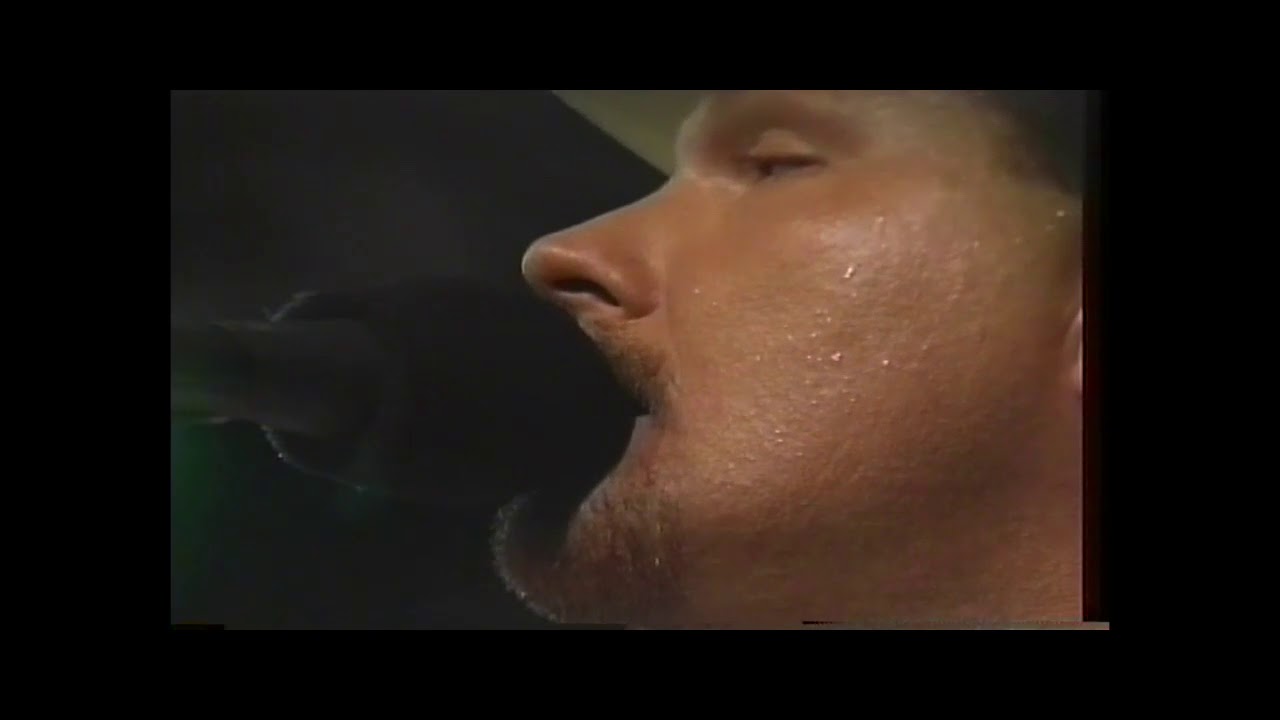
The power of “Angels & Outlaws” becomes even more evident in the collaborative performance featuring Burns alongside Texas music legends Gary P. Nunn and Bobby Rambo. These three Texas songwriters, each with their own distinctive voice and style, came together to deliver a version that highlights the song’s themes of redemption and the borderland mysticism that defines so much of Texas music. The performance captures the camaraderie and mutual respect among Texas musicians who understand that the best songs transcend individual egos and become part of a larger conversation about what it means to be human, to struggle, and to hope for grace.
Related videos
 Watch LaterAdded
03:51
Watch LaterAdded
03:51 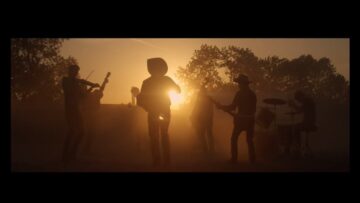 Watch LaterAdded
03:34
Watch LaterAdded
03:34 ![Gianna Nannini ft Laura Pausini – Sei nellanima [Live at San Siro] (Traducción en Español)](https://musicvideosclub.com/wp-content/uploads/2025/11/gianna-nannini-ft-laura-pausini-360x203.jpg) Watch LaterAdded
Watch LaterAdded