




Mungo Jerry – In the Summertime
The Song That Sold Out Before Lunchtime — Written in Ten Minutes by a Man Who Had to Ask His Boss for the Afternoon Off
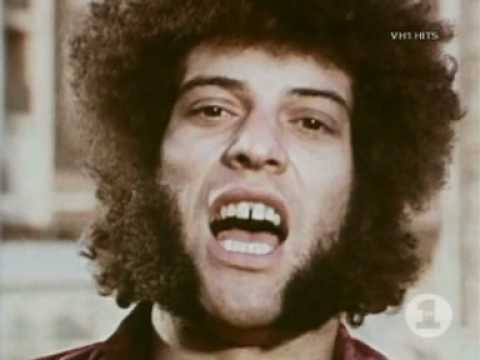
Ray Dorset wrote “In the Summertime” in ten minutes on a second-hand Fender Stratocaster, during a break from his regular job working in a laboratory for Timex. He had no particular plan for it — it was just another piece of repertoire for a band called The Good Earth that was building a following on the pub and festival circuit in and around West London. Producer Barry Murray heard it and told Dorset it was a hit single. The band disagreed. They wanted a different song called “Mighty Man” as the lead track. Murray told them that if they didn’t release “In the Summertime” he would find someone else to record it. The band capitulated. Murray remixed it, added a motorcycle sound in the middle to disguise the fact that the song was originally only two minutes long and had simply been played twice, and released it as the world’s first maxi-single — a seven-inch record played at 33⅓ RPM rather than the standard 45 — on May 22, 1970. When the record company dispatched the first 78,500 copies on a Monday morning, every single one of them had been sold and paid for by lunchtime.
“In the Summertime” entered the UK chart at Number 13 the week following the Hollywood Music Festival — where Mungo Jerry had played alongside Black Sabbath, Traffic, Free, and the Grateful Dead in their first ever UK performance, in front of 35,000 people who had not expected to go home talking about a jug band from Middlesex. The single hit Number One on June 13, 1970 and held the position for seven weeks — long enough to ensure that Free’s “All Right Now,” which entered the chart the same week Mungo Jerry took the top spot, was stuck at Number Two simply because there were no sales left for anyone else. It reached Number Three on the Billboard Hot 100, topped the charts in over twenty countries, and became the fastest-selling single in French chart history. It was Britain’s biggest-selling single of the year. Dorset had to ask his boss at Timex for the afternoon off to appear on Top of the Pops.
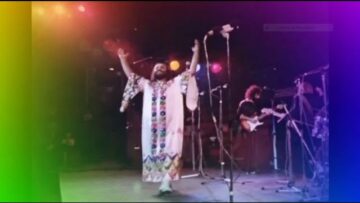
The song defies easy categorization — which is precisely why it has lasted. Music historians have never reached consensus on what genre it belongs to, and Dorset has said the ambiguity is not accidental. He grew up on American music: Leadbelly, Woody Guthrie, Lonnie Donegan, then rock and roll, then the blues. His first band, formed as a teenager, was called The Blue Moon Skiffle Group, and its drummer was a fourteen-year-old named Phil Collins. By the time Dorset wrote “In the Summertime,” those influences had fermented into something that sounded simultaneously like jug band music, country blues, Creedence Clearwater Revival, and nothing else on the radio. The boogie-woogie piano of Colin Earl, the banjo of Paul King, the double bass of Mike Cole, and Dorset’s own guitar and mouth percussion — played into separate channels with the guitar and bass mixed so that they appeared to drift between speakers — gave the finished recording a physical looseness that studio production of the era almost never allowed. It sounds like a live performance because it essentially was.
One detail about the recording that most listeners have never noticed: the question of whether Dorset sings “we go sailing” or “we go swimming in the sea” has been debated for fifty-five years. The answer is both. He double-tracked the vocal with a different lyric on each channel — sailing on one, swimming on the other — and the two versions bleed into each other on most playbacks. The motorcycle sound bridging the two halves of the track was Murray’s solution to a structural problem: without it, the edit would have been audible. With it, the record sounds like a summer afternoon interrupted by something passing through and then returning to its original warmth. The lyric line “have a drink, have a drive” was later used in a UK drink-driving awareness campaign — deployed ironically in a public safety advert — and has been a minor controversy ever since. Dorset has maintained consistently that “drive” did not originally imply alcohol. He wrote it, and his reading seems reasonable enough.
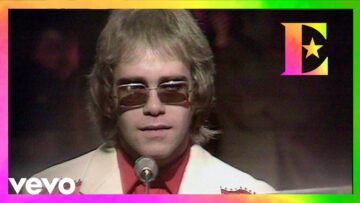
“In the Summertime” was the opening statement of a career that refused to stay in a single lane. Mungo Jerry placed two songs at Number One in the UK in consecutive years — this one in 1970 and “Baby Jump” in 1971 — along with a string of further chart hits that demonstrated Dorset’s range as a songwriter far beyond the good-time jug band sound of the debut. He had written “Feels Like I’m in Love” specifically for Elvis Presley — a song that Elvis died before he could record, that Dorset released quietly as a Mungo Jerry B-side, and that became a Number One hit for Scottish disco singer Kelly Marie in 1980. In 1983 he joined a one-off blues supergroup called Katmandu with guitarist Peter Green of Fleetwood Mac and keyboardist Vincent Crane of Atomic Rooster — three musicians from three different corners of British rock, united by the blues that underpinned all of them. Elton John and Bob Dylan have both recorded “In the Summertime.” The Ivor Novello committee gave Dorset two awards for writing it. The PRS gave him an Iconic Song Award in 2005. None of these things quite captures what it means to write a song in ten minutes that every radio programmer on the planet still reaches for the moment the weather turns warm.
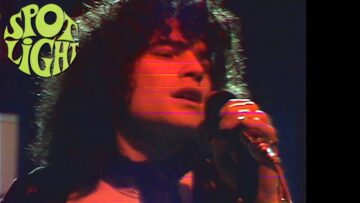
Shaggy’s 1995 reggae cover — built around samples of Dorset’s original guitar and mouth percussion, used with his permission — reached Number One in multiple territories and introduced the song to a generation born after its original run. The official Mungo Jerry video predates the age of the music video entirely and exists only as television performance footage, which means every time the song appears on screen it does so on its own terms rather than inside a director’s concept. That is appropriate. “In the Summertime” has never needed anyone else’s frame. Its opening bars — the choo-choo percussion, the guitar riff, the first syllable of Dorset’s unmistakable vocal — constitute one of the most immediate recognition moments in the history of pop music. John Peel was the first to play it on British radio, having been handed the acetate personally at his flat in Regent’s Park. He heard it once and knew. Most people who have ever heard it agree with him instantly, which may be the most straightforward definition of a classic song there is.
SONG INFORMATION
Related videos
 Watch LaterAdded
04:02
Watch LaterAdded
04:02  Watch LaterAdded
 Watch LaterAdded
04:12
Watch LaterAdded
04:12