



![Three Degrees – When Will I See You Again [HQ stereo]](https://musicvideosclub.com/wp-content/uploads/2024/10/three-degrees-when-will-i-see-yo-360x203.jpg)

Teddy Pendergrass – Lady
Six Weeks Before Everything Changed Forever
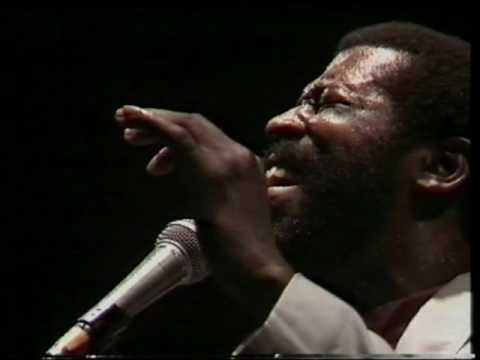
Filmed on February 3, 1982 at London’s Hammersmith Odeon, this performance of Lionel Richie’s “Lady” captured Teddy Pendergrass at the absolute zenith of his powers, just six weeks before a catastrophic car accident on March 18 would leave him paralyzed from the chest down. What makes this footage historically significant isn’t just the performance itself but the timing. This was one of the final times audiences would witness Pendergrass commanding a stage on his feet, delivering that signature blend of romance and raw sensuality that had made him the first Black male singer to record five consecutive multi-platinum albums. When he introduced the song by telling the audience these words represented everything he wanted to say to his own lady, women in the crowd audibly melted, roses started appearing at the stage edge, and the atmosphere shifted into something approaching worship.
The concert showcased material from Pendergrass’s four consecutive platinum albums released between 1977 and 1981, including classics like “Close the Door”, “Turn Off the Lights”, and David Oliver’s “Love T.K.O.” which Pendergrass had transformed into his own signature track. The setlist positioned “Lady” early in the show, following his medley opener and “Love T.K.O.”, building momentum before launching into his own deeper catalogue. The Live in ’82 concert film eventually became a precious document for fans, released on DVD decades later as a reminder of what a hugely talented performer he was. When the footage finally circulated widely in the 2000s, reviewers noted the cruel irony of watching someone so physically commanding knowing what would happen just weeks later.
Pendergrass’s decision to cover “Lady” was both strategic and personal. Lionel Richie had written the song originally as “Baby” for the Commodores, who rejected it in favor of the religious track “Jesus Is Love”. When Kenny Rogers heard Richie’s demo at the Captain & Tennille’s Rumbo Records Studios in Los Angeles, he convinced Richie to rename it after hearing Rogers gush about his new wife, actress Marianne Gordon. Richie famously wrote the second verse while sitting in a bathroom stall during the recording session, sending toilet paper notes back to Rogers who was waiting to complete the track. Released in September 1980, Rogers’s version spent six weeks at No. 1 on the Billboard Hot 100, becoming the first record of the eighties to chart on all four major Billboard singles charts simultaneously. For Pendergrass to cover it barely 16 months later demonstrated his confidence in making any song his own.
The Hammersmith Odeon show was recorded for what would become the definitive live document of Pendergrass’s pre-accident career. The concert featured his full band delivering the polished Philly soul sound that producer Kenny Gamble and Leon Huff had perfected at Philadelphia International Records during Pendergrass’s solo years. His growling baritone transformed Richie’s tender ballad into something more primal and urgent, stripping away Rogers’s country-pop polish to reveal the raw emotional core underneath. The performance style was pure Pendergrass: he didn’t just sing to women, he sang directly at them, creating an intimacy that made every person in that venue feel like the only recipient of his attention. Critics later observed how he could deliver sensual double doses like “Come Go With Me” and “Close the Door”, then follow them with “Turn Off the Lights” with its explicit lyrics about showering together and applying hot oils, leaving audiences breathless.
This performance exists within a specific moment in Pendergrass’s career arc. Having left Harold Melvin & the Blue Notes in 1975 after years of disputes over wages, he’d launched his solo career in 1976 and immediately dominated. His albums Teddy Pendergrass, Life Is A Song Worth Singing, Teddy, and TP had all achieved platinum status, establishing him as R&B’s reigning sex symbol. His concerts were legendary for fans throwing underwear onstage, and he’d even held women-only shows where attendees received Teddy Bear lollipops. The London show was part of a tour that included stops in Dallas, Houston, and multiple US cities through early 1982. Nobody watching that February night could have imagined it would be nearly two decades before Pendergrass performed concerts again, finally returning to the stage on Memorial Day weekend 2001 with two sold-out shows in Atlantic City.
The aftermath of the March 18 accident was brutal and scandalous. Media coverage focused intensely on the passenger in his Rolls Royce Silver Spirit, transgender nightclub performer Tenika Watson, whom Pendergrass had met in the seventies. The car hit a guardrail on Lincoln Drive near Rittenhouse Street in Philadelphia’s East Falls section, crossed into oncoming traffic, and slammed into two trees. Both were trapped for 45 minutes. While Watson walked away with minor injuries, Pendergrass’s fifth and sixth cervical vertebrae were shattered. The accident happened at 31, ending his ability to command stages the way he had at Hammersmith just weeks earlier. He made his first post-accident performance on July 13, 1985 at Live Aid in Philadelphia, performing from his wheelchair before 100,000 people and 1.5 billion television viewers worldwide, emotionally thanking the crowd before singing Diana Ross’s “Reach Out and Touch Somebody’s Hand”.
When reviewers eventually analyzed the Live in ’82 footage, they consistently noted how the concert showed Pendergrass delivering a classic blend of energetic soul floor fillers and steamy sensuous ballads in his inimitable growling baritone. One observed that the lucky men in that Hammersmith audience watched as romance personified made women melt when he said the words represented everything he wanted to say to his own lady. The performance of “Lady” specifically stands as evidence of why Pendergrass became such a phenomenon: he possessed the rare ability to make every love song sound like personal testimony, transforming Lionel Richie’s already romantic lyrics into something that felt urgent and necessary. That February night in London captured an artist at his absolute peak, six weeks before tragedy, performing with the physical freedom and vocal power that defined an era of soul music. The footage remains both celebration and elegy.
SONG INFORMATION
Related videos
 Watch LaterAdded
03:20
Watch LaterAdded
03:20  Watch LaterAdded
04:55
Watch LaterAdded
04:55  Watch LaterAdded