



![Eagles – The Best of My Love (Live 1977) (Official Video) [4K]](https://musicvideosclub.com/wp-content/uploads/2025/03/eagles-the-best-of-my-love-live-360x203.jpg)
![George Benson – Give Me The Night (Official Music Video) [HD Remaster]](https://musicvideosclub.com/wp-content/uploads/2026/02/george-benson-give-me-the-night-360x203.jpg)
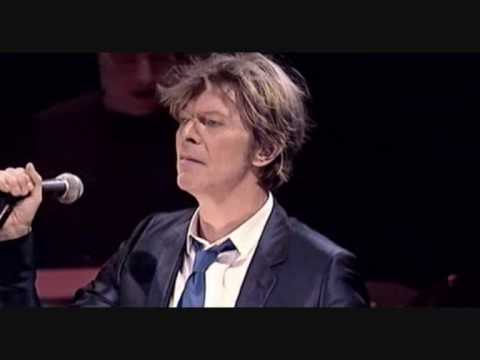
David Bowie – Heroes
He Watched His Producer Kiss By The Wall And Kept The Secret For Twenty-Six Years
Released on 23 September 1977, David Bowie’s “Heroes” emerged from a former Gestapo ballroom located just five hundred yards from the Berlin Wall. Recorded at Hansa Studio 2 during July and August 1977, the song peaked at only number twenty-four on the UK Singles Chart and failed to chart completely in the United States upon initial release. Yet Bowie’s observation of producer Tony Visconti and backing singer Antonia Maass kissing beneath a guard turret inspired what would become his most celebrated song. Bowie protected Visconti’s secret affair for twenty-six years until finally revealing the truth in 2003, two decades after Visconti’s eventual divorce from Mary Hopkin. The song reached number twelve in the UK following Bowie’s death in January 2016 and entered the Grammy Hall of Fame in 2008. NME and Melody Maker both named the “Heroes” album their album of the year for 1977.
The commercial disappointment initially puzzled everyone involved. Despite heavy promotion including appearances on Marc Bolan’s Marc show and Bing Crosby’s Christmas special Merrie Olde Christmas, where Bowie and Crosby performed a duet titled “Peace on Earth/Little Drummer Boy,” the single barely registered. Crosby died on 14 October before the special’s Christmas Eve broadcast, leading Bowie to quip he was getting seriously worried about appearing on television because everyone he went on with was kicking it the following week. The song reached the top ten in multiple European countries and Australia but missed completely in America. Only at Live Aid in 1985 did “Heroes” become recognized as a classic, with biographer David Buckley calling it the best version Bowie had ever sung. When Bowie performed it at the Berlin Wall on 5 June 1987, thousands gathered on the eastern side to listen, bringing him to tears during what he called one of the most emotional performances he’d ever done.
Brian Eno suggested the title after he and Bowie spent weeks devising concepts for the next album following Low. One idea involved using the same G-D chord sequence Bowie had used for Iggy Pop’s “Success.” Eno thought the sequence sounded grand and heroic, having that exact word in his mind. The title also paid reference to German krautrock band Neu!’s track “Hero” from their 1975 album Neu! ’75. Bowie placed the title in quotation marks as an expression of irony on otherwise romantic or triumphant words and music. The backing track began with Bowie on piano and the core band of Carlos Alomar on rhythm guitar, George Murray on bass, and Dennis Davis on drums, creating a groove that built into a crescendo lasting eight minutes. That backing track sat untouched for weeks until one day Bowie requested everyone leave him alone in the studio to focus on writing. Staring out the window, he witnessed Visconti and Maass kissing near the Wall.
Recording took place at Hansa Studio 2, a former concert hall that Gestapo officers had used as a ballroom during World War II. Visconti recalled sitting at his desk every afternoon seeing three Russian Red Guards watching them with binoculars, Sten guns over their shoulders, knowing mines were buried in the Wall. That atmosphere proved so provocative, frightening, and stimulating that the band played with enormous energy. Robert Fripp arrived from New York after Eno called him in July 1977 asking if he’d play some hairy rock and roll guitar. Fripp admitted he hadn’t played for three years but agreed to take the risk if Bowie would. A first-class Lufthansa ticket arrived shortly afterward. Fripp marked spots on the studio floor with tape where different notes would feed back at different distances from his amplifier. An A would feed back at about four feet, while a G fed back at three and a half feet. He recorded three takes, each without hearing the previous ones, all fed through Eno’s EMS Synthi AKS synthesizer built in a briefcase. When Visconti merged all three takes onto one track during mixing, they fit together perfectly despite Fripp having no way of being in sync. Visconti later described it as a dreamy, wailing quality, almost crying sound that left everyone flabbergasted.
“Heroes” became the title track and lead single from the album released in October 1977, the second installment of what became known as Bowie’s Berlin Trilogy alongside Low and Lodger. Ironically, “Heroes” was the only one of the three actually recorded entirely in Berlin. The album followed Low‘s semi-vocal, semi-instrumental structure but boasted a more heavily layered, harder-edged sound thanks to Fripp’s guitar contributions. The second side featured instrumentals including “V-2 Schneider,” inspired by and named after Kraftwerk’s Florian Schneider, though many British listeners assumed the V-2 reference meant the rockets used by the German army in World War II. Bowie recorded the saxophone part for that track off-beat by accident but decided he liked it better and kept it. Songs like “Joe the Lion” paid tribute to American artist Chris Burden, known for outlandish publicity stunts, while “Blackout” referenced the New York City blackout of 1977.
The innovative vocal recording technique became legendary. Visconti devised a multi-latch system utilizing three Neumann microphones at different distances. The first, a valve U 47, sat nine inches from Bowie. The second, a U 87, was positioned twenty feet away. The third, another U 87, stood fifty feet back in the hall’s auditorium space. The two farther microphones were routed through noise gates that would open only when Bowie’s voice reached them at sufficient volume. As he sang louder, the next microphone would open, creating a splash of room ambience that gave the vocal performance its dramatic expansion from conversational tone to near-operatic intensity. Bowie improvised the entire lyric while standing at the microphone, a method he’d learned watching Iggy Pop during sessions for The Idiot and Lust for Life. He completed the vocal in three takes over about two hours, with the last take mostly appearing in the final song. He and Visconti immediately recorded backing vocals afterward, harmonizing in thirds and fifths below the lead vocal. The final mix happened at Mountain Studios in Montreux, Switzerland.
The cover versions span generations and genres. The Wallflowers released a positively received version in 1998 that charted in the US and Canada, featured in the film Godzilla. The X Factor series seven finalists took it to number one in the UK in 2010. Peter Gabriel had previously covered it in 1987, and when Netflix’s Stranger Things used Gabriel’s version in earlier seasons before featuring Bowie’s original in the December 2024 finale, streams surged five hundred percent. The show’s creators revealed that cast member Joe Keery suggested using Bowie’s version. King Crimson performed it regularly, with Fripp finally receiving proper recognition decades later. In 2019, Fripp expressed ongoing frustration about not having a songwriting credit, noting that Eno, Visconti, and Bowie himself all believed he should have one. The song appeared in films including Christiane F in 1981, The Perks of Being a Wallflower in 2012, and countless advertisements including a Microsoft commercial theme.
A 2024 BBC documentary revealed another layer to the story. Artist Clare Shenstone, who Bowie met in 1969, claimed she’d visited him during the summer he recorded “Heroes” and spent a day walking along the Wall with him. She told him about a dream of swimming with dolphins, which she believed inspired specific lines in the song. They crossed into East Berlin via Checkpoint Charlie, witnessed guards goose-stepping at the Tomb of the Unknown Soldier, then walked along the Wall where spotlights illuminated silhouetted guns above them. When he kissed her there, she later recognized that moment immediately upon hearing the finished song, understanding what each word meant. Whether inspired by Visconti and Maass, by Shenstone, or by both, the song captured something universal about love under threat, about finding moments of heroism in a divided world. The truth likely contains elements of all these stories, filtered through Bowie’s gift for transforming personal observation into myth.
The song’s reputation grew exponentially over decades, far surpassing its initial commercial performance. Rolling Stone ranked it number 403 on their 500 Greatest Songs of All Time in 2021. A 2020 survey by OnBuy declared it the most popular first dance song at weddings worldwide. When the 2017 remaster for the A New Career in a New Town (1977-1982) box set featured a controversial volume shift, fans and critics protested so loudly that Parlophone issued corrected replacement discs. English football clubs including Huddersfield Town, Hull City, Swindon Town, and Sunderland adopted it as their anthem from the 1960s onward. In 2015, archival recordings were backed by the Royal Philharmonic Orchestra for the If I Can Dream album on the eightieth anniversary of Bowie’s birth. Netflix’s 2024 documentary Return of the King: The Fall and Rise of Elvis Presley inadvertently highlighted how both Bowie and Presley found redemption through 1960s comeback performances, though Bowie’s occurred in 1968 rather than 1977.
Looking back, “Heroes” represents everything Bowie achieved during his Berlin period. Escaping Los Angeles drug culture, he retreated to a divided city where he could ride his bicycle inconspicuously in a boiler suit, living in a modest flat while still being David Bowie, international rock star. The idea that he was drug-free after arriving in Berlin proved misleading. He drank heavily during periods there and remained, as biographer Buckley noted, a fragile specimen battling his demons. Yet that fragility, that tension between creation and destruction, between east and west, between public myth and private struggle, gave “Heroes” its power. The song that initially flopped became Bowie’s defining statement, proof that sometimes commercial failure masks artistic triumph. As he explained, the song was about facing reality and standing up to it, finding joyness in life despite everything conspiring against you. The Berlin Wall eventually fell in 1989, but “Heroes” endures as a beacon of restorative human creativity, built in an old Gestapo ballroom where destruction once reigned. Tony Visconti and Antonia Maass kissing by the Wall became immortal through Bowie’s witness, their private moment transformed into a universal declaration that we can be heroes, just for one day.
SONG INFORMATION
Related videos
 Watch LaterAdded
04:42
Watch LaterAdded
04:42  Watch LaterAdded
02:45
Watch LaterAdded
02:45  Watch LaterAdded
04:44
Watch LaterAdded
04:44